If you are comparing fda cleared red light therapy devices wavelengths, start with the regulatory claim before you start ranking numbers. The FDA does not clear "660 nm" or "850 nm" by itself; it clears a specific device for a specific intended use. A familiar wavelength can be a useful clue, but it is not proof that the product is cleared, well designed, or right for your goal.
Does FDA Clearance Apply to Red Light Therapy Wavelengths?
FDA clearance applies to the finished device and the use the manufacturer is allowed to claim. That means the first question is not "Is this wavelength FDA cleared?" but "Is this exact device cleared for the purpose being advertised?"
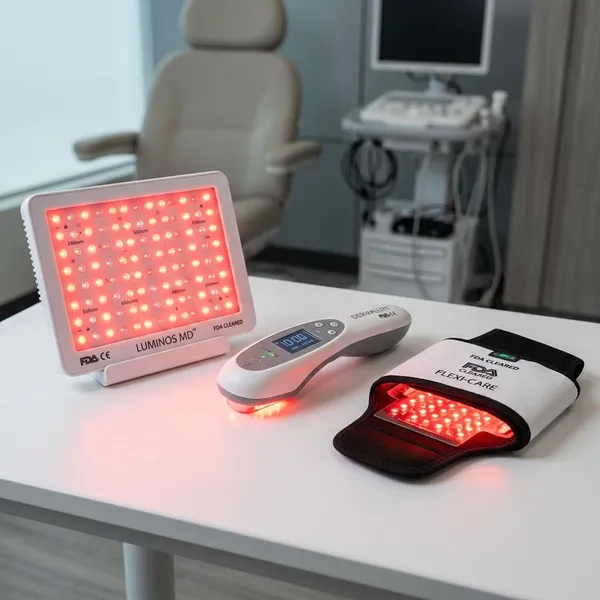
A face mask, a flexible knee wrap, and a large body panel may all use red or near-infrared LEDs. They can still have different instructions, risk warnings, treatment areas, and regulatory records. Treat wavelength as one specification, not as the whole buying decision.
FDA clears devices and intended uses, not wavelength ranges
A wavelength such as 630 nm, 660 nm, 810 nm, or 850 nm is a technical feature. FDA clearance, when it applies, is tied to the complete product: the hardware, labeling, instructions, safety information, and intended use.
FDA cleared vs FDA approved vs FDA registered
These terms are often mixed together in red light therapy marketing, but they do not mean the same thing.
- FDA cleared: commonly refers to a 510(k) clearance for a defined device and intended use.
- FDA approved: usually applies to a different, more demanding pathway often associated with higher-risk devices; it is frequently misused in this category.
FDA registered: usually means a company or facility is listed with the FDA, not that the product's performance claims were reviewed.
What Wavelengths Are Common in FDA Cleared Red Light Therapy Devices?
Most consumer devices in this space use visible red light, near-infrared light, or a combination of both. Some acne-focused devices may also use blue light, but the approved outline here is mainly about red and near-infrared choices.
The useful way to read wavelength numbers is by goal. Red light is usually associated with skin-facing use. Near-infrared is often chosen for deeper body-area applications. Combination devices try to cover more than one routine, but they still need clear instructions and a matching intended use.
Red light ranges commonly used for skin-focused devices
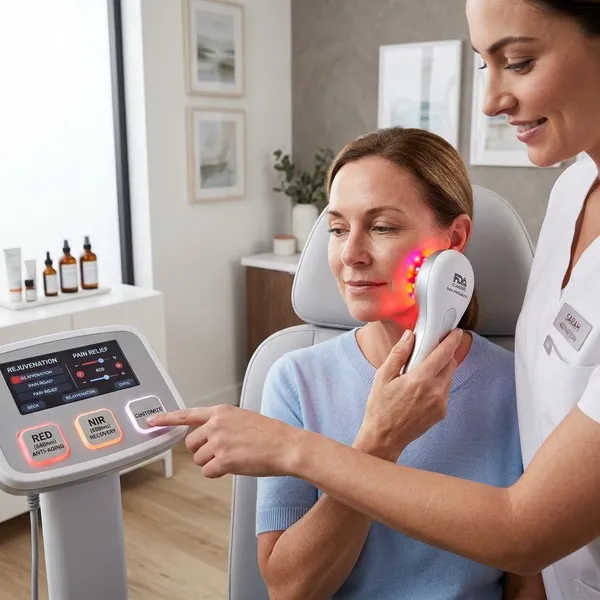
Skin-focused red light devices often use wavelengths around 630 nm to 660 nm. You may see these numbers on facial masks, handheld tools, and smaller beauty-oriented devices aimed at skin appearance routines.
For a simple face routine, the wavelength is only one part of the decision. A mask that fits well, has clear eye-safety guidance, and gives realistic session instructions may be more useful than a stronger-looking device that is awkward to position.
Near-infrared ranges commonly used for deeper applications
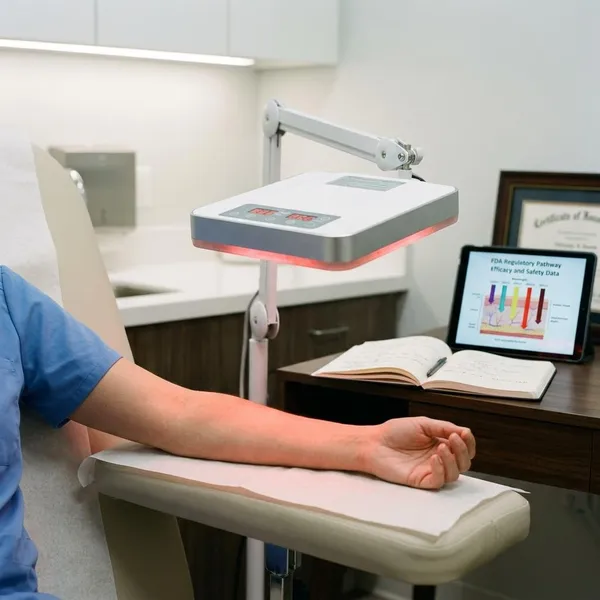
Near-infrared devices commonly use ranges around 810 nm to 850 nm, especially in wraps, pads, belts, and panels designed for larger body areas. Near-infrared light is less visible, so a device may look dim even when it is operating as intended.
If you are buying for a knee, shoulder, or lower-back routine, check the device format before getting distracted by the highest number on the page. A flexible wrap can be more practical for a joint, while a panel may make more sense for broader areas.
Multi-wavelength combinations used in home devices
Many home devices combine red and near-infrared LEDs because one household may have more than one use case. For example, one person may want a skin routine, while another wants a body-area device that is easier to use after exercise.
| Common setup | Often chosen for | What to check before buying |
|---|---|---|
| Red only | Face and skin appearance routines | Fit, treatment distance, eye guidance, and skin-related intended use |
| Near-infrared only | Body-area applications | Timer, contact or distance instructions, and realistic claims |
| Red + near-infrared | Broader home use | Whether the device format actually suits both routines |
More wavelengths do not automatically make a device better. A combination panel that never fits your routine is less useful than a simpler device you can use correctly and consistently.
How to Verify a Red Light Therapy Device Is FDA Cleared
The most practical check is to match three things: the exact product model, the manufacturer, and the intended use. If the brand's FDA claim cannot be tied to those details, slow down before buying.
Finding the manufacturer clearance information
Start with the manufacturer's own product page, manual, regulatory page, or support materials. Look for a 510(k) number, the exact model name, and wording that connects FDA clearance to that specific device.
A useful support question is: "Can you provide the 510(k) number, exact model name, and intended use for this product?" If the answer only repeats "FDA registered" or "FDA compliant," that does not confirm the claim you need.
Checking FDA databases and device listings
Once you have a manufacturer name or 510(k) number, search the FDA's public 510(k) database and compare the record with the product being sold.
- Match the company name. Make sure the record is not for an unrelated manufacturer.
- Match the model or product family. Similar-looking devices are not automatically the same device.
- Read the intended use. The claim on the sales page should not go beyond what the record supports.
- Compare the manual and listing. Big differences in claims are a warning sign.
Matching clearance claims with intended use
The intended use is where vague marketing often becomes easier to judge. If you want an acne-focused device, the clearance language should support that kind of use. If you want a skin appearance device, look for skin-related language rather than broad promises about the whole body.
A low-risk beauty routine and a more health-related concern are not the same buying situation. For general appearance goals, you may mainly be comparing fit, comfort, and credible claims. For pain, injury, medical conditions, or post-procedure use, it is more sensible to be cautious and ask a clinician before relying on a home device.
Avoiding misleading marketing language
Be careful with phrases that sound official but are hard to verify. Common warning signs include:
- "FDA-approved wavelengths" instead of a device-specific clearance claim.
- "FDA registered facility" used as if it proves the product was reviewed.
- No model number connected to the regulatory claim.
- Claims that sound medical or extreme without clear documentation.
The safest move is simple: if the brand cannot show how the exact product connects to the FDA record, do not let the wavelength numbers do the persuading.
How to Choose the Right Wavelength for Your Goal
Choose by goal first, then by device format, then by wavelength. That order prevents a common mistake: buying the device with the most impressive-looking numbers while ignoring whether it is cleared, usable, or suited to your routine.
For occasional beauty use, convenience may matter most. For regular body-area sessions, positioning and safety features may matter more. For any medical concern, the better first step is professional advice rather than trying to interpret a product page on your own.
Choosing red light for skin appearance goals
Red light in the 630 nm to 660 nm range is usually the sensible starting point for skin appearance goals such as tone, texture, or general facial routines. A mask or handheld device may be easier to use than a large panel if your target area is mainly the face.
- Check the intended use: does it actually mention skin-related use?
- Check the fit: poor contact or awkward positioning can ruin consistency.
- Check the instructions: session time, distance, and eye guidance should be clear.
Choosing near-infrared for deeper tissue applications
Near-infrared is commonly selected when the target is a larger or deeper body area, but the product shape can matter as much as the wavelength. A wrap may suit a knee or elbow better than a panel; a panel may be more practical for the back or legs.
Because near-infrared is not as visibly bright, built-in timers, auto shutoff, and clear use limits are worth taking seriously. Do not increase session time just because the light looks less intense.
Choosing combination wavelengths for broader use
A red and near-infrared combination can make sense when you want one device for more than one routine. It is especially practical for a shared household or for someone who wants both face-focused and body-area options without buying separate products.
It is not always the best choice, though. If you only want a simple facial routine, a well-designed red light mask may be easier to keep using. If you only want a joint wrap, a targeted near-infrared format may be less frustrating than a multipurpose panel.
Conclusion
The strongest buying decision starts with the exact device claim, not the biggest wavelength list. Common red and near-infrared ranges can help you narrow the options, but they do not replace checking the model, intended use, safety instructions, and FDA documentation. If a product fits your goal, is practical to use, and has a claim you can verify, it is a much better candidate than one that leans on impressive numbers and vague regulatory wording.