IPL can be safe for facial hair reduction, but only on the right parts of the face and only if your skin tone, hair color, and device instructions match. The first checks are simple: stay on approved lower-face areas, keep well away from the eyes, avoid dark or irritated skin, and do not push the intensity just because you want faster results.
Where can you use IPL on your face?
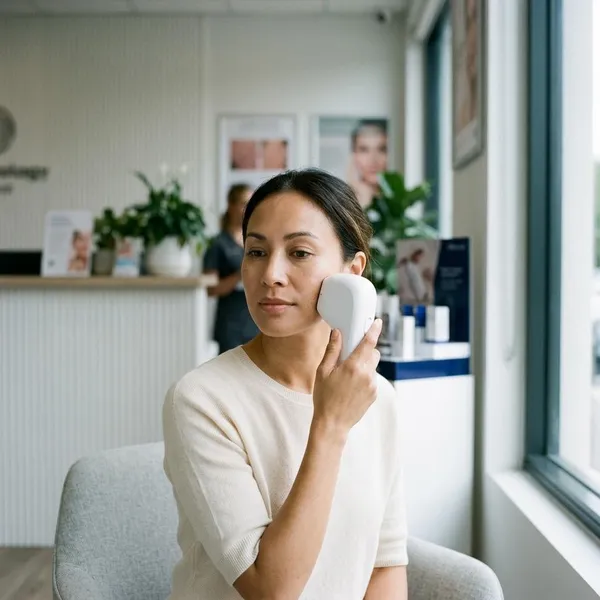
Most at-home IPL devices are designed for selected lower-face areas, not the whole face. A good rule is to treat only places your manual clearly allows, because facial skin is more visible, more sun-exposed, and less forgiving if you get redness, burns, or pigmentation marks.
Facial IPL is usually most useful when the hair is dark enough for the light to target. If you are dealing with a few coarse hairs on the chin, it may be a reasonable option. If you are trying to treat soft peach fuzz across the cheeks, the benefit is often much less predictable.
Upper lip
The upper lip is commonly approved for at-home facial IPL, but it needs careful placement because the area is small and sensitive. Shave first, use a facial or precision attachment if your device has one, and keep the treatment window firmly below the nose and away from the eye area.
If you only have occasional upper-lip hair before an event or holiday, do not rush into multiple sessions close together. IPL works gradually, so over-treating right before you want clear skin is more likely to cause redness than instant smoothness.
Chin
Chin hair is often a better match for IPL than fine cheek hair because it can be darker and coarser. The main mistake here is overlap: the chin is curved, so it is easy to flash the same small patch twice without noticing.
Jawline
The jawline is usually one of the easier lower-face areas to treat because the device can sit more evenly against the skin. Keep the treatment zone within the area approved by your device, especially if the hair continues down toward the neck or up toward the cheeks.
For long-term hormonal hair, think of IPL as reduction and maintenance rather than a one-time fix. Someone treating a few dark jawline hairs once a week according to the device schedule is in a very different situation from someone repeatedly flashing the same area every few days because regrowth is frustrating.
Lower cheeks
Lower cheeks are only a yes if your device specifically includes them. This area is more likely to have fine hair, uneven tone, acne marks, or sun-related pigmentation, so the risk-to-benefit balance can be weaker than on the upper lip or chin.
Other areas approved by your device
Some devices allow additional facial areas, but the manual should be the final limit. Different models have different window sizes, sensors, attachments, and intensity ranges, so advice for one device does not automatically apply to another.
- Treat only named facial zones: do not extend the area because it looks close enough.
- Use the facial attachment if supplied: it usually helps with smaller, safer placement.
- Stop if contact is poor: gaps or awkward angles can lead to uneven flashing.
Where should you avoid facial IPL?
The areas to avoid matter just as much as the areas you can treat. IPL uses strong light, and on the face the biggest concerns are eye safety, burns, and dark marks that may linger.
If a spot is near the eyes, very dark, recently irritated, or excluded by the manufacturer, leave it alone. Guessing is not worth it when the alternative is tweezing, shaving, threading, or asking a professional.
Around the eyes and eyelids
Do not use at-home IPL around the eyes or on the eyelids. Closed eyes are not enough protection, and reflected light can still be a concern near such delicate tissue.
Most home devices draw the line at the cheekbones or below. Respect that boundary even if the device feels easy to aim.
Eyebrows
Eyebrows are too close to the eyes for at-home IPL. There is also a cosmetic risk: one misplaced flash could thin hair you actually wanted to keep.
Tattoos and dark skin spots
IPL is attracted to pigment, so tattoos, very dark moles, dense freckles, and patches of hyperpigmentation can absorb too much energy. That can raise the chance of burns, scabbing, or lasting discoloration.
If you are unsure whether a dark spot is harmless, do not treat over it. Cover tattoos if needed and get unusual moles or changing marks checked before using IPL nearby.
Broken or irritated skin
Wait if your skin is sunburned, peeling, scratched, inflamed, or flaring with acne, eczema, or a rash. IPL on a damaged skin barrier can turn a small irritation into a longer-lasting mark.
Areas excluded by the manufacturer
An excluded area should be treated as off-limits, even if it seems similar to an approved one. Those limits are usually based on safety testing, device fit, and misuse risks, not just cautious wording.
Who should be extra careful with facial IPL?
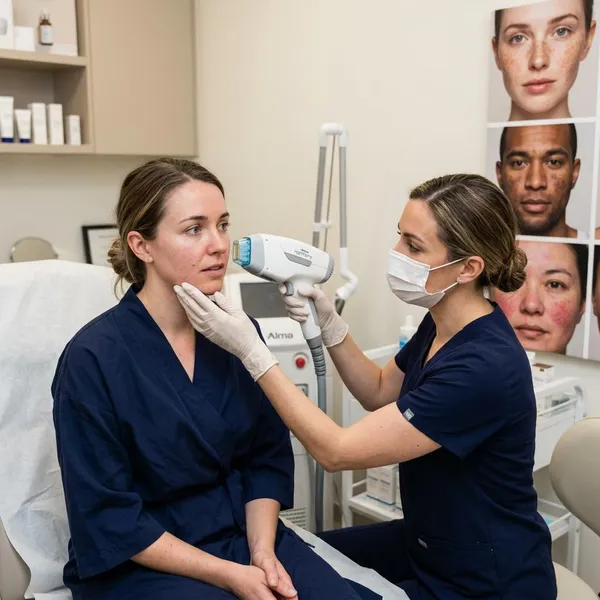
Some people need a more conservative approach, even with a reputable at-home device. The face is not the best place to "see what happens," because irritation and pigment changes are harder to hide than they would be on the legs or underarms.
A low-risk user might have light-to-medium skin, dark hair, no recent tanning, and calm skin. A higher-risk user might have darker skin, melasma, reactive skin, recent sun exposure, or medication that makes skin more light-sensitive.
People with darker skin tones
Darker skin can absorb more IPL energy because it contains more melanin. That does not mean every darker skin tone is automatically excluded, but it does mean the device's skin tone chart and sensor matter.
If your skin is near the darkest shade the device allows, be cautious about treating your face at home. Professional advice may be the safer route, especially if you already develop dark marks easily after irritation.
People with sensitive or reactive skin
Skin that flushes, stings, or reacts strongly to skincare may also react more strongly to IPL. A patch test is not optional in this situation; it is the step that tells you whether your skin tolerates the heat and light before you treat a visible area.
People prone to pigmentation
If acne, waxing, scratches, or sun exposure often leave dark marks on your face, IPL deserves extra caution. The same applies to melasma, which can be worsened by heat and light in some people.
For a person with existing upper-lip or cheek pigmentation, removing hair is not the only goal. Avoiding darker patches may matter more, so a dermatologist-guided option can be a better choice than at-home trial and error.
People taking photosensitizing medication
Some medicines and supplements can make skin unusually sensitive to light. This can include certain antibiotics, acne treatments, anti-inflammatory medicines, antifungals, and herbal products such as St. John's wort, but the risk depends on the exact product and dose.
Ask a pharmacist, prescribing clinician, or dermatologist before using IPL on your face if you are taking anything that lists light sensitivity as a warning.
How to use at-home IPL on your face safely
Safe facial IPL is mostly about order: check whether you are a suitable candidate, prepare the skin, test first, use the right setting, and avoid overdoing it. The common trap is treating IPL like shaving, where more effort gives a faster result. With IPL, extra flashes usually add heat, not better progress.
- Before you start: read the facial-use section of the manual, not just the general body instructions.
- Before each session: make sure the skin is clean, shaved, calm, and not recently tanned.
- During treatment: place the window carefully and move in a steady pattern.
- After treatment: keep the area gentle and protect it from sun exposure.
Check your skin tone and hair color
This is the first real decision point. IPL usually works best when there is clear contrast, such as darker hair against lighter skin. Blonde, red, gray, or white facial hair often responds poorly because there may not be enough pigment for the device to target.
Check your face in natural light and compare it with the device's chart. Do not rely on how your legs or arms look, because facial skin may be darker, more uneven, or more recently exposed to sun.
Shave the treatment area first
Shaving leaves the hair root in place while removing surface hair that could singe or add extra heat. Use a clean razor and be gentle, especially around the upper lip and chin.
Avoid waxing, threading, or plucking right before IPL. Those methods remove the root that IPL is trying to target, so the session may be less useful.
Start with a patch test
Test a small, discreet area first and wait 24 to 48 hours before treating more of your face. Mild redness that fades can happen, but blistering, strong burning, swelling, or new darkening is a stop sign.
Use the recommended intensity
The highest setting is not automatically the best facial setting. Start where the manual recommends for your skin tone and facial area, then only adjust if the device allows it and your skin has handled earlier sessions well.
Avoid treating the same spot repeatedly
Move slowly enough to know where you have already flashed. On tiny areas like the upper lip, it can help to treat one side, pause, then treat the other side instead of sweeping back and forth.
Follow the device schedule
Use the schedule your device gives, even if the hair is stubborn. Many devices start with regular early sessions and then move to maintenance, but the exact timing varies by model.
Summer use deserves extra caution because recent tanning and stronger sun exposure can increase the chance of irritation or pigmentation. If you cannot avoid sun on the area, delaying facial IPL may be the safer choice.
Conclusion
IPL is a reasonable facial hair-reduction option for some people, but it is not a "use anywhere on the face" treatment. If your device approves the area, your skin and hair are suitable, and your skin is calm, a conservative routine can make sense; if you are close to the eyes, dealing with pigmentation, recently tanned, or unsure about your skin's reaction, skipping at-home treatment is the smarter choice.