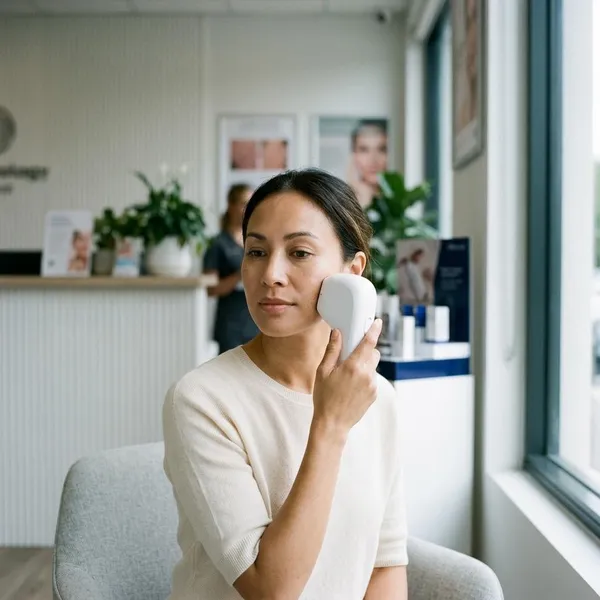
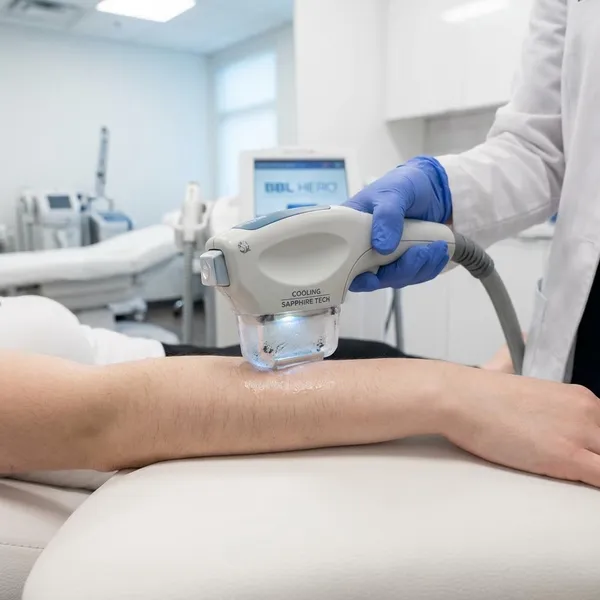
For most healthy adults, LED face masks are usually safe when the device is well made and used exactly as directed. The bigger led mask safety questions are eye protection, photosensitivity, overuse, and whether your skin is already irritated before you start.

What are the main risks of LED face masks?
The main risks are usually mild, but they are not worth ignoring. Think of an LED mask as a light-based skincare tool, not just a beauty gadget you can use endlessly. The safest first check is simple: if the manual, your medication label, your eye history, or your skin condition gives you a reason to pause, do that before putting the mask on.
Redness and skin irritation
Temporary pinkness can happen after a session, especially when you are new to the device. That is different from redness that stings, lasts for hours, or appears every time you use the mask. Persistent redness is a sign to reduce use or stop, not a sign to "push through."
Irritation is more likely if your routine already includes strong actives such as exfoliating acids, benzoyl peroxide, prescription acne creams, or retinoids. If your skin feels hot, tight, scraped, or windburned before treatment, skip the session.
Dryness or increased sensitivity
LED light is not usually drying in the way a harsh cleanser can be, but frequent sessions may make a weak skin barrier feel more reactive. You might notice tightness, flaking, or stinging from products that normally feel fine.
Eye discomfort and light sensitivity
Eye discomfort is one of the safety issues to take seriously. Bright visible light near the eyes can cause watering, squinting, headaches, or lingering sensitivity, especially if the mask fits poorly or the shields do not block light well.
- Stop immediately if you feel eye pain, pressure, or strong discomfort.
- Use the supplied protection instead of assuming closed eyes are enough.
- Be extra cautious if you have dry eye, migraines triggered by light, retinal issues, or recent eye surgery.
Reactions linked to photosensitivity
A mask can be non-UV and still be a poor choice for someone who reacts strongly to light. Some conditions and medications can make visible light more irritating to the skin or eyes.
If you have lupus, porphyria, light-triggered rashes, or pigmentation that worsens with visible light, do not treat this as a casual skincare experiment. Ask a dermatologist whether the specific type of light is appropriate for you.
Problems caused by overuse
More sessions do not automatically mean better results. Overuse is one of the easiest ways to turn a gentle device into a source of dryness, redness, or eye strain.

Who should be careful with LED masks?
Some people can use an LED mask with little drama; others should get medical advice first. The dividing line is usually not age or skin type alone, but light sensitivity, eye health, medication use, and whether the skin barrier is already compromised.
If you are a casual user with calm skin, the main job is to follow the manual and watch for irritation. If you are treating acne, recovering from a procedure, or managing a medical skin condition, the risk calculation changes.
People with photosensitive conditions
People with photosensitive conditions should be cautious because visible light may still trigger symptoms. A device that is safe for a friend with normal skin may not be safe for someone whose skin flares after sun exposure or bright light.
Do not rely on product claims alone if you have a diagnosed light-sensitive condition. The better check is to ask a dermatologist about the exact device type, wavelength, and your condition.
People taking photosensitizing medication
Medication is an easy safety detail to miss. Some antibiotics, acne medications, diuretics, antifungals, anti-inflammatory medicines, and psychiatric medications can increase light sensitivity.
Look for warnings about sunlight or photosensitivity on the label, then ask a pharmacist or prescriber if you are unsure. This is especially important if you are using isotretinoin, doxycycline, or prescription acne treatments that already make skin more fragile.
People with eye conditions
If you have glaucoma, cataracts, retinal disease, dry eye, light-triggered migraines, or recent eye surgery, check with an eye doctor before using a mask. The issue is not just the light color; it is brightness, distance, fit, leakage around the eyes, and how your eyes respond afterward.
People with irritated or damaged skin
Skip LED sessions when your skin is sunburned, peeling, over-exfoliated, rashy, or flaring with eczema, rosacea, or dermatitis. Damaged skin is more likely to sting, dry out, or react unpredictably.
People recently treated with strong skin procedures
Chemical peels, microneedling, laser treatments, radiofrequency procedures, and stronger professional facials can temporarily make skin more reactive. Some clinics use light therapy as part of supervised aftercare, but that does not mean it is safe to restart a home mask whenever you feel like it.
Follow the aftercare timeline from the professional who treated you. If you were told to avoid heat, actives, sunlight, or friction for a period of time, treat that as a reason to hold off on the mask too.
How to use an LED face mask safely
Safe use comes down to removing avoidable variables: clean skin, the right mode, protected eyes, the correct session length, and a clean device. When something feels off, pause early rather than trying to prove the mask is fine.
Start with clean dry skin
Use the mask on clean, dry skin unless the brand gives different instructions. Makeup, sunscreen, heavy oils, and thick creams can affect fit and make it harder to tell whether redness came from the device or from something already on your face.
For the first few uses, keep the rest of your routine boring: gentle cleanser, basic moisturizer afterward, and no fresh exfoliation right before treatment.
Choose the recommended light mode
Pick the mode that matches the manual, not the one that sounds most impressive. Red and blue light are used for different skincare goals, and combining modes casually can make irritation harder to trace.
If you are using the mask for long-term maintenance, consistency with one suitable mode usually makes more sense than switching settings every session. If you are trying it before an event, avoid experimenting with a new or stronger mode right before the day you want your skin to look calm.
Use the required eye protection
Use the eye shields, goggles, or fit system the brand requires. If the mask feels bright even with protection, or light leaks directly into your eyes, that is not something to ignore for convenience.
- Good sign: your eyes feel relaxed during and after the session.
- Warning sign: squinting, watering, headache, pressure, or screen sensitivity afterward.
- Better choice: a less glamorous mask with better eye coverage.
Follow the treatment time and frequency
Stay inside the recommended session length and frequency. The tested schedule is the boundary that matters most; adding extra minutes is not a shortcut.
If the manual offers a range, start conservatively. This is especially useful for sensitive skin, first-time users, or anyone combining the mask with acne products or anti-aging actives.
Clean the mask after each use
Clean the part that touches your face after every session using the method recommended by the manufacturer. Sweat, oil, sunscreen residue, and skincare products can build up and may contribute to clogged pores or irritation.
Avoid soaking the device or using harsh cleaners unless the manual clearly allows it. A damaged mask is not safer just because it looks cleaner.
Stop if irritation develops
Stop using the mask if you develop burning, swelling, persistent redness, worsening breakouts, unusual dryness, or eye discomfort. Then simplify your routine until your skin feels normal again.
- Pause the mask. Do not add more sessions to "get used to it."
- Check the same-day routine. Look for retinol, acids, acne treatments, scrubs, or new products.
- Restart cautiously only if symptoms fully settle. If the reaction returns, stop and ask a dermatologist.
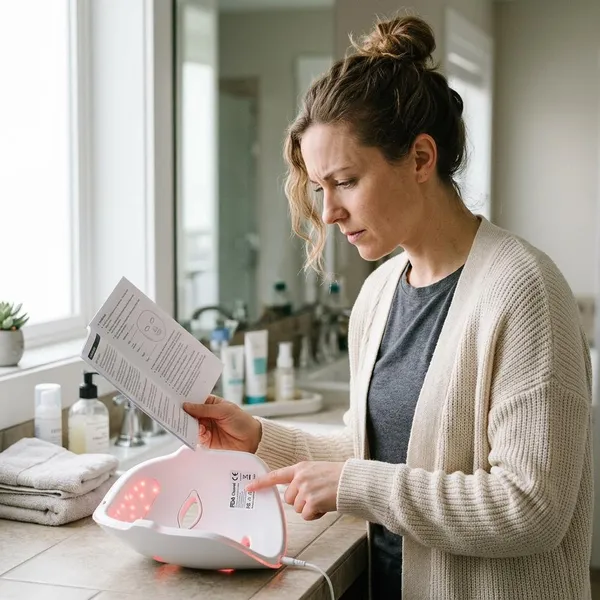
How to choose a safer LED face mask
A safer LED mask is not simply the most expensive one. It is the one that tells you exactly what it does, how to use it, who should avoid it, and how your eyes are protected.
For occasional use, clear instructions may be enough to keep you on track. For long-term use several times a week, build quality, comfort, eye shielding, and safety documentation matter much more because small design problems become repeated exposure.
Check the wavelength specifications
Look for stated wavelengths in nanometers rather than vague claims like "skin rejuvenating light." You do not need to become a technician, but the brand should clearly say what type of light the mask uses and which mode does what.
If a product hides basic light specifications, it is harder to compare and harder to trust. That is a reasonable reason to choose a more transparent device.
Look for clear treatment instructions
Good instructions should answer four questions before you buy: how long to use it, how often to use it, whether skin should be bare, and who should avoid it. "Use regularly" is not enough guidance for a light-based device.
Check eye protection features
Pay close attention to the eye area in product photos, reviews, and the manual. Built-in shields, separate goggles, and close-fitting designs can all work, but only if they actually reduce direct light exposure for your face shape.
If you already know bright light bothers you, make eye protection a buying priority rather than a bonus feature.
Review contraindications and warnings
A responsible brand should list situations where the mask should not be used or should be cleared by a clinician first. That may include photosensitive disorders, photosensitizing medication, eye disease, pregnancy precautions, recent procedures, or irritated skin.
No warnings at all is not automatically a good sign. It may simply mean the brand has not explained the safety limits clearly.
Look for credible safety testing
Look for relevant safety information for the market where the device is sold, such as recognized electrical safety certifications or regulatory clearance when applicable. These do not guarantee that your skin will love the mask, but they do make the product easier to evaluate than an untraceable device with big claims and little documentation.
Conclusion
An LED face mask can be a reasonable at-home skincare tool if your skin is calm, your eyes are protected, and you stay within the instructions. The safer choice is not to use it more aggressively, but to check your risk factors first, start conservatively, and stop quickly if your skin or eyes react badly.