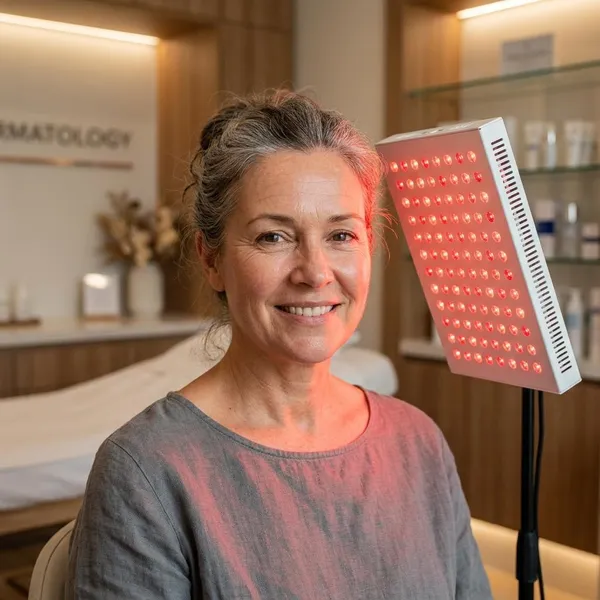
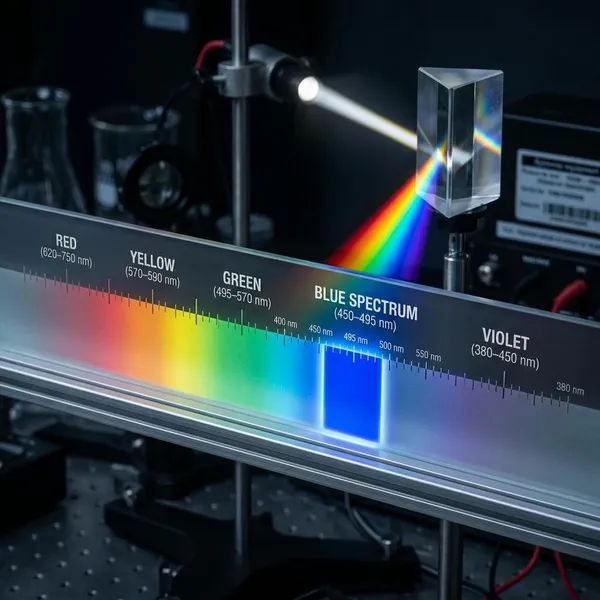
If you are choosing between 660 nm and 850 nm, start with the body area you care about most. 660 nm red light is usually the better match for skin, scalp, and other surface-level goals, while 850 nm near-infrared is usually more useful for muscles, joints, and deeper recovery work. The common mistake is treating "deeper" as automatically better when the better wavelength is really the one that matches your target.
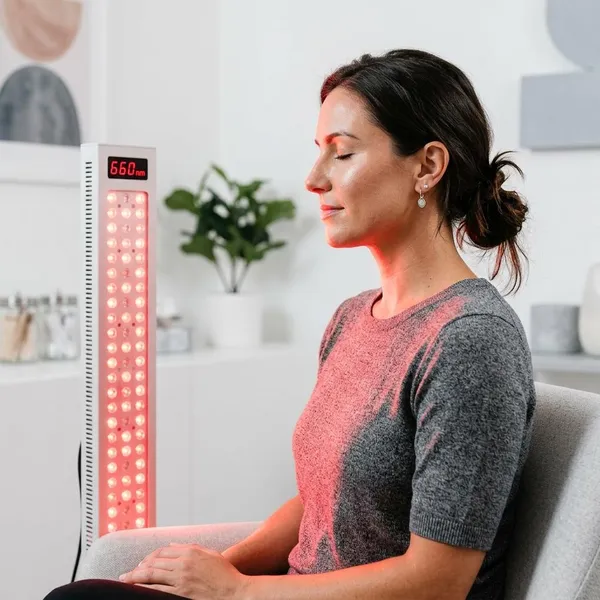
660 nm Red Light Therapy Explained
660 nm sits in the visible red range, so it produces the red glow most people associate with red light therapy devices. In home-use products, it is commonly used in face masks, small panels, caps, and targeted devices where the goal is closer to the surface rather than deep inside the body.
The practical value of 660 nm is not that it is the "strongest" wavelength. It is that it often lines up well with skin, scalp, and superficial tissue goals. If your main concern is facial texture, visible redness, or a scalp routine, 660 nm is usually a more logical starting point than a near-infrared-only device.
Visible red light and surface-level penetration
660 nm light is visible and tends to be used for shallower targets. It can reach into the skin, but it generally does not travel as deeply as 850 nm near-infrared. That makes it a better fit for concerns that are mostly in the epidermis, dermis, or scalp area rather than large muscles or deeper joint structures.
Common uses for skin and superficial tissue goals
660 nm is most often chosen when the goal is visible, gradual improvement rather than deep recovery. Common use cases include:
- Facial skin routines: tone, texture, fine lines, dullness, and redness-prone areas.
- Scalp and hair support: home devices aimed at follicles and surrounding scalp tissue.
- Small superficial areas: surface-level recovery support where deeper penetration is not the main need.
Research areas commonly associated with 660 nm
Research around 660 nm and nearby red wavelengths often looks at skin appearance, collagen-related activity, wound healing support, inflammation-related skin outcomes, and hair growth support. Not every study uses exactly 660 nm, so it is safer to think of it as part of a commonly studied red-light range rather than a magic number.
When comparing devices, do not stop at the wavelength label. Check whether the brand gives usable details such as treatment distance, session time, coverage area, and output information. A weak or poorly designed 660 nm device may be less useful than a better-built product that gives clearer treatment guidance.
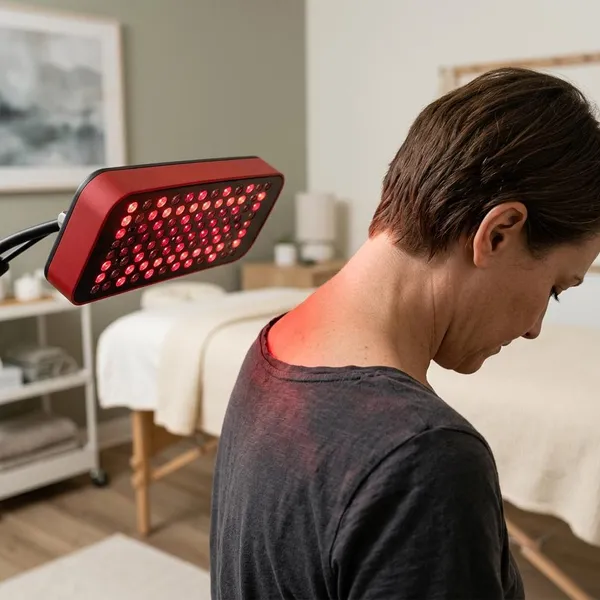
850 nm Near Infrared Light Therapy Explained
850 nm is near-infrared light, which sits just beyond the visible red range. You usually cannot see it clearly, even when the LEDs are working. That can surprise first-time users, but invisibility is normal for this wavelength.
Its main appeal is deeper reach. 850 nm is often used in panels, wraps, and recovery-focused devices because it is better matched to muscles, joints, tendons, and larger body areas than a surface-focused red wavelength alone.
Near-infrared light and deeper tissue reach
850 nm generally penetrates deeper than 660 nm because near-infrared light tends to pass through tissue differently than visible red light. That is why it is commonly selected for body areas where the target is not just the skin surface.
This deeper reach is useful only when the goal calls for it. If you are using light mainly for facial texture or scalp support, 850 nm may still pass through the skin, but it is not automatically the most direct choice. For a shoulder, knee, lower back, or large muscle group, it becomes much more relevant.
Common uses for muscle and recovery goals
850 nm is usually the better match when the goal involves movement, soreness, or deeper tissue support. It is commonly used for:
- Post-workout recovery: legs, back, shoulders, and other larger muscle groups.
- Joint-area routines: knees, elbows, ankles, and shoulders where the target is not surface-only.
- Broader body coverage: panels or wraps used regularly on larger areas.
Research areas commonly associated with 850 nm
850 nm and nearby near-infrared wavelengths are commonly discussed in research areas such as exercise recovery, muscle performance, pain-related outcomes, inflammation, circulation, and joint comfort. Some studies use nearby wavelengths such as 810 nm or 830 nm, so the broader near-infrared category matters as much as the exact number on a product page.
660 nm vs 850 nm Which Wavelength Is Better?
Neither wavelength is better in every situation. The useful comparison is not "which one is stronger?" but "where is the target tissue?" For skin and scalp, 660 nm often makes more sense. For muscles, joints, and larger recovery areas, 850 nm is usually the better fit.
Differences in visibility and tissue depth
The most obvious difference is what you see. 660 nm glows red; 850 nm is near-infrared and may look very dim or invisible. That visual difference also points to a practical depth difference: 660 nm is commonly used for shallower targets, while 850 nm is commonly used when the target sits deeper.
| Comparison point | 660 nm red light | 850 nm near-infrared |
|---|---|---|
| Visibility | Visible red glow | Usually invisible or very dim |
| Typical target depth | Skin, scalp, superficial tissue | Muscle, joint area, deeper soft tissue |
| Common device types | Masks, caps, small panels | Panels, wraps, pads, body devices |
Differences in common treatment goals
660 nm is more often chosen for appearance-focused goals: skin tone, texture, fine lines, visible redness, and scalp routines. 850 nm is more often chosen for comfort and recovery goals: post-exercise soreness, mobility routines, joint-area use, and larger body zones.
Why deeper penetration does not always mean better results
Deeper penetration is not automatically better because the target may not be deep. For fine lines, scalp support, or visible redness, sending more light beyond the surface does not necessarily make the routine more effective. It may simply be less directly matched to the goal.
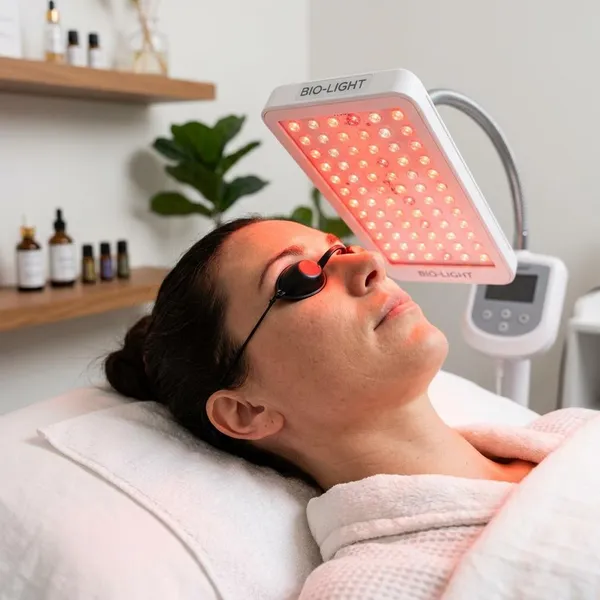
Which Wavelength Should You Choose?
Choose the wavelength by use case, not by popularity. Your first check should be the target area: skin and scalp point toward 660 nm, while muscles and joint areas point toward 850 nm. Your second check is whether the device shape actually fits that area well enough for regular use.
Choose 660 nm for skin-focused goals
Choose 660 nm when your main goal is close to the surface. It is a sensible fit for facial skin routines, scalp support, and small superficial areas where cosmetic or visible changes matter most.
- Best fit: face, scalp, neck, and other shallow targets.
- Good reason to choose it: skin tone, texture, redness, fine lines, or hair-support routines.
- Less ideal when: your main concern is deep soreness, a large muscle group, or joint recovery.
Choose 850 nm for deeper recovery goals
Choose 850 nm when the target is below the skin and the goal is recovery, comfort, or movement support. It is especially relevant for body panels, wraps, and pads used on larger areas.
Choose both wavelengths for mixed goals
Choose both wavelengths if your goals cross surface and deeper tissue needs. This is common for households where one person wants skin support and another wants recovery use, or for one user who wants a face routine plus body recovery from the same device.
- One device, several goals: useful for face, scalp, joints, and larger body areas.
- Better long-term flexibility: helpful if your routine may expand beyond one use case.
- Still check the design: a dual-wavelength device should also have suitable coverage, positioning, and clear session instructions.
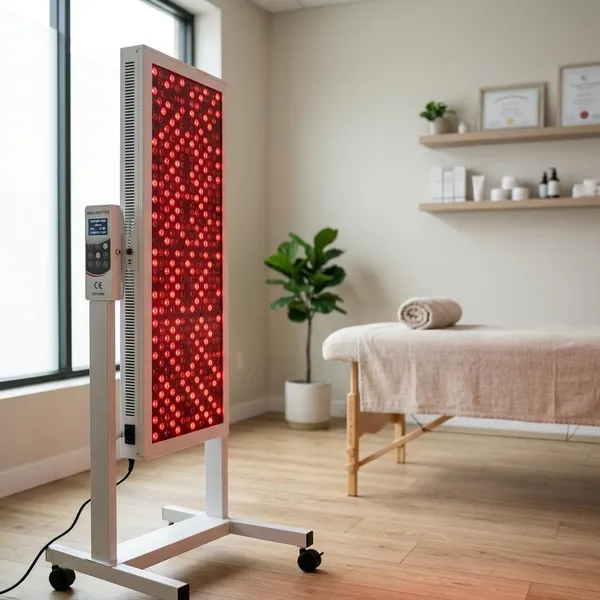
Conclusion
The most practical choice is the wavelength that matches the depth of your goal: 660 nm for skin, scalp, and surface-level routines; 850 nm for muscles, joints, and deeper recovery work. If your needs are mixed or you are buying one device for several people, a dual-wavelength option is often the safer long-term choice. Just do not let the wavelength number distract you from the basics: coverage, treatment guidance, and whether you will actually use the device consistently.