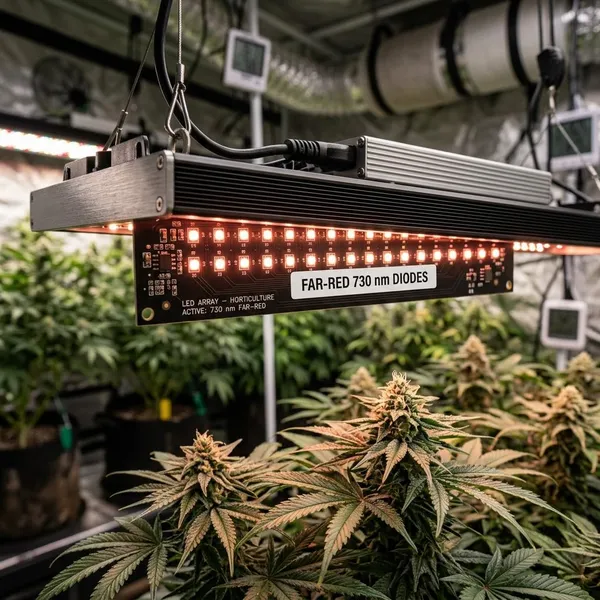
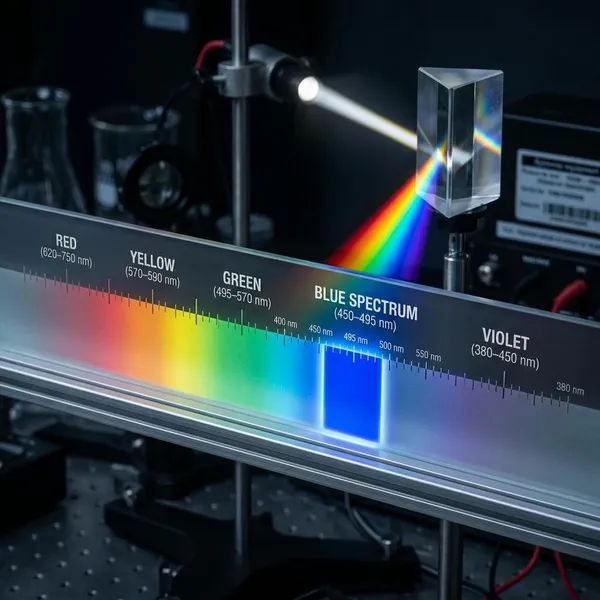
Red LED light usually falls around 620–700 nm, but the number that matters most on a product page is the peak wavelength. For most everyday red LEDs, 630 nm gives a bright, familiar red; 660 nm looks deeper and is more often chosen when the wavelength itself matters, such as in plant lights or some light-therapy devices.

What is the wavelength of red LED light?
The common wavelength of red LED light is about 620 nm to 700 nm. A product may be sold simply as "red," but the actual LED is usually designed around a narrower peak value such as 625 nm, 630 nm, 640 nm, or 660 nm.
If you are choosing an LED, treat the nm value as more useful than the color name. "Red" can mean a bright indicator-style red, a slightly orange-red, or a deeper red that does not look as visually strong to the eye.
620–700 nm is a common red LED range
620–700 nm is a practical range for visible red LEDs. The lower end often looks brighter and a little warmer or orange-red, while the upper end moves toward deeper red.
A single LED does not normally emit evenly across that whole range. It has a peak wavelength, plus a spread of nearby wavelengths. That is why a "630 nm LED" and a "660 nm LED" are both red, but they do not look the same.
630 nm is a common red wavelength
630 nm is one of the most common choices for standard red LEDs because it looks vivid and easy to notice. It is a sensible pick for indicator lights, control panels, signs, displays, and decorative lighting where the human eye needs to catch the color quickly.
- Good fit: status lights, warning indicators, small electronics, signage, accent lighting.
- Less ideal: uses where a specific deep-red wavelength is more important than visible brightness.
660 nm is a common deep red wavelength
660 nm is usually described as deep red. It can look dimmer than 630 nm even when the LED is not weak, because human vision is less sensitive to that deeper part of the red spectrum.
This wavelength is common in plant lighting and appears in many red-light therapy products. For those uses, do not judge the device only by how bright it looks; check the wavelength, output information, coverage area, and manufacturer guidance together.
Why do red LEDs have different wavelengths?
Red LEDs have different wavelengths because LED chips are made with different semiconductor materials and designs. The result is not one universal "red LED," but a group of LEDs tuned for different shades, brightness levels, efficiencies, and applications.
For a casual project, nearby values may not matter much. If you are replacing a tiny appliance indicator, 625 nm and 630 nm may both work visually. If you are buying LEDs for a grow setup, test equipment, or a therapy panel, the exact wavelength and tolerance deserve more attention.

LED materials produce different peak wavelengths
The materials inside the LED help set the peak wavelength. Small changes in the semiconductor composition can shift the output from a bright red around 625–630 nm toward a deeper red closer to 660 nm.
Peak wavelength affects the shade of red
Peak wavelength is the main reason two red LEDs can look different side by side. Around 620–630 nm, the red often appears brighter and more eye-catching. Around 660 nm, the color usually looks deeper and less visually intense.
| Peak wavelength | Typical appearance | Where it often makes sense |
|---|---|---|
| 620–630 nm | Bright red, sometimes slightly orange-red | Indicators, displays, signs, decoration |
| Around 660 nm | Deep red, visually dimmer | Grow lights, some light-therapy devices, wavelength-focused uses |
Wavelength ranges vary slightly by manufacturer
Manufacturer specs are not always identical. One LED may be listed as 630 nm, while another similar-looking part is listed as 625 nm or 635 nm. That does not automatically mean one is better; it may reflect binning, testing method, or tolerance.
- For simple visual use: a small wavelength difference is often acceptable if the color looks right.
- For multiple LEDs in one product: tighter tolerance helps keep the color consistent.
- For technical or therapy-related use: avoid vague listings that say only "red" without a nm value.
630 nm vs 660 nm red LED light
The practical difference between 630 nm vs 660 nm red LED light is mostly about appearance and purpose. A 630 nm LED is usually the better choice when people need to see the light clearly. A 660 nm LED is more relevant when the application calls for deeper red output.

630 nm appears brighter red
A 630 nm red LED usually appears brighter to most people than a 660 nm LED. That makes it a good everyday choice for a dashboard indicator, a power light, a small sign, or a decorative red glow that needs to be obvious in normal room lighting.
660 nm appears deeper red
A 660 nm red LED has a deeper red appearance and may look less bright to the eye. That dimmer look can be misleading, especially with grow lights or therapy panels, because visual brightness does not tell you the actual optical output.
- Choose 660 nm when the product or project specifically calls for deep red output.
- Be cautious if a seller claims strong benefits but gives no wavelength tolerance, power details, or usage guidance.
How to read red LED wavelength specs
When comparing red LEDs, check the specs in this order: peak wavelength first, tolerance second, bandwidth third, intended use last. That order keeps you from being distracted by marketing words such as "high power," "deep red," or "therapy grade."
Check the peak wavelength
The peak wavelength is the main nm value where the LED emits most strongly. If the listing says 630 nm, expect a standard bright red. If it says 660 nm, expect a deeper red.
If no nm value is listed, the product is hard to compare. That may be fine for a cheap decorative LED strip, but it is not enough if you need a predictable wavelength for a specific purpose.
Check the wavelength tolerance
Wavelength tolerance tells you how far the actual output may shift from the stated value. For example, a 660 nm LED with a ±10 nm tolerance may not land exactly at 660 nm in every unit.
- Loose tolerance: usually acceptable for basic indicators or decorative lights.
- Tighter tolerance: better for matching several LEDs in one setup.
- No tolerance shown: ask for a data sheet if wavelength accuracy matters.
Check the spectral bandwidth
Spectral bandwidth describes how wide the LED's output spreads around its peak. A narrower bandwidth means the light is more concentrated near the stated nm value; a wider bandwidth means it covers a broader part of the red spectrum.
This is not the first spec most casual buyers need. It becomes more useful when a product claims a very specific spectral effect, because bandwidth helps show whether the light is tightly targeted or more general.
Match the wavelength to the intended use
The best wavelength is the one that fits the job, not the one with the most impressive number. Use the application as the final filter after you understand the basic specs.
- For visibility: choose around 620–630 nm when the light needs to be easy to see.
- For plants: compare deeper red options around 660 nm, but also check total output and fixture design.
- For light therapy products: expect 630 nm, 660 nm, or both, but review intensity, coverage, use instructions, and safety guidance before relying on wavelength alone.
- For matching existing LEDs: look for the same peak wavelength and a similar tolerance, not just the same color name.
Conclusion
For most buyers, the useful shortcut is simple: choose around 630 nm when you want a bright, classic red that is easy to see, and look closer to 660 nm when you need a deeper red for a wavelength-focused use. The safest habit is to read the peak wavelength and tolerance before trusting the word "red," because that one label can cover noticeably different LEDs.