If you are wondering about LED mask eye safety, the practical answer is this: many home LED masks can be used safely around the eyes when they are well designed, fitted correctly, and used exactly as instructed. The part to take seriously is direct or leaking light, especially if the mask feels harsh, you use stronger modes, or your eyes are already sensitive.
What affects LED mask eye safety?
The first things to check are the light mode, brightness, eye coverage, and session time. A mask that is comfortable for occasional red-light use may not feel the same on a brighter blue or near-infrared setting, especially if light leaks toward the eyes.
Light wavelength
Different wavelengths behave differently near the eye area. Blue light often feels more glaring at close range, red light usually feels softer, and near-infrared can be easy to underestimate because it is less visible.
Light intensity
Brightness matters because the mask sits close to your face. If the light feels sharp, painful, or hard to tolerate even with your eyes closed, treat that as a stop signal rather than something to push through.
- Try the lowest suitable setting first if the manual allows adjustment.
- Use the device in normal room lighting if darkness makes the glare feel stronger.
- Stop if you notice watering, headache, eye pain, or lingering visual discomfort.
Distance from the eyes
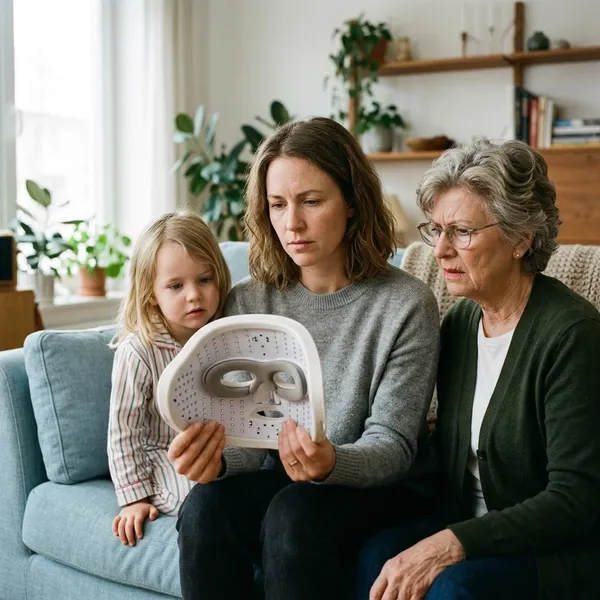
A small change in distance can make a close-range light source feel very different. Rigid masks, recessed eye areas, and well-shaped openings may reduce stray light better than a flexible mask that presses close to the orbital area.
Fit also varies by face shape. Someone with deeper-set eyes may get less direct light than someone whose cheekbones or nose bridge cause the mask to sit at an angle. This is why a mask can get good reviews and still be a poor match for your face.
Treatment duration
Longer sessions mean more exposure. If the instructions recommend a short session, doubling the time is not a sensible shortcut for better skin results.
This matters most for people who plan to use a mask several times a week. An occasional, correctly timed session is a different situation from using a bright mask every night while casually adding extra minutes. A timer is a simple way to keep the routine controlled.
Mask fit and eye coverage
Good eye coverage is one of the most practical safety checks. Before turning the mask on, put it in place and look for obvious gaps, tilted positioning, or light paths that would point directly into the eyes.
- Built-in shields should sit where the brand intends, not above or below the eyes.
- Separate goggles should fit snugly without being painfully tight.
- The mask should stay stable when you recline or adjust the straps.
Who should be extra careful with LED masks?
Extra caution is sensible if your eyes are already vulnerable, healing, or unusually reactive to light. For a healthy user trying a short red-light session, the main job is to follow the manual; for someone with eye disease, recent surgery, migraines, or photosensitizing medication, the decision should be more careful.
People with eye conditions
If you have an eye condition, do not judge safety only by whether the mask feels comfortable on the first try. Dry eye, retinal concerns, glaucoma-related issues, chronic irritation, or a history of strong light sensitivity can change what is reasonable for you.
People recovering from eye procedures
Recovery periods are not the time to experiment with bright devices near the face. After LASIK, cataract surgery, eyelid surgery, injections, or other eye-area procedures, the concern may be light exposure, dryness, pressure from the mask, or all three.
Waiting for clearance is usually the better choice. Skincare timing can be adjusted; healing eyes deserve less guesswork.
People with light sensitivity
Light-sensitive users should be cautious even with masks marketed for home beauty use. If headlights, sunlight, bright screens, or clinic lights already trigger pain, migraine symptoms, tearing, or eye strain, a close LED mask may trigger the same kind of response.
For this group, a "short test" is only sensible if the instructions allow it, the recommended protection is used, and symptoms are taken seriously. If discomfort starts quickly, that is useful information, not a challenge to endure.
People taking photosensitizing medication
Some medications and topical treatments can make the skin or eyes more reactive to light. This can include certain acne treatments, antibiotics, diuretics, antifungals, anti-inflammatory medicines, and other prescriptions, but the risk depends on the specific drug and person.
- Ask a pharmacist or prescriber if your medication increases light sensitivity.
- Check topical products used near the eyes, especially strong actives.
- Be more cautious with frequent use than with a single trial session.
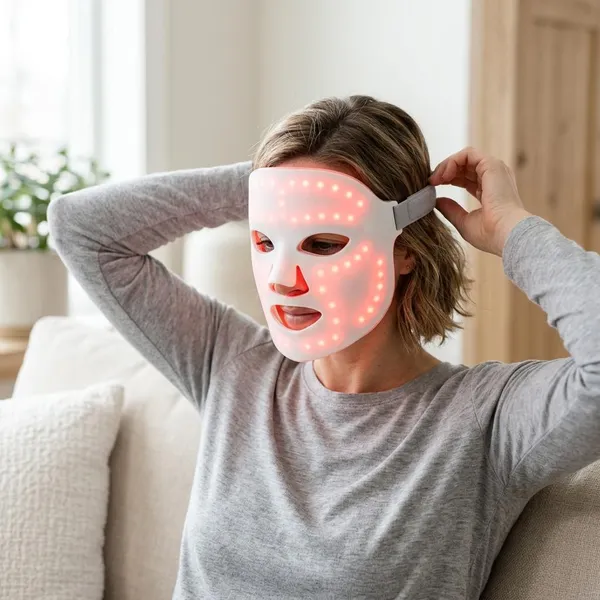
How to use an LED mask safely around your eyes
Use the mask like a controlled device, not a background beauty gadget. The safest routine is to check the eye instructions first, fit the mask before switching it on, use the protection the brand recommends, and stop when the session time is over.
Read the eye safety instructions first
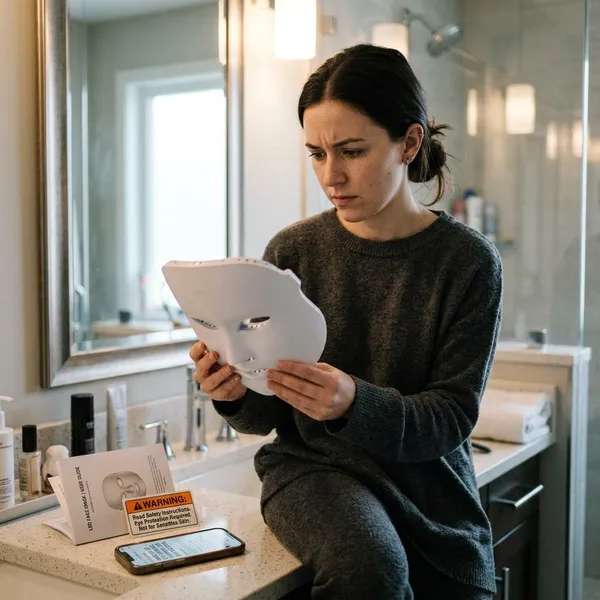
The manual should tell you whether to close your eyes, use goggles, rely on built-in shields, avoid certain modes, or ask a doctor first. If the eye guidance is vague, that is a reason to slow down rather than improvise.
Position the mask correctly
Fit the mask before the lights are on. Use a mirror, align the eye openings or shields, and make sure the mask is not tilted toward one eye.
This is especially important if you plan to lie down during treatment. A mask that feels fine while sitting upright may shift when you recline, changing where the light leaks.
Use the recommended eye protection
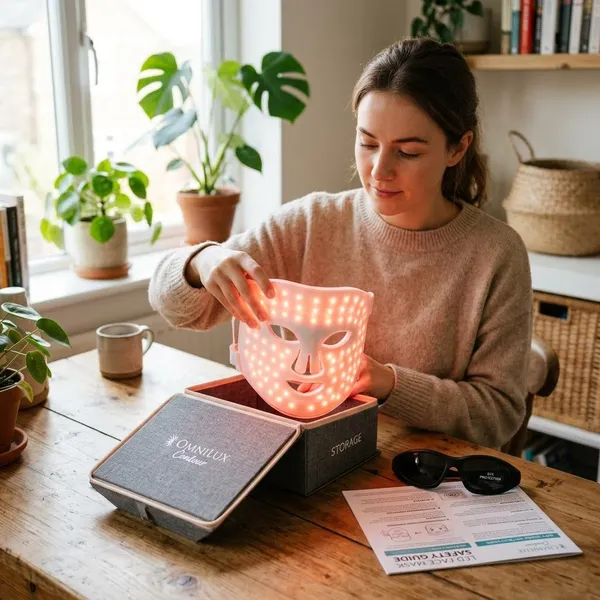
Use the goggles, inserts, shields, or closed-eye instructions that belong to your device. Random sunglasses or makeshift covers may not block the right angles or fit safely under the mask.
- Do not skip protection because the session is "only a few minutes."
- Do not remove goggles halfway through to make the mask more comfortable.
- Do not use a mode near the eyes if the brand specifically warns against it.
Keep sessions within the recommended time
Stop at the recommended time, even if the mask feels gentle. Overuse is one of the easiest mistakes to make because a few extra minutes can become a regular habit.
Conclusion
An LED mask is not automatically unsafe for your eyes, but it is also not something to use casually with light shining wherever it lands. If the mask fits well, the eye protection is used as intended, and the sessions stay within the recommended limit, many low-risk users can keep exposure controlled; if you have eye issues, recent procedures, strong light sensitivity, or photosensitizing medication, get professional advice before making it part of your routine.