Sapphire ice cooling can reduce IPL burn risk by keeping the skin surface cooler before and during each flash, but it does not make home IPL automatically safe. The first things to check are still skin tone compatibility, recent tanning or irritation, and the intensity level you plan to use. Cooling helps most when the device is already suitable for your skin and you use it slowly, without overlapping flashes.
How does sapphire ice cooling help prevent IPL burns?
Sapphire ice cooling helps by reducing the heat felt at the outer skin layer while IPL light is being delivered. That matters because IPL needs heat to target pigment in the hair, but too much heat at the surface can cause strong stinging, lingering redness, or burns.
Cools the skin before each flash
When the sapphire window touches the skin, it starts cooling the surface before the pulse is fired. This short pre-cooling step can make the first flash feel less sharp, especially if you are treating an area that usually reacts quickly, such as the upper lip or bikini line.
Reduces surface heat during treatment
During the flash, the cooled window keeps drawing some warmth away from the surface. The IPL energy still passes through to target pigment in the hair, but the skin surface is less likely to take the full heat sensation at once.
This is where cooling is most useful for comfort. A normal flash may still feel like a quick snap, but it should not feel like a deep burning sensation. If it does, the setting, skin condition, or treatment area needs to be reassessed.
Helps limit heat buildup between flashes
Heat can build up when several flashes are used close together, even if each individual pulse feels tolerable. Sapphire cooling helps the surface release some of that warmth between flashes, which is useful on larger areas such as legs where a session takes longer.
- Low-risk use: slow rows on untanned lower legs with a compatible setting.
- Higher-risk use: quick flashes around curves, recent sun exposure, or going back over "missed" spots.
Makes IPL more comfortable on sensitive areas
Sensitive areas often benefit the most because discomfort can make people rush, tilt the device, or pull away mid-flash. A cooler window can help you keep the device flat and move more calmly, which is safer than trying to finish quickly because the treatment feels too hot.
Cooling does not make delicate areas risk-free. If a device manual limits facial, bikini, or underarm use, follow that limit even if the cooling feels pleasant.
Why can IPL cause skin burns?
IPL burns usually happen when too much light energy is absorbed by the skin surface or when the same patch receives too much heat in a short time. Cooling can reduce surface heat, but it cannot fix an unsafe match between the device and your skin.
Before any session, the practical order is: check whether your skin and hair are suitable, make sure the skin is calm and not tanned, choose the recommended intensity, then focus on careful placement. Skipping the first two checks is where many home IPL mistakes begin.
Intensity is too high for the skin
A higher level is not automatically a better level. If the intensity is above what your skin can tolerate, the flash may feel painfully hot and leave redness that lasts longer than expected.
For a beginner, the safer choice is to start at the brand's recommended level for your skin tone and area. For someone restarting after summer or after a long break, treat it like a new start rather than returning immediately to the highest setting you used before.
Flashes overlap on the same area
Overlapping flashes can create a hot spot because one small area receives repeated pulses before it has cooled down. This often happens around ankles, knees, underarms, and bikini edges where it is harder to keep a neat pattern.
Skin tone is not suitable for the device
IPL targets pigment, so skin with more surface melanin may absorb more energy at the top layer. If your skin tone is outside the device's approved range, sapphire cooling should not be treated as a workaround.
Use the brand's skin tone chart or sensor for each area, not just once for your whole body. Forearms after sun exposure can be darker than covered legs, and that difference can change the safety judgment.
Skin is tanned, irritated, or sunburned
Tanned or sunburned skin is more reactive because there is more pigment or inflammation near the surface. Irritated skin from shaving rash, exfoliating acids, retinoids, peeling, or friction may also handle IPL poorly.
- Wait if skin feels tender, hot, itchy, or raw.
- Avoid IPL over peeling, broken skin, dark moles, or tattoos.
- Be extra cautious after strong sun exposure or self-tanner.
The device is used incorrectly
Incorrect use can turn a suitable device into a risky one. Common mistakes include holding the window at an angle, flashing too fast, skipping the patch test, using the device on restricted areas, or treating skin that is not clean and dry.
If the device does not sit flat, stop and reposition instead of forcing the flash. Good contact matters for both cooling and even light delivery.
How does sapphire ice cooling work?
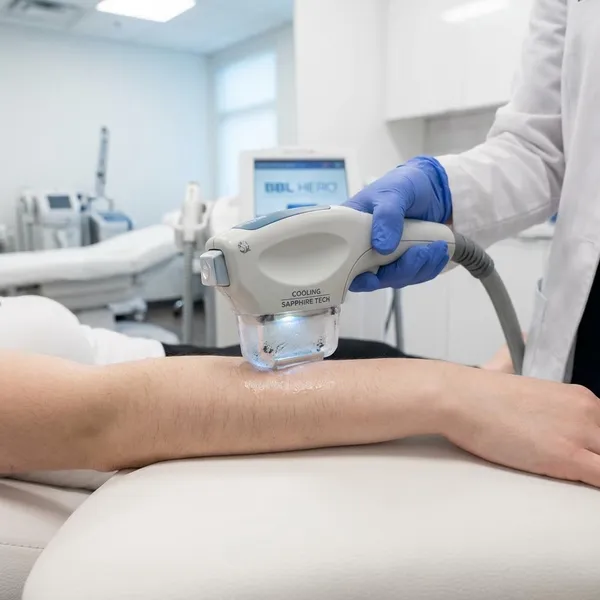
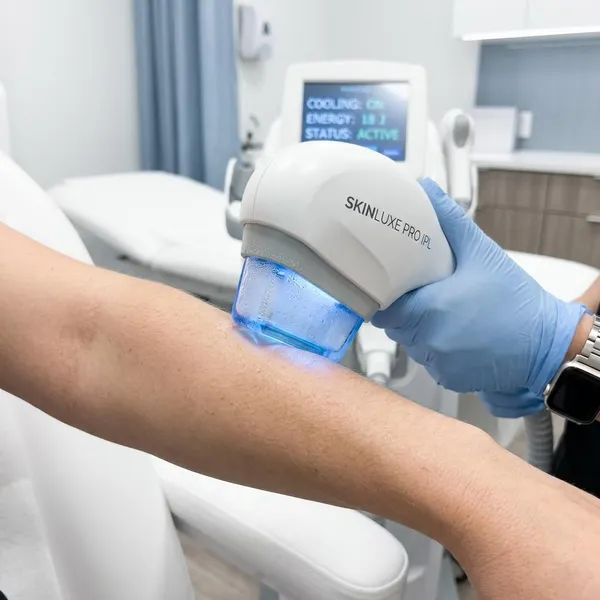
Sapphire ice cooling is a contact-cooling system. The treatment window is made with a sapphire surface that stays cool against the skin while still allowing IPL light to pass through.
The cooling part and the hair-removal part do different jobs. The sapphire window manages surface comfort; the IPL flash targets pigment in the hair. You need both proper contact and proper settings for the treatment to make sense.
The sapphire window stays against the skin
The cooling effect only works well when the window is flat against the skin. On easy areas such as the lower legs, that is usually simple. On curved areas like knees or underarms, you may need to stretch the skin slightly or change your angle so the whole window touches evenly.
Contact cooling draws heat from the surface
Heat naturally moves from the warmer skin surface into the cooler sapphire window. This can lower the heat you feel at the point of contact without blocking the IPL pulse from entering the skin.
Cooling continues as IPL energy is delivered
On sapphire-cooled IPL devices, the window is designed to stay cool while the pulse is delivered. That timing is important because the skin is supported at the same moment heat is being created.
- During a short upper-lip session: cooling can reduce the sudden sting of each flash.
- During a longer leg session: cooling can help prevent the area from feeling hotter and hotter as you continue.
The IPL light still targets pigment in the hair
Cooling does not mean the treatment is weaker. The IPL light still aims at melanin in the hair shaft and follicle area, while the cooled window helps the skin surface stay calmer.
Results still depend on the usual IPL factors: hair color, skin tone, treatment timing, device power, and consistency. Very light, red, gray, or white hair may respond poorly because there is less pigment for the light to target.
What are the benefits of sapphire cooling?
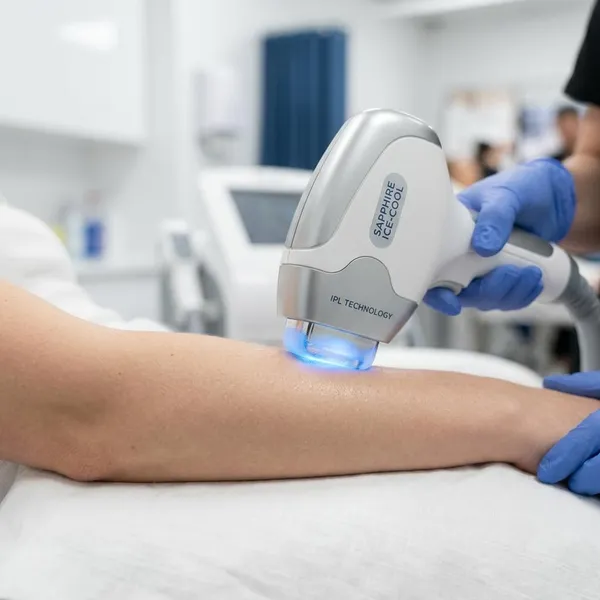
The biggest benefit is not that you can use IPL more aggressively. It is that a compatible treatment can feel calmer, which makes it easier to use the device carefully and consistently.
That matters for home IPL because results usually come from repeated sessions, not one intense treatment. A comfortable routine is often safer and more realistic than pushing the highest setting once and irritating the skin.
Less heat on the skin surface
Sapphire cooling lowers the hot feeling at the contact point. Mild warmth or brief pinkness can still happen, but the goal is to avoid the kind of heat that lingers, stings sharply, or makes you want to pull the device away.
Less stinging during flashes
Many users find the flash feels less prickly with a cooled window. This can be especially helpful when moving from an easy area, like the calves, to a more sensitive area, like underarms.
Comfort should still be used as feedback. If a flash feels suddenly much stronger than the others, check whether you overlapped, hit a darker spot, used poor contact, or chose too high a level.
Better comfort on sensitive areas
On sensitive zones, cooling can make the difference between careful treatment and rushed treatment. That is valuable because rushing around curves is one of the easiest ways to overlap flashes or lose full contact.
- Upper lip: use only if the device allows facial treatment and avoid lips, nostrils, and irritated skin.
- Bikini line: keep to the areas approved by the device manual and use a cautious setting.
- Underarms: stretch the skin gently so the window sits flat.
Easier repeated treatments
IPL works best when you can repeat sessions as directed without dreading the next one. Sapphire cooling can make that routine easier to maintain, especially for people who quit previous devices because they felt too hot.
For long-term use, consistency beats intensity. A moderate setting used on schedule is usually a better plan than an uncomfortable setting that makes you skip sessions or irritate your skin.
How to use sapphire-cooled IPL safely
Use sapphire cooling as one layer of protection, not the whole safety plan. The best routine is to rule out obvious risks first, then use a steady technique that avoids repeated heat on the same spot.
Check skin and hair compatibility
Start with the device's skin tone and hair color guidance. Home IPL is usually best suited to darker hair with a compatible skin tone, while very light hair colors often respond less well.
Check each treatment area separately. A person may be fine treating untanned legs in winter but need to pause on sun-exposed arms in summer.
Patch test before full treatment
Do a patch test on a small area before treating a full section, especially with a new device, a new body area, or after recent tanning or skincare changes. Wait the time recommended by the manufacturer before deciding the setting is acceptable.
The patch test is looking for more than pain during the flash. Watch for lingering redness, swelling, tenderness, unusual darkening, or a burning feeling afterward.
Use the recommended intensity
Choose the recommended starting level rather than jumping to the maximum. If your skin stays calm after patch testing and early sessions, adjust gradually within the device's guidance.
- Too low: treatment may feel easy but progress may be limited.
- Appropriate: brief warmth or snap, with skin settling normally.
- Too high: sharp pain, strong heat, or redness that keeps building.
Keep the cooling window flat on the skin
Flat contact lets the sapphire surface cool evenly and helps the flash land where intended. If the device is tilted, the cooling may be uneven and the light may not distribute properly.
On awkward areas, slow down. It is better to reposition twice than to fire a flash when only part of the window is touching the skin.
Avoid repeated flashes on one spot
Do not flash the same patch again just because you are unsure whether you covered it. Extra flashes add heat faster than they add results.
Follow the treatment schedule
Follow the schedule from the device manufacturer, even if cooling makes treatment feel easy. Using IPL more often than directed may irritate the skin without improving hair reduction.
Conclusion
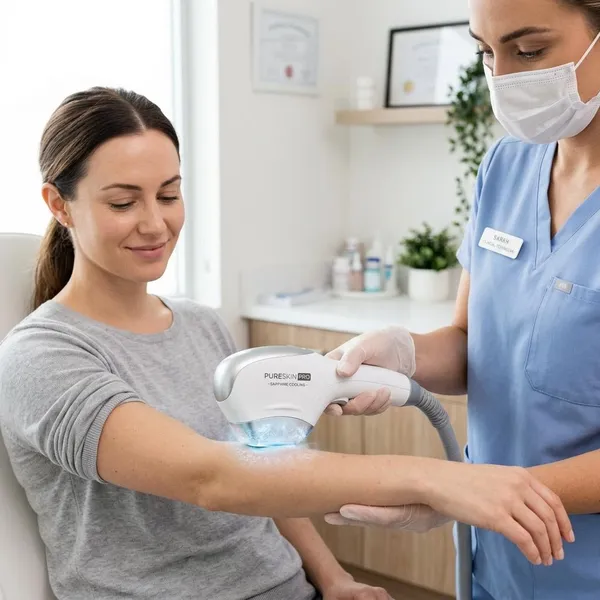
Sapphire cooling is useful because it makes the skin surface less likely to overheat, but the real safety decision still starts with whether your skin is suitable, calm, and treated at the right intensity. If you are tanned, irritated, outside the approved skin tone range, or tempted to repeat flashes on one spot, wait or lower the risk first; a cooled window works best as extra protection for careful use, not as a fix for unsafe treatment.