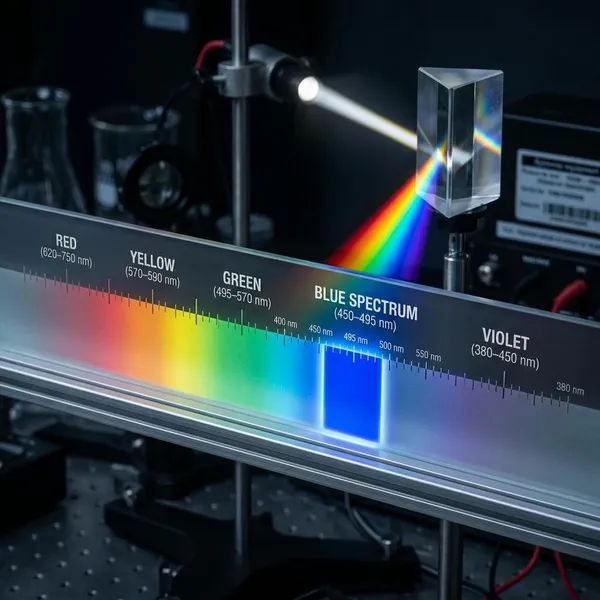
Far-red light usually means wavelengths around 700–800 nm, with 730 nm being the number you will see most often in grow-light specs. For plant lighting, the useful question is not just "what range is it?" but whether the light is true far-red output, how close it is to 730 nm, and how it works alongside normal red light.
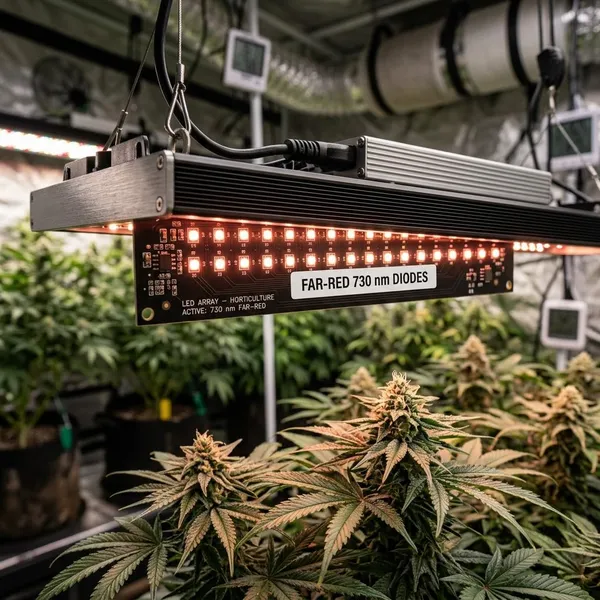
What is the wavelength of far-red light?
Far-red is the spectral region just beyond visible red. In broad terms, it is usually described as about 700–800 nm. In grow-light use, the most useful part of that range is often narrower, because plants do not respond to every far-red wavelength in the same practical way.
Far-red is generally around 700–800 nm
A practical broad definition of far-red light is 700–800 nm. This places it just after the red end of the visible spectrum and before longer infrared wavelengths.
The exact upper boundary can vary by source, so it is better to treat 700–800 nm as a useful working range rather than a hard universal rule. For everyday grow-light decisions, that range is accurate enough to separate far-red from standard red and from infrared.
Horticulture often focuses on 700–750 nm
For plant lighting, 700–750 nm is usually the more relevant slice. That is where many far-red horticultural discussions, LEDs, and phytochrome-related responses are centered.
- Shopping for a grow light: look for a named far-red wavelength, not just "full spectrum."
- Testing plant shape: watch internode length, leaf expansion, and flowering response instead of judging by brightness.
- Trying to keep plants compact: be cautious with added far-red, especially if the crop already stretches easily.
730 nm is a common far-red LED wavelength
730 nm is one of the most common far-red LED targets because it is close to the far-red response area used by plant phytochrome systems. It is not the only far-red wavelength, but it has become the most recognizable reference point in horticultural lighting.
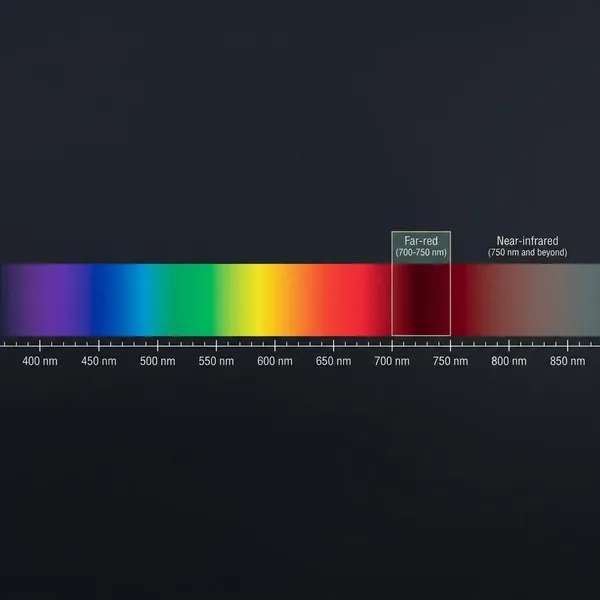
Where does far-red light sit in the spectrum?
Far-red sits between visible red light and infrared. That middle position is the reason it causes so much confusion: it is close enough to red that people may expect to see it clearly, but far enough toward infrared that it often looks faint.
It comes after visible red light
Visible red is usually shorter than far-red, with common horticultural deep-red LEDs often around 650–660 nm. Far-red begins roughly beyond 700 nm, so a 660 nm red diode and a 730 nm far-red diode should not be treated as the same thing.
It sits near the edge of human vision
Far-red can appear as a very dim red glow, or it may look almost invisible depending on the wavelength and your eyes. That does not automatically mean the LED is weak or broken.
It borders longer infrared wavelengths
Far-red is next to infrared, but it is not the same label in practical grow-light use. If a product is marketed only as "infrared," check the wavelength before assuming it will behave like horticultural far-red.
Why is 730 nm common in grow lights?
730 nm is common because it is both biologically useful and easy for manufacturers to specify. It gives growers a clearer target than a broad claim like "better flowering spectrum" or "plant-boosting red light."
It closely matches the phytochrome far-red response
Plants use phytochrome systems to interpret red and far-red light. A stronger far-red signal can suggest shade or nearby plant competition, which may change stem length, leaf position, flowering behavior, or overall plant shape.
It helps adjust the red-to-far-red balance
The red-to-far-red balance is often more important than far-red by itself. Red light and far-red light work together as a signal, so adding 730 nm without considering the rest of the spectrum can lead to results you did not want.
- Check red output first: especially whether the fixture has strong deep red around 660 nm.
- Look for control: a separate far-red channel is easier to test than far-red that is always mixed in.
- Match the goal: added far-red may help with stretch or canopy effects, but it may be unwanted if you need compact growth.
It offers a practical far-red LED target
730 nm is useful because it gives everyone a shared reference point. A grower, supplier, and lighting chart can all discuss the same far-red target instead of using vague spectrum language.
For a small indoor grow, that usually means choosing a fixture with clear wavelength information. For a commercial or repeatable crop setup, it means trialing far-red carefully and recording plant response rather than assuming the same setting works everywhere.
Far-red light vs red light and infrared
Red light, far-red light, and infrared are close neighbors, but they are not interchangeable. The simplest way to separate them is by wavelength, visibility, and typical use.
| Light type | Typical wavelength area | What to watch for |
|---|---|---|
| Red light | Roughly below 700 nm | Often bright to the eye and important in standard grow-light output |
| Far-red light | About 700–800 nm, often 730 nm in grow lights | Looks dim but can strongly affect plant signaling |
| Infrared | Longer than far-red | Not automatically useful as a horticultural far-red substitute |
Red light uses shorter wavelengths
Red light uses shorter wavelengths than far-red. In horticulture, deep red around 650–660 nm is common because it is efficient and strongly visible compared with far-red.
If a fixture only lists red LEDs, do not assume it includes far-red. Red may help drive growth, while far-red is more often used to adjust plant signaling and shape.
Far-red extends beyond conventional red
Far-red continues past conventional red into a range that humans see poorly. That weak visibility is exactly why it is easy to underestimate.
In practice, far-red is most useful when you have a reason to use it: changing plant architecture, testing end-of-day lighting, or adjusting red-to-far-red balance. It is less useful as a random add-on when you have no plan for timing, intensity, or crop response.
Infrared continues at longer wavelengths
Infrared comes after far-red at longer wavelengths and is generally invisible to humans. It is used in many technologies that have nothing to do with plant signaling, such as sensors, remote controls, and thermal applications.
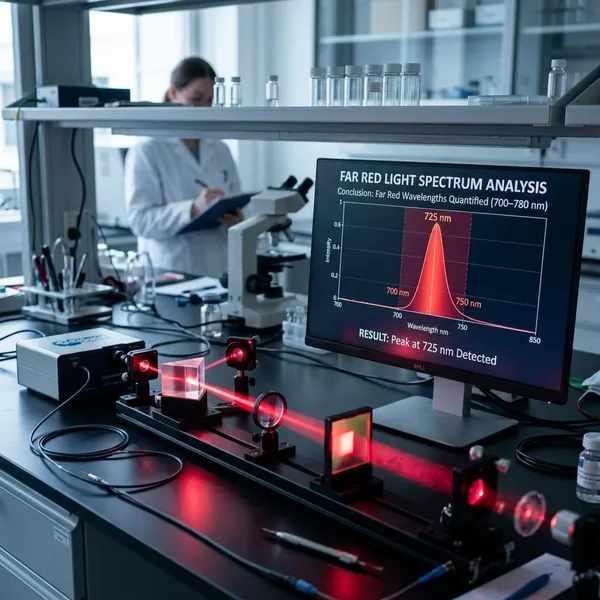
Conclusion
The wavelength of far-red light is best understood as roughly 700–800 nm, with 730 nm being the practical number to check on grow-light specs. If you are choosing equipment, start with the actual listed wavelength, then consider whether the far-red is controllable and whether your crop benefits from more stretch, shade signaling, or timing effects. A dim-looking far-red diode can still matter, but it should be used with a clear purpose rather than treated as a general upgrade.