If you are comparing red light therapy near-infrared wavelengths 800-850 nm, the main point is simple: this range is usually chosen when the target is deeper than the skin surface, such as muscles or joints. It is not automatically "better" than 630-660 nm red light; it is better suited to different goals. Before choosing a device, look at the goal, the treatment area, and how much usable light the device can actually deliver.
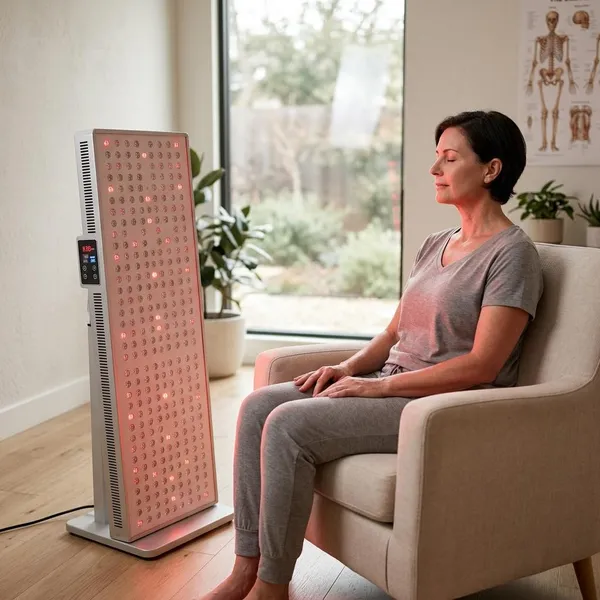
What are 800–850 nm wavelengths in red light therapy?
Wavelengths from 800 to 850 nm sit just beyond visible red light. You will often see them listed as 810 nm, 830 nm, or 850 nm on red light therapy panels, wraps, and handheld devices. For most home users, the important distinction is not the tiny gap between those numbers, but whether the device matches the area and purpose you want to treat.
They fall in the near-infrared range
800-850 nm wavelengths belong to the near-infrared range, not the visible red range. The phrase "red light therapy" is often used loosely, so a product may be marketed as a red light device even when it includes both red LEDs and near-infrared LEDs.
That matters when comparing devices. If your goal is mainly skin appearance, a red wavelength around 630-660 nm may be more relevant. If your goal is a larger muscle group or a joint area, near-infrared in the 800-850 nm range is usually the more sensible place to look.
They are mostly invisible to the eye
Near-infrared light at this range is mostly invisible. A device can look dim and still be producing near-infrared output, so brightness is a poor way to judge strength.
- Do not judge by glow: visible brightness mostly tells you what your eyes can detect.
- Check stated output: look for irradiance measured at a real treatment distance.
- Use eye caution: follow the device instructions, especially around the face and eyes.
They reach deeper than visible red light
In general, 800-850 nm near-infrared light is used because it can reach deeper than visible red light. That does not mean it travels through the body without limits or that it will work the same on every area. Tissue thickness, body position, device power, and distance all affect what actually reaches the target.
How does 800–850 nm near-infrared light work?
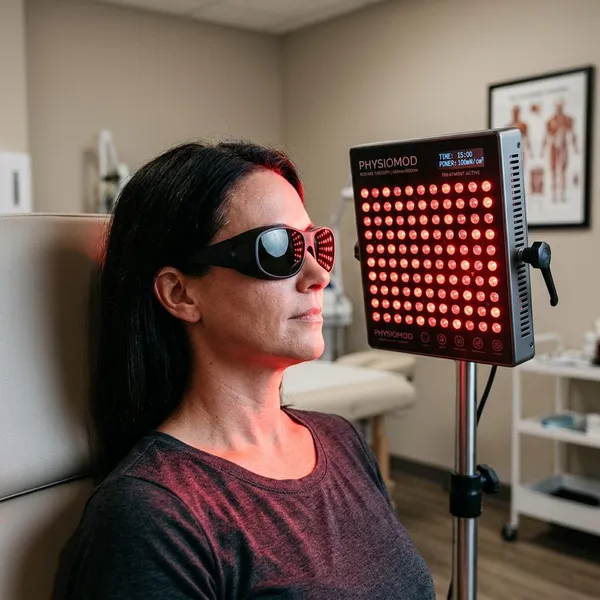
Near-infrared red light therapy is usually discussed through photobiomodulation: light reaches tissue, part of that energy is absorbed, and cells may respond through normal biological signaling. It should not be treated like a heat lamp or a guaranteed fix. The useful question is whether enough appropriate light reaches the right area often enough to fit your goal.
Tissue absorbs the light energy
Skin, blood, water, and deeper tissues all interact with light differently. Near-infrared wavelengths in the 800-850 nm range are valued because more of the light can pass beyond the surface compared with visible red light, but the delivered energy still drops with distance and poor positioning.
A flat panel aimed at the back is easier to position evenly than the same panel angled awkwardly toward a shoulder. A wrap may suit a knee better than a rigid lamp. These practical details can make the difference between a routine you repeat and one you abandon after a few sessions.
Cells respond through photobiomodulation
Photobiomodulation does not need to feel hot to be doing anything. Some users expect warmth and assume "no heat" means "no effect," but red and near-infrared devices are not meant to work mainly by heating the tissue.
The safer expectation is gradual support, not an instant dramatic change. If you have sharp pain, swelling, a new injury, or a medical condition, it is better to treat the device as a wellness tool and get proper medical advice rather than trying to self-manage the issue with light exposure alone.
Treatment effects depend on the delivered dose
Dose is the amount of light energy delivered to the treatment area over time. It depends on irradiance, distance, session length, coverage, and frequency. This is why two 850 nm devices can feel very different in real use.
- Start with the goal: skin, muscle recovery, joint comfort, or mixed use.
- Match the device size: small spot treatment needs less coverage than legs or back.
- Use the stated distance: do not guess from brightness or marketing photos.
- Keep sessions trackable: changing time, distance, and area every day makes results harder to judge.
What is 800–850 nm near-infrared light used for?
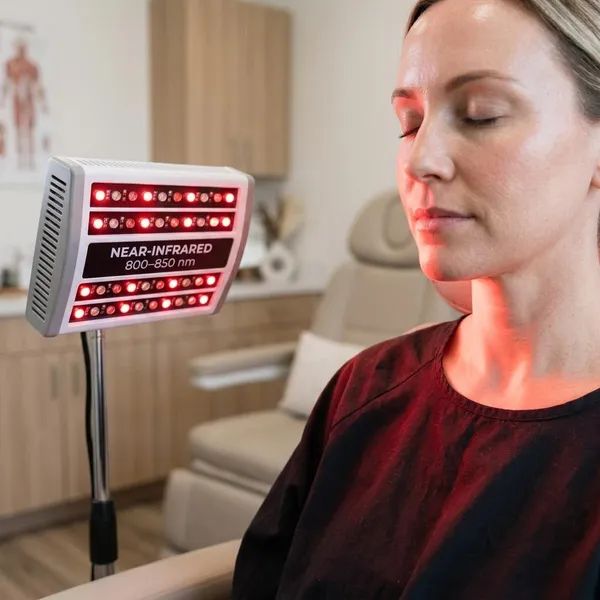
This wavelength range is most often chosen for routines where surface-only light is not the main aim. Common home uses include post-workout muscle routines, joint comfort routines, and targeted sessions for areas below the skin surface. It is best viewed as supportive, not as a replacement for diagnosis, rehab, or treatment when something is injured or worsening.
Muscle recovery support
For muscle recovery support, near-infrared makes the most sense when the treatment area is large enough to justify deeper-reaching light and decent coverage. Someone treating calves after occasional runs can manage with a smaller setup; someone using it regularly after heavy leg training will usually want a panel that covers more area without constant repositioning.
Joint comfort support
Joint comfort routines are often more about positioning than power on paper. Knees, elbows, wrists, and shoulders are awkward shapes, so a device that sits comfortably in place may be more useful than a stronger panel you struggle to aim correctly.
- Knee or elbow: a wrap or small targeted panel can be easier to keep aligned.
- Shoulder: check whether you can reach the area without twisting or holding the device awkwardly.
- Daily routine: choose the setup you can repeat calmly, not the one that looks best in specs only.
Deeper tissue-focused treatment
When the goal is deeper tissue-focused treatment, 800-850 nm is usually more relevant than visible red light alone. That is why many people choose a near-infrared-only device or a combined red and near-infrared panel rather than a red-only beauty-style device.
For mixed household use, a combination device can be the more practical option. One person may care about surface-level skin exposure, while another wants a post-exercise routine for the back or legs. In that situation, flexibility can matter more than choosing only 810, only 830, or only 850 nm.
What matters besides near-infrared wavelength?
Wavelength is only the first filter. Once you know you want near-infrared, the next checks are more practical: output at distance, treatment area, session length, and whether the device fits into your normal routine. A technically impressive device that is annoying to set up often becomes a device you stop using.
| First check | Why it matters in real use |
|---|---|
| Goal | Skin-focused, muscle-focused, and joint-focused routines may need different setups. |
| Coverage | A small beam can be fine for a wrist but inefficient for the back or thighs. |
| Output at distance | Claims measured too close to the LEDs may not reflect normal use. |
| Routine fit | The easiest device to use consistently may beat the "best" wavelength on paper. |
Irradiance
Irradiance tells you how much light power reaches a given area, usually at a stated distance. The distance is essential. A high number measured extremely close to the LEDs is less helpful than a realistic number measured where you would actually sit or stand.
If a brand gives wavelength but no usable output information, treat the claim as incomplete. You do not need perfect lab data to make a purchase, but you do need enough information to compare devices beyond "850 nm sounds deeper."
Treatment dose
Treatment dose combines irradiance and time. Too little exposure may be underwhelming; simply stretching sessions much longer is not always the smarter answer. Photobiomodulation is generally discussed as dose-sensitive, so a steady, moderate routine usually makes more sense than occasional extreme sessions.
Treatment time
Session length should be realistic for the area. Five minutes with a small handheld may feel easy on a wrist but becomes inconvenient if you need to move it across both legs, the lower back, and shoulders.
Distance and coverage
Distance changes how much light reaches the body, while coverage changes how evenly the area is treated. Moving farther away usually reduces intensity; standing too close to a small panel may create a narrow treatment zone.
- Small area: handhelds or wraps can be practical.
- Large area: a bigger panel saves repositioning time.
- Curved area: comfort and angle may matter more than maximum output.
Usage frequency
Consistency matters more than occasional overdoing. Follow the manufacturer's timing and frequency guidance, then keep the routine simple enough to repeat. If you are using near-infrared for general wellness support, it is better to track a steady habit than to keep changing distance, time, and body area every session.
Conclusion
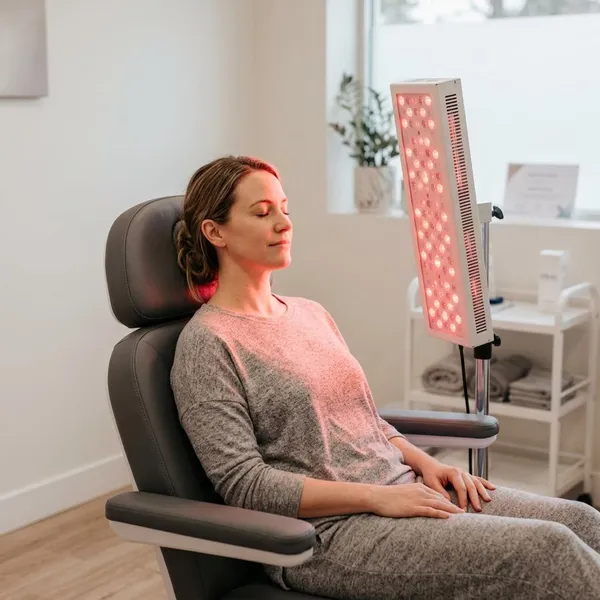
800-850 nm near-infrared light is a sensible choice when your goal is deeper tissue-focused support, especially for muscles and joints, but it should not be chosen by wavelength alone. Start with the body area and purpose, then check output at a realistic distance, coverage, session practicality, and whether red plus near-infrared would serve you better. The best device is usually the one that fits your actual routine without forcing you to guess, overextend sessions, or chase tiny wavelength differences.