A home IPL device is usually a poor bet for spider veins on the legs, especially if the veins are blue, purple, clustered, or easy to see when you stand. It may slightly fade tiny surface redness in a low-risk case, but most consumer IPL tools are made for hair reduction rather than vein treatment. The first thing to check is not the price of the device, but whether your marks are actually suitable for light treatment at home.
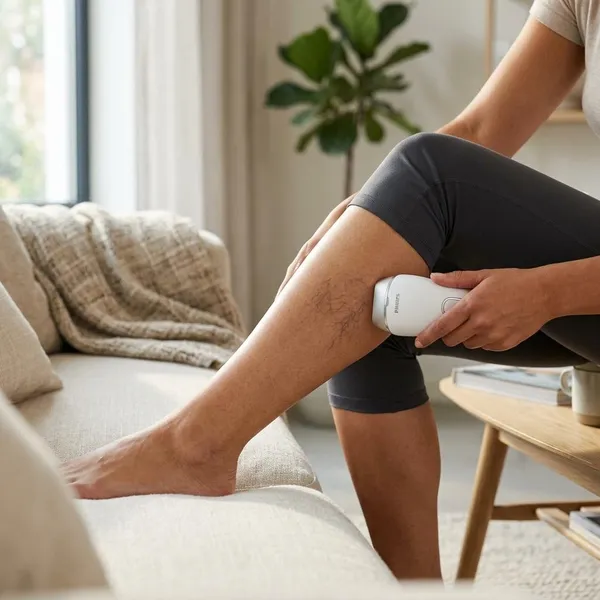
Can a Home IPL Device Treat Spider Veins on Legs?
For most leg spider veins, home IPL is not a reliable removal method. The realistic outcome is usually either no visible change or a small softening of very fine red surface vessels. If you want clear cosmetic improvement across a noticeable area, professional treatment is usually the more sensible route.
Home IPL is usually not designed for spider vein removal
Most home IPL devices are built for hair reduction. They target contrast between dark hair and surrounding skin, not the blood inside small vessels. If a device manual only talks about hair removal and does not mention spider veins, broken capillaries, thread veins, or vascular concerns, assume it was not designed for leg veins.
Do not rely on beauty-site claims alone. The safer check is the manufacturer's instructions, especially the "do not use on" section. If visible veins, unusual skin marks, irritated skin, or vascular lesions are listed as exclusions, that should stop the experiment.
Some very small surface veins may show limited fading
Limited fading is possible when the marks are tiny, flat, red or pink, and very close to the surface. Even then, the change is usually subtle: less contrast rather than full clearance.
- More plausible: one or two fine red capillaries on fair, untanned skin.
- Less promising: blue or purple vessels, ankle clusters, branching patterns, or veins visible from a standing distance.
- Easy mistake: judging results after temporary post-treatment redness instead of comparing photos in the same light.
Professional vein treatments usually provide more predictable results
Professional care is more predictable because the treatment is chosen for the vessel, not guessed from a consumer device. A clinic may use sclerotherapy, vascular laser, or professional IPL depending on the color, size, depth, location, skin tone, and symptoms.
For classic leg spider veins, sclerotherapy is often the option people end up discussing because it treats the vessel directly. That does not mean it is right for everyone, but it is a very different approach from trying to heat a leg vein from the surface with a low-energy hair-removal device.
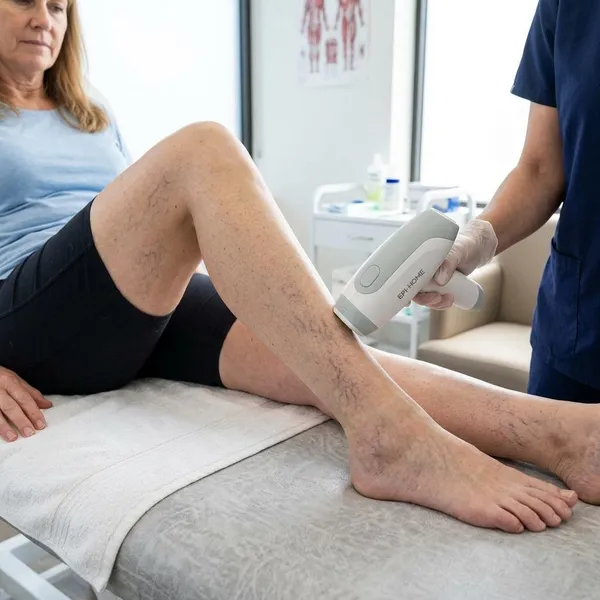
Why Home IPL Results for Spider Veins Are Limited
The main limitation is a mismatch between the tool and the target. Home IPL can be useful for some hair-removal routines because hair follicles respond to repeated light exposure. Spider veins need a much more specific effect on blood vessels, and leg veins are often deeper and more stubborn than facial redness.
Hair removal IPL targets pigment rather than blood vessels
Hair-removal IPL is mainly designed around melanin, the pigment in hair. Spider vein treatment needs to affect hemoglobin in the blood vessel. When the device is not set up for that target, you may feel heat or see temporary redness on the skin without creating a meaningful change in the vein.
This is why a device can work nicely on leg hair but still do almost nothing for spider veins on the same leg. The skin reaction is not proof that the vessel is being treated effectively.
Spider veins require vascular-specific treatment settings
Vein-focused treatments usually involve settings, filters, pulse timing, cooling, and operator judgment chosen for blood vessels. Home devices normally offer a few intensity levels, but that is not the same as a vascular treatment plan.
Before trying anything at home, use this quick decision check:
- Look at the vein type: flat and red is more plausible than raised, blue, purple, or rope-like.
- Read the manual: the device should clearly allow vascular use, not just hair removal.
- Check your skin condition: avoid recently tanned, sunburned, irritated, or self-tanned skin.
- Set a stop point: if photos show no real change after a fair trial, do not keep escalating use.
Lower energy levels limit what consumer devices can achieve
Consumer IPL devices are intentionally lower powered because they are used without professional supervision. That safety margin matters, but it also limits what they can do to established leg veins.
For a mild cosmetic concern, lower energy may still feel acceptable if you are only hoping for a small improvement. For a dense patch you have noticed for years, repeated low-energy sessions are unlikely to suddenly behave like an in-office vein treatment.
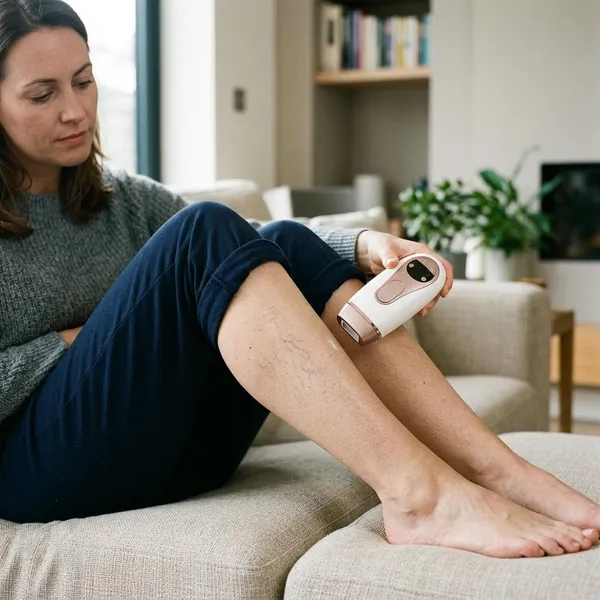
Safety Risks of Using IPL on Leg Veins
The risk is not just that the device may fail. The bigger problem is spending weeks treating the wrong target while irritating the skin. That trade-off matters most if your skin is darker, recently tanned, reactive, or if the veins are painful, raised, or changing.
Burns blistering and skin irritation risks
IPL works by turning light into heat. If too much energy is absorbed by the skin rather than the intended target, irritation, swelling, burns, or blistering can happen. Common home-use mistakes include starting on the highest setting, flashing the same spot repeatedly, treating after sun exposure, or ignoring sharp pain.
Stop using the device if redness lasts, swelling worsens, the area feels hot or tender, or any blistering appears. A brief mild flush can happen with light-based devices, but ongoing discomfort is not something to push through.
Pigmentation risks on darker or tanned skin
Darker skin tones and tanned skin can absorb more broad-spectrum light, which may raise the chance of dark patches, pale marks, or uneven pigment. This is also a seasonal issue: skin that tolerated a device in winter may be a poor candidate after summer sun or self-tanner.
If you are planning to use IPL before a holiday or during warm-weather months, be more conservative, not less. Recent tanning, even if it looks light, can change the safety calculation.
How to Decide If Home IPL Is Worth Trying
Home IPL is only worth considering when the possible benefit is small but acceptable, and the risk is low. If you would only be happy with smooth, vein-free legs, skip the home experiment and ask about professional options. If you have one faint red area and already own a device that clearly allows vascular use, a cautious trial may be reasonable.
Identify your vein type before treatment
Start by separating spider veins from signs that may need medical assessment. Tiny, flat, web-like red or purple lines are more consistent with superficial spider veins. Raised, bulging, rope-like, painful, one-sided, or swelling-related veins should not be treated casually at home.
Check whether the device is designed for vascular use
The device must say more than "IPL" on the box. Look for clear wording in the manual about spider veins, broken capillaries, thread veins, or vascular lesions. If the only supported use is hair removal, using it on leg veins is guesswork.
Also check what the device excludes. A warning against treating visible veins, unusual marks, irritated skin, or recently tanned skin is more important than a customer review claiming it helped.
Set realistic expectations before starting
Decide what result would make the trial worthwhile before you begin. "A little less red in one small spot" is a realistic home goal. "No visible veins on both calves" is not.
- Low-risk trial: fair, untanned skin; tiny flat red vessels; device clearly allows vascular use.
- Poor value trial: widespread leg veins; no vascular setting; you would still want clinic results afterward.
- Stop condition: irritation, pigment change, pain, or no visible photo difference after a reasonable attempt.
When Professional Treatment Makes More Sense
Professional treatment makes more sense when the veins are obvious, the area is large, timing matters, or there are symptoms. It may cost more upfront, but it can save months of testing a device that was never suited to your vein pattern.
When veins are larger or more noticeable
Blue, purple, clustered, or branching veins on the legs are usually poor candidates for home IPL. They may sit deeper or connect to feeder veins that a surface device cannot address well.
If the veins are easy to see in daylight, show more when you stand, or spread around the ankles and calves, professional options are usually more efficient than repeated home sessions.
When faster cosmetic improvement is needed
If you want improvement before a wedding, holiday, beach season, or another specific date, home IPL is too uncertain to rely on. Even a good home response is usually gradual and subtle.
A clinic visit does not guarantee instant results, but it gives you a clearer answer: which treatment fits the vessel, whether your skin tone is suitable, and what kind of timeline is realistic.
When medical assessment is recommended
Book a medical or vein-specialist assessment if the veins are painful, raised, rapidly increasing, mostly on one leg, or linked with swelling, heaviness, skin color changes, warmth, or tenderness. Those signs can point beyond a simple cosmetic concern.

Conclusion
For leg spider veins, a home IPL device is best viewed as a cautious, limited experiment for very small surface redness, not as a dependable removal treatment. Check the vein type first, read the device exclusions carefully, and be especially careful with tanned, darker, irritated, or symptomatic skin. If the veins are noticeable, blue-purple, clustered, painful, or important to improve within a certain timeframe, professional advice is the more practical next step.