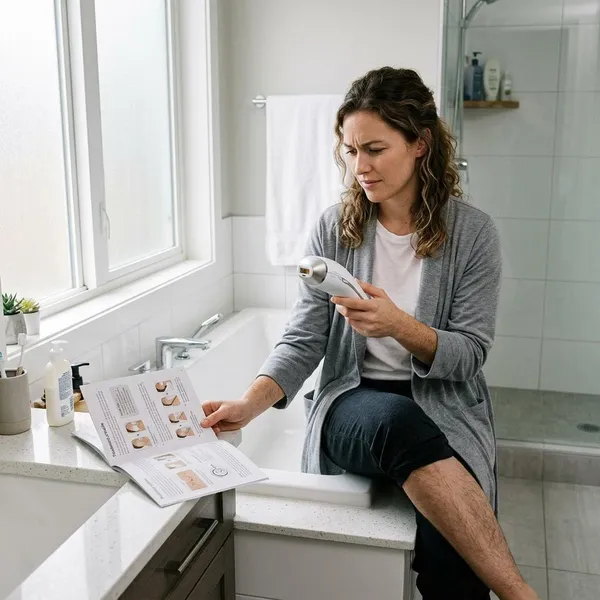
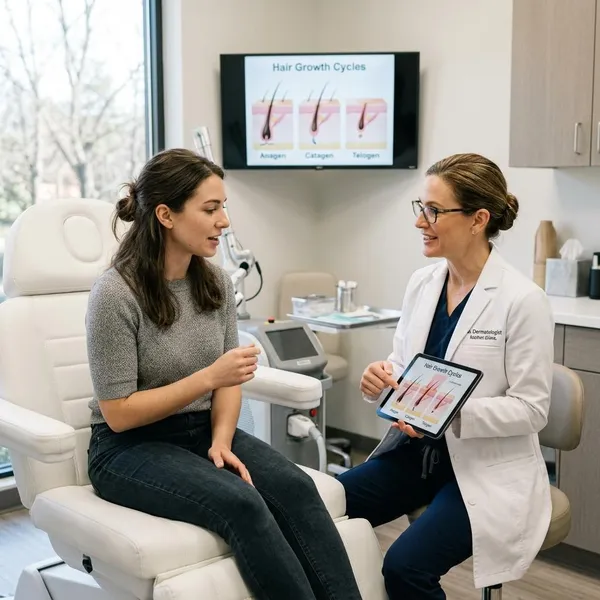
Home laser hair removal can work well if your skin tone, natural hair color, and device are a safe match, but it is better to think of it as hair reduction rather than a one-time fix. It suits people who want less shaving and slower regrowth, not people who expect clinic-level results after a few quick sessions. The first checks should be simple: your skin tone, your natural hair color, the area you want to treat, and any medication or skin sensitivity warnings.
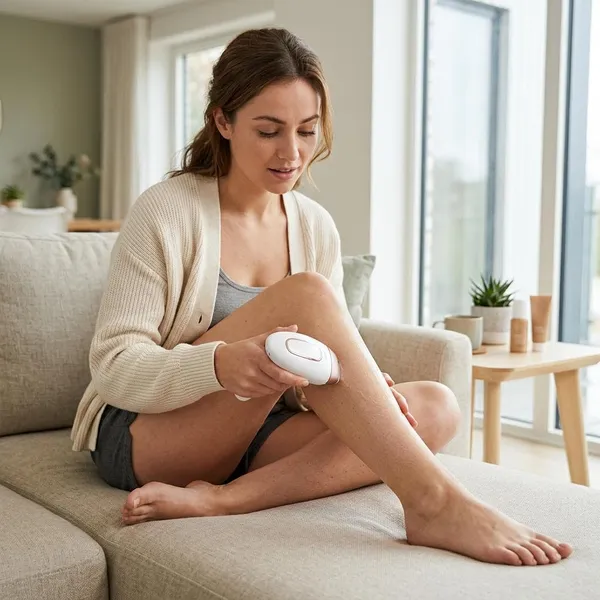
What results can you expect at home?
Most at-home devices are IPL devices rather than true medical lasers, although people often group them together. Both use light to target pigment in the hair follicle, but home devices are designed with lower energy for consumer use. That makes them convenient, but it also means results usually come slowly and need upkeep.
Gradual hair reduction rather than instant removal
Change usually appears over several weeks, not after the first session. Hair grows in cycles, and light-based treatment works best on hairs that are in an active growth phase, so one session can only affect part of the area.
Results that vary by hair, skin, and device
The best match is usually dark natural hair against a lighter approved skin tone, because the device needs pigment in the hair to absorb the light. Black and dark brown hair tend to respond better than blonde, red, gray, or white hair. Dyeing pale hair darker on the surface does not reliably help because the target is the follicle, not just the visible strand.
- Good potential match: dark hair, approved skin tone, and a treatment area listed in the manual.
- Likely weak results: very light, red, gray, or white hair, even with consistent use.
- Higher caution: darker skin tones, recent tanning, frequent hyperpigmentation, or reactive skin.
Device quality matters, but compatibility matters more. A popular device can still be the wrong choice if its chart excludes your skin tone or if your hair color lacks enough pigment.
Repeat treatments and ongoing maintenance
Home treatment is a routine, not a single event. Many brands suggest an initial phase of weekly or every-other-week use, followed by occasional touch-ups, but the exact schedule should come from the device manual.
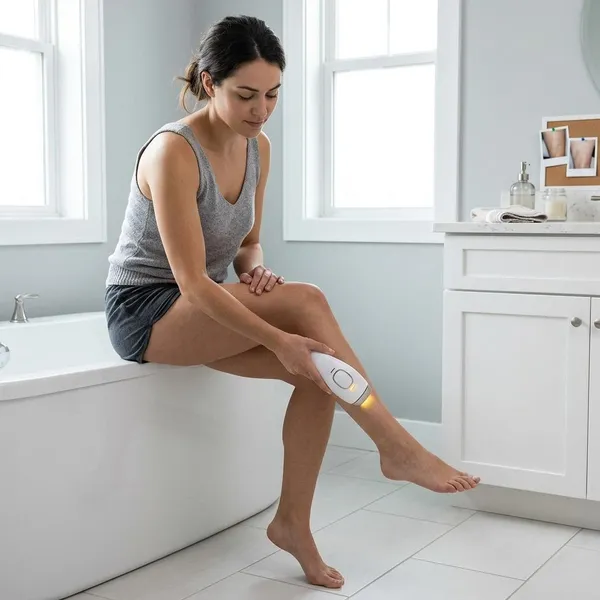
How to check if a home device suits you
The buying decision should start with suitability, not reviews, price, or flash count. If the device does not match your skin, hair, health situation, or treatment area, better features will not make it safe or effective.
Match your skin tone to the device's chart
Compare your untanned skin with the manufacturer's skin tone chart in natural light. Do not use a recent tan as your reference, because tanned skin may absorb more light and react differently.
If your tone is close to the device's cutoff, be conservative. Home devices do not offer the same level of adjustment as professional systems, and "almost approved" is not a reassuring category when burns or discoloration are possible.
Check your natural hair color
Use your natural hair color at the root as the guide. Dark coarse hair is generally the most promising; pale, red, gray, or white hair often gives little reduction because there is not enough pigment for the light to target well.
Mixed hair can give mixed results. For example, darker bikini-line hairs may reduce while finer lighter hairs nearby remain, so success may look like thinning rather than perfectly even smoothness.
Confirm the approved treatment areas
Check the exact body areas approved by the brand. Legs, arms, underarms, chest, and the outer bikini line are commonly allowed on many devices, but that does not mean every device permits every area.
- Face: often limited to below the cheekbones; never assume near-eye use is safe.
- Bikini area: the outer bikini line may be allowed, while the full genital area is often prohibited.
- Pigmented spots: tattoos, dark moles, and very dark marks should usually be avoided unless the manual gives specific safe instructions.
Review health and medication restrictions
Medication and skin history can change the risk. Be especially careful if you use products or medicines that increase photosensitivity, have active eczema or psoriasis in the area, recently had a peel, are treating acne aggressively, or often develop pigmentation after irritation.
How to use home hair removal devices safely
Safe use is not just about avoiding injury; it also makes the results more predictable. The most common mistakes are treating tanned skin, skipping the patch test, flashing over tattoos or dark marks, using the device too often, and ignoring irritation because the session "only felt a little hot."
Treat the device like a light-and-heat treatment, not like an electric razor. If you are new to it, start with a small area and build a routine before attempting long sessions on both legs or several body areas in one day.
Prepare your skin as the manual directs
Most devices are intended for clean, dry, freshly shaved skin. Shaving leaves the root below the skin for the light to target while removing surface hair that could heat up and cause discomfort. Waxing, plucking, or epilating beforehand is usually a poor fit because those methods remove the root the device is trying to affect.
Remove heavy lotions, oils, deodorant, perfume, and self-tanner unless the manual specifically allows them. If the area has had recent sun exposure, wait until your skin is back to its normal tone and condition before treating.
Perform the recommended patch test
A patch test is worth doing even if your skin normally tolerates beauty devices. Treat a small section in the same area you plan to use, at the setting recommended by the manual, then wait the stated time before treating more skin.
Mild temporary redness may be expected for some people. Blistering, strong burning, swelling, or darkening is a stop sign, not something to push through.
Avoid tattoos and prohibited areas
Do not flash over tattoos, dark moles, or areas the manual excludes. Dark pigment can absorb light intensely and may heat faster than the surrounding skin.
Follow the settings and treatment schedule
More intensity and more frequent sessions do not automatically mean better results. They usually mean more irritation risk. Use the setting range and schedule given by the manufacturer, especially during the first few weeks.
- Start methodically: work in small sections so you do not overlap the same spot repeatedly.
- Track sessions: note the date and area treated, especially if you are doing several body parts.
- Adjust cautiously: only increase intensity if the manual allows it and your skin tolerated the last session well.
Follow aftercare instructions
After a session, keep the area simple: gentle cleansing, fragrance-free moisturizer if your skin feels dry, and loose clothing on areas that rub. If the manual says to avoid hot showers, exfoliating acids, retinoids, intense workouts, or sun exposure for a period of time, follow that guidance.
For exposed areas such as the face, arms, or lower legs, sun protection matters. Treated skin can be more reactive, and UV exposure may increase the chance of lingering marks in people prone to pigmentation.
Stop if you develop burns or marked irritation
Stop using the device if you develop blisters, sharp pain, worsening redness, crusting, or skin color changes that do not settle. Pause treatment and seek medical advice if the reaction is strong or gets worse over the next day.
One bad reaction is enough to rethink the plan. Lowering the setting may help in mild cases, but repeated irritation can mean the device, area, timing, skincare routine, or medication situation is not a good match.
Home devices versus professional laser treatment
A home device is usually the privacy-and-convenience option. Professional treatment is usually the stronger-assessment-and-supervision option. Neither is automatically better; the better choice depends on how well you match a home device, how consistent you are, and how much risk or uncertainty is involved.
If your skin and hair are an easy match and your goal is moderate reduction, at-home use can be practical. If you have darker skin, light hair, hormonal facial growth, a history of pigmentation, or a strong need for faster results, professional advice may save time and frustration.
Treatment options for your skin and hair
Professional clinics may have access to different laser systems and settings for different skin tones and hair types. That flexibility can matter when your situation is not the classic light-skin, dark-hair match that many home devices are built around.
Home devices are less flexible. They can still be useful, but they are best chosen when the manual clearly approves your skin tone, hair color, and treatment area.
Session time and overall commitment
Home treatment saves appointment travel, but it shifts the work to you. Small areas such as underarms or upper lip can be manageable; full legs require more patience, more careful coverage, and a longer habit.
Professional sessions require scheduling and travel, yet some people stick with them better because the commitment is external. If you often abandon routines after two weeks, the "convenient" home option may not be the best value.
Upfront and ongoing costs
A home device may cost less than a full clinic course, especially if you use it regularly over time. The hidden cost is buying the wrong device, using it inconsistently, or discovering later that your hair color was unlikely to respond.
| Situation | More practical choice to consider |
|---|---|
| Dark hair, approved skin tone, smaller areas, patient routine | Home device may be enough |
| Darker skin, pigment concerns, or uncertain medication risks | Professional assessment first |
| Large areas and faster reduction expectations | Clinic treatment may feel more efficient |
| Moderate budget and flexible expectations | Home treatment can be a reasonable trial if you are a good match |
Professional assessment and supervision
Professional supervision is most valuable when the decision is not straightforward. A qualified provider can look at your skin tone, hair pattern, medical history, and reaction risk before choosing settings or advising against treatment.
That matters for higher-risk situations: tattoos close to the area, frequent hyperpigmentation, hormonal chin hair, recent skin treatments, or a past reaction to light-based procedures. For a low-risk user treating underarms at home, that level of support may be unnecessary; for a borderline user, it can prevent trial-and-error on your skin.
Conclusion
Home treatment makes the most sense when you clearly fit the device chart, want gradual reduction, and are willing to keep up with sessions and touch-ups. If any of the basic checks feel uncertain—skin tone, hair color, approved area, medication warnings, or past reactions—pause before buying and get professional guidance instead. The best choice is the one that matches your skin, your hair, and your patience, not the one with the boldest promise.