Most people start to notice early IPL changes after about 3 to 4 weeks, but clearer hair reduction usually takes 8 to 12 weeks of regular use. The first signs are often subtle: hair comes back more slowly, feels finer, or returns in uneven patches instead of disappearing all at once.
How Long Does It Take to See Results From IPL Hair Removal?
At-home IPL is usually a gradual hair-reduction routine, not an instant hair-removal method. If your hair and skin are suitable for IPL and you follow the schedule properly, the most realistic timeline looks like this:
| Timeframe | What you may notice | How to judge it |
|---|---|---|
| Weeks 1 to 2 | Little visible change | Do not judge the device yet unless you have irritation or compatibility concerns. |
| Weeks 3 to 4 | Slower, softer, or patchier regrowth | Compare shaving frequency and texture rather than expecting bare skin. |
| Weeks 8 to 12 | Noticeable reduction in many treated areas | You should usually see less dense regrowth if the device suits you. |
Weeks 1 to 2 with little visible change
Little visible change in the first two weeks is completely normal. After one or two sessions, many hairs are still sitting in the skin, and some may look as if they are growing normally even when they are beginning to loosen.
This is the stage where people often quit too early. If you are treating your legs before summer, for example, the first fortnight may feel disappointing because shaving is still needed. That does not mean the routine has failed; it is simply too soon to judge reduction.
Weeks 3 to 4 with slower and patchier regrowth
By weeks 3 to 4, the signs usually become easier to notice. Hair may take longer to come back after shaving, or some small areas may stay smoother while nearby spots still grow as usual.
- Good sign: you can wait longer between shaves.
- Good sign: stubble feels softer or less sharp.
- Normal sign: results look uneven from one patch to another.
- Not enough evidence: judging progress from one mirror check after one session.
Weeks 8 to 12 with noticeable hair reduction
Weeks 8 to 12 are when at-home IPL usually becomes more rewarding. You may notice fewer coarse hairs, larger smooth patches, and a routine that feels easier to maintain.
Results still vary by area. Underarms and bikini lines often show clearer changes because the hair is commonly darker and coarser. Facial hair, especially on the chin or upper lip, can be slower or more stubborn because hormones may keep triggering new growth.
Why Does IPL Take Weeks to Show Results?
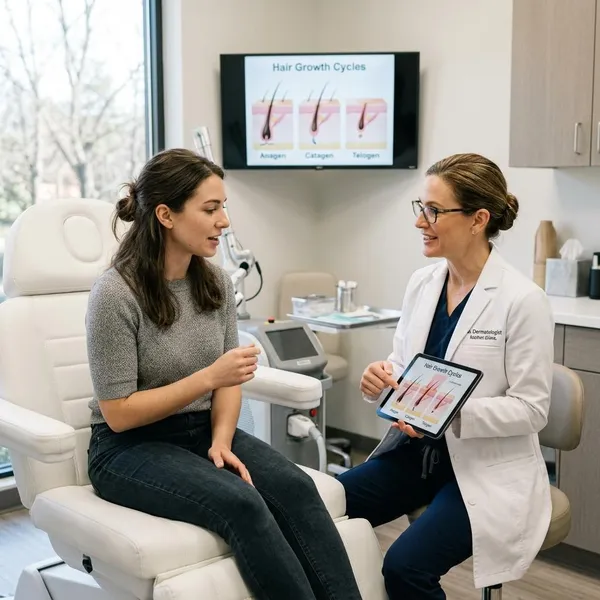
IPL takes weeks because it depends on hair growth cycles. The light energy works best when a hair is still connected to the follicle in the active growth phase, but not every hair is in that phase on treatment day.
IPL only affects hairs in the active growth phase
IPL is most effective on hairs in the active growth phase because the hair can help carry light energy toward the follicle. Hairs in resting or transition phases are less responsive, so a single pass over the skin cannot treat every follicle equally.
Hair cycles determine when results appear
Hair cycles explain why two areas on the same person can behave differently. Your underarms may start looking patchy after a few sessions, while your legs still need more time simply because the area is larger and the growth pattern is different.
This also matters for long-term use. Someone using IPL only before a holiday may see some improvement, but someone treating consistently for several months is more likely to catch enough cycles to see a meaningful reduction.
Shedding and slower regrowth happen gradually
Treated hairs may shed over the next 1 to 3 weeks instead of falling out immediately. You might notice them during washing, toweling, or gentle exfoliation.
Avoid scrubbing aggressively to "force" shedding. If the follicle has been affected, the hair usually works its way out on its own; rough exfoliation only increases the chance of irritation.
How Can You Tell If Your IPL Device Is Working?
The best way to judge IPL is to look for practical changes, not perfect smoothness. A working routine usually shows up as slower regrowth, finer hair, patchy return, or shedding after treatment.
Use a weekly comparison rather than checking every day. Daily checks make small changes almost impossible to see, while a simple photo or shaving note can show whether the trend is moving in the right direction.
Hair grows back more slowly
Slower regrowth is one of the clearest early signs. If you normally shave an area every two days and now it looks acceptable for several more days, that is meaningful progress even if hair is still present.
Hair becomes finer and softer
Hair may become weaker before it becomes sparse. This can be especially noticeable in areas where coarse stubble used to feel rough, such as the underarms or bikini line.
For everyday comfort, finer regrowth can matter almost as much as reduced density. It often means shaving feels easier and the skin looks less shadowed between sessions.
Treated areas show uneven regrowth
Uneven regrowth is often a positive sign during the first month or two. It usually means some follicles have responded while others still need to be treated in a suitable growth phase.
Some hairs shed after treatment
Shedding can happen quietly, so do not expect a dramatic moment where hair falls out all at once. A better sign is that hair seems to loosen, wipe away more easily, or return less strongly after a few sessions.
If shedding appears together with slower regrowth and finer texture, the device is probably having an effect. If none of those signs appear after 8 to 12 weeks of correct use, it is time to review compatibility, settings, and technique.
What Affects How Fast IPL Results Appear?
The biggest factors are hair color, hair thickness, skin tone, treatment area, device quality, and consistency. If results are slow, check those basics before assuming the device is useless.
A simple priority order helps: first confirm that your hair and skin are suitable for IPL, then check whether you are using the device often enough, then look at settings and technique. If the basic match is poor, perfect consistency may still produce limited results.
Hair color and thickness
Dark, coarse hair usually responds fastest because it contains more pigment for IPL to target. Blonde, gray, white, and red hair often respond poorly because there may not be enough pigment to absorb the light effectively.
This is an important expectation check. If you have pale blonde leg hair, slow results may be a compatibility issue rather than a discipline issue. If you have dark underarm hair, you may see changes sooner because the contrast is stronger.
Skin tone and IPL compatibility
IPL generally works best when there is clear contrast between the hair and the surrounding skin. Some devices are suitable for a wider range of skin tones than others, but each model has its own limits.
- Check first: the manufacturer's skin tone and hair color chart.
- Be cautious: if your skin tone is outside the recommended range.
- Do not guess: use the device's sensor or patch-test instructions if provided.
Treatment area and hair growth patterns
Different body areas do not follow the same timeline. Underarms and bikini areas often respond well because the hair is typically darker and thicker, while legs may take longer because there is more surface area to cover consistently.
Facial areas need more patience and care. If hair growth is hormone-related, IPL may reduce visible hair but still require ongoing maintenance. That is a different situation from treating occasional body hair before a beach trip.
Device quality and treatment consistency
A suitable device used consistently will usually outperform a better-looking device used randomly. Missed sessions can delay results because some hairs pass through the active phase without being treated.
Technique matters too: the device needs proper skin contact, enough overlap to avoid missed strips, and an intensity level that is appropriate for your skin. If you are using the lowest setting for comfort, progress may be slower, but jumping to an uncomfortable level is not the answer either.

How to Improve IPL Hair Removal Results
The best improvements come from boring consistency: use the right schedule, shave instead of pulling hair out, choose a suitable intensity, and track changes for several weeks. These steps help you avoid the common mistake of treating randomly and then judging the device too early.
Follow the recommended treatment schedule
Follow the schedule for your specific device, especially during the start-up phase. Many at-home IPL routines begin with weekly or every-two-week sessions, then move to maintenance once regrowth slows.
If you keep forgetting sessions, choose one fixed day and treat it like a normal grooming task. Consistency matters more than trying to "make up" missed sessions with extra flashes later.
Shave before IPL instead of waxing or plucking
Shave before IPL because the hair root needs to remain in place. Waxing, plucking, and epilating remove the hair from the follicle, leaving less pigment for the light to target.
For many people, shaving the day before or several hours before treatment is more comfortable than shaving immediately before. The goal is short hair at the surface, not irritated skin.
Use suitable intensity settings
Use the highest comfortable level that is allowed for your skin tone by the device instructions. Too low can make progress slow; too high can cause irritation and make you less likely to keep going.
- Start safely: patch test when the instructions recommend it.
- Increase gradually: only if your skin stays calm.
- Stop and reassess: if you feel sharp pain, burning, or unusual irritation.
Track progress over several weeks
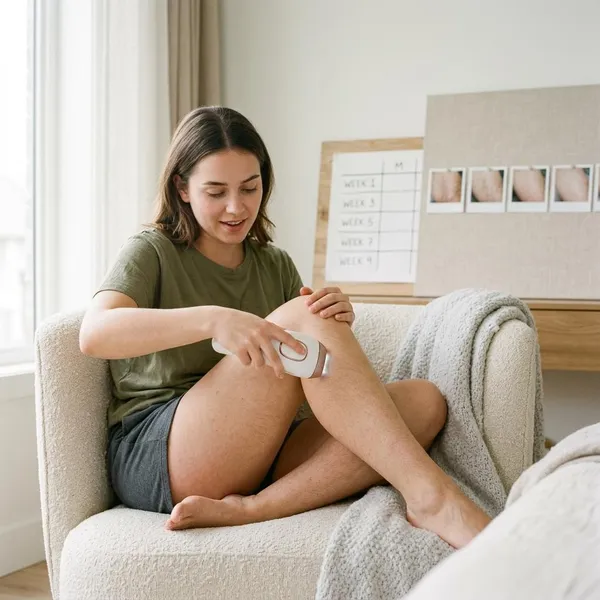
Track one or two simple signals instead of obsessing over every hair. Take a weekly photo in the same lighting, and note how often you need to shave the treated area.
This is especially useful if you are treating a large area such as the legs, where gradual thinning is easy to miss. If the gap between shaves gets longer or regrowth feels softer after several sessions, the routine is likely moving in the right direction.
Conclusion
IPL is worth judging over weeks, not days: early changes often appear around weeks 3 to 4, while stronger reduction usually needs 8 to 12 weeks of consistent treatment. If your hair and skin are suitable, slower regrowth, finer texture, patchiness, and shedding are all encouraging signs; if none of them appear after a full routine, check compatibility, settings, and technique before continuing the same way.