The safest way to choose an IPL device is to match the device to your natural skin tone first, then check whether your hair color gives the light enough pigment to target. If your skin is near the darker end of a brand's chart, safety features matter more than speed, price, or the highest power setting. For anyone comparing options, how to choose ipl device for skin tone really comes down to compatibility, contrast, and built-in safeguards.
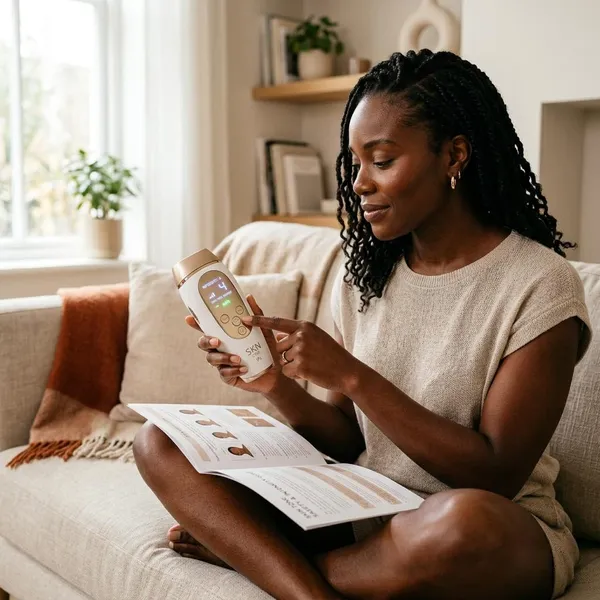
How to choose an IPL device for your skin tone
Start with the checks that decide whether the device is suitable at all. Comfort attachments, treatment speed, app features, and design only matter after the device clearly supports your skin tone and hair color.
- Match your untanned skin to the brand chart. Use natural daylight and compare an area that is not freshly tanned.
- Check the hair in the exact treatment area. Underarm hair, leg hair, and facial hair can differ enough to change your expectations.
- Read the exclusions, not just the marketing line. "Suitable for most skin tones" is not specific enough if you are near the device limit.
- Prioritize sensors and lockout features. These reduce the chance of flashing on skin the device should not treat.
- Choose controls you will actually use correctly. A lower, consistent setting is better than a powerful device you hesitate to use or use too aggressively.
Check the brand's skin tone chart
The skin tone chart is the first filter. If your natural, untanned skin tone is outside the supported range, that device is not a sensible choice, even if reviews are positive or the price is tempting.
If your tone sits between two shades, treat yourself as the darker shade unless the brand gives clearer guidance. This matters most for people who tan easily in summer: a device that looks suitable in winter may not be suitable after several weeks of sun exposure.
Check your natural hair color
IPL usually works best when the hair is naturally dark enough to absorb light. Black, dark brown, and some brown hair are typically better matches than very light blonde, grey, white, or red hair.
- Dark leg hair, lighter facial hair: the device may work better on legs than on the face.
- Fine medium-brown hair: results may be slower even if the chart says the combination is allowed.
- Dyed hair: dye does not make the follicle a better IPL target; the natural hair pigment matters.
Look for skin tone sensing
Skin tone sensing is worth having because your skin is not the same color everywhere. Underarms, knees, elbows, bikini areas, and recently sun-exposed patches can read darker than the area you used when comparing the chart.
Think of the sensor as a safety backup, not permission to ignore the manual. If your skin is already close to the device's limit, patch testing and conservative use still matter.
Compare power controls
Good power controls help you stay within the safe range while keeping treatments comfortable enough to repeat. Beginners often do better with a device that starts low or adjusts automatically, while experienced users may prefer several manual levels for different body areas.
Do not choose the strongest device just because it sounds more effective. For home IPL, the better device is usually the one that lets you treat consistently without pushing intensity on sensitive or borderline areas.
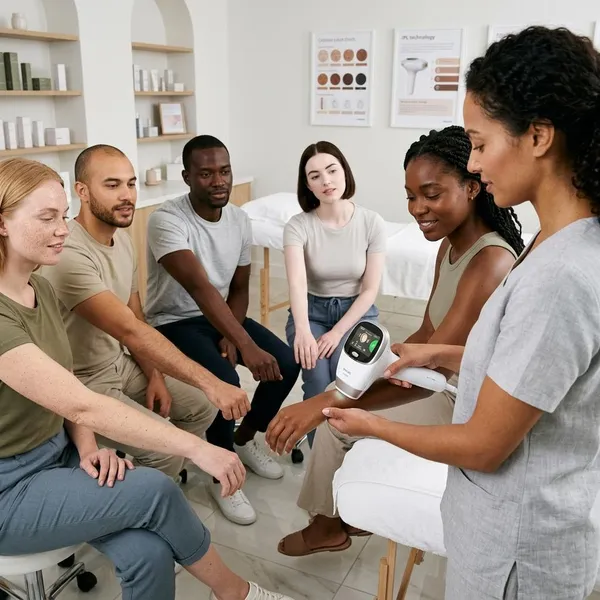
How skin tone affects IPL compatibility
IPL uses light that is absorbed by melanin. That melanin is in the hair, which is the target, but it is also in the skin. The safest and most effective match is usually darker hair against lighter surrounding skin, because the device can focus more of its energy where it is intended.
As skin tone deepens or the hair-to-skin contrast becomes weaker, the margin becomes narrower. That does not automatically rule out IPL, but it does mean the exact model, safety system, and published compatibility range matter much more.
More skin melanin absorbs more light
When skin contains more melanin, the skin can absorb more of the IPL energy before the light reaches the hair follicle. That may increase the chance of irritation, temporary pigment changes, or burns if the device is not designed for that tone.
A fresh tan creates a similar problem because it temporarily increases surface pigment. If you use self-tanner or spend time in strong sun, compare your current skin tone again and follow the waiting period in the device manual rather than assuming your usual tone still applies.
Lower skin-hair contrast narrows the safe range
Low contrast makes IPL less straightforward. Someone with fair skin and black hair usually has a wider margin than someone with medium-dark skin and medium-brown hair, even if both combinations appear close on a chart.
A practical test before buying is simple: compare the treatment-area hair with the surrounding skin, not with hair on another body part. If the difference is subtle, choose a device with stronger safety features and keep expectations modest.
Device limits vary by model
Two IPL devices can look similar online but support different skin tones. Filters, energy settings, sensor logic, and lockout behavior vary by model, so a friend's device or a salon result does not prove that a home device is suitable for you.
Use the exact product manual when comparing. Reviews can tell you whether a device feels comfortable or easy to hold, but they cannot replace the manufacturer's compatibility chart.
Which IPL features matter most for darker skin tones
For darker skin tones, the most valuable features are the ones that make the device's limits clear and stop obvious misuse. High power is not the priority. Controlled output, accurate sensing, and a refusal to flash on unsuitable skin are far more useful for home treatment.
This is especially important if you are buying for long-term use rather than trying IPL once. Over repeated sessions, small mistakes such as treating after tanning or using too high a level on a darker area become more important.
A clearly supported skin tone range
A reliable device should show exactly which tones it supports and which it excludes. A visual shade chart or Fitzpatrick-type reference can both work, as long as the limit is easy to understand.
Vague claims are a warning sign. If the brand says "works on most tones" but does not clearly show the darker cutoff, it is harder to make a safe decision before buying.
Automatic skin tone sensing
Automatic skin tone sensing is helpful when your skin is uneven across treatment areas or when more than one person may use the device. It reduces the risk of copying another person's settings or treating a patch that is darker than expected.
Look for a clear response from the device, such as an indicator, setting change, or refusal to flash. A "smart sensor" label is less useful if the brand does not explain what the sensor actually does.
Automatic power adjustment
Automatic power adjustment can make IPL easier for cautious users because the device lowers or changes intensity based on the skin reading. That is useful on areas that tend to be more sensitive or slightly darker, such as underarms or the bikini line.
Manual control is still useful if you want to start at the lowest level and increase only if your skin tolerates it well. The safest setup for many users is a device that combines automatic adjustment with clear, limited manual options.
Flash lockout for unsuitable skin
Flash lockout is one of the strongest home-use safety features because it stops the device from firing when the detected skin tone is outside its allowed range.
This matters most in higher-risk situations: after tanning, on naturally darker zones, or when treating under indoor lighting where your skin may look lighter than it really is. If you are choosing between a device that only warns you in the manual and one that physically refuses to flash, the lockout model usually offers better practical protection.
Conclusion
The right IPL device is the one that clearly fits your natural skin tone, has enough hair contrast to work, and gives you safety features that match your risk level. If you are near the edge of a chart, recently tanned, or unsure about your hair color, choose the more cautious option rather than trying to force a device to work. A slower, safer match is a better buy than a powerful device that leaves you guessing.