If you are looking at an IPL acne treatment device because breakouts leave your skin red for weeks, the main thing to know is this: IPL may help some acne-related redness and uneven tone, but it is not a cure for every type of acne. It tends to make the most sense when inflammation and leftover marks are the bigger problem, while deep cysts, active infections, or strongly hormonal acne usually need medical acne care first.
What is an IPL acne treatment device?
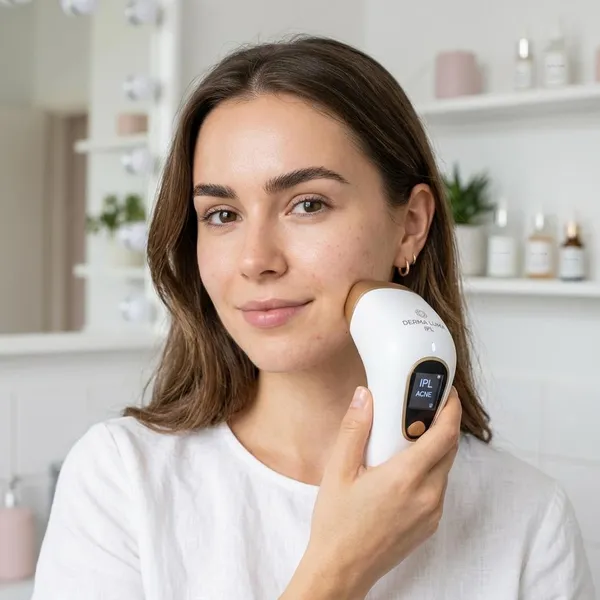
An IPL acne treatment device uses intense pulsed light to treat selected skin concerns linked with acne-prone skin. Unlike a laser, which usually uses one focused wavelength, IPL sends out a broader range of light that can be filtered and adjusted for different visible targets.
Uses broad-spectrum pulsed light
IPL uses broad-spectrum pulsed light, which gives it a wider treatment range than a single-wavelength laser. For acne-prone skin, that can be useful when redness, inflamed-looking areas, and uneven tone are mixed together rather than neatly separated.
A realistic example is someone whose cheeks still look flushed even after the active spots have gone down. IPL may be more relevant for that lingering "my skin still looks irritated" effect than for a few blackheads or closed comedones.
Uses filters for different skin targets
Filters narrow the light toward certain targets in the skin, such as visible redness or pigment changes. This is one reason professional treatment should not feel like a one-setting routine; the right settings depend on what is actually visible on your skin.
- Red marks: IPL may be chosen to focus more on vascular-looking redness.
- Brown marks: the provider may need to consider pigment risk more carefully.
- Sensitive or reactive skin: settings may need to be gentler, or treatment may need to wait.
For darker skin tones or anyone who develops post-inflammatory hyperpigmentation easily, this step is especially important. The wrong settings can irritate the skin or worsen uneven pigment, so a patch test or a different treatment may be the safer route.
Delivers controlled light in short pulses
The device delivers light in short pulses while the provider moves the handpiece across the treatment area. Many people describe the feeling as a quick warm snap, though comfort varies by device, skin sensitivity, and the area being treated.
The point of controlled pulsing is not just comfort. It lets the provider watch how the skin reacts and avoid treating every part of the face as if it behaves the same way. Jawline acne, cheek redness, and a sensitive upper lip area may all need different levels of caution.
Can IPL help with acne?
IPL can help with some acne concerns, but the best results usually come when the problem is inflammatory redness or post-acne marks rather than deep, painful lesions. The first thing to check is what bothers you most: active pimples, leftover color, or actual texture changes.
If your skin mostly has mild inflamed breakouts and red marks that hang around, IPL may be worth discussing with a qualified provider. If your acne is cystic, rapidly worsening, infected-looking, or linked to medication or hormonal changes, it is usually better to start with a dermatologist or medical acne plan.
May reduce inflammatory breakouts
IPL may reduce the appearance of some inflammatory breakouts, especially red papules or pustules. It is usually less useful for acne that is mainly blackheads, whiteheads, or clogged pores without much redness.
Think of two different situations. Someone with a few recurring red spots on the cheeks may see the skin look calmer over time. Someone with deep cysts along the jawline that hurt and last for weeks should not rely on IPL as the main treatment, because the inflammation is sitting deeper than a cosmetic light session can reliably manage.
May improve post-acne redness
Post-acne redness is one of the clearer reasons people consider IPL. These pink or red marks can make the skin look actively broken out even when the bump itself has flattened.
This is also where timing matters. If you are still picking at spots, using harsh scrubs, or constantly irritating your skin barrier, IPL may have less to work with because new redness keeps being created. Calmer skincare and sun protection usually need to sit alongside any light-based treatment.
May improve uneven tone after breakouts
IPL may soften uneven tone after breakouts when the issue is mainly color. It cannot reliably lift indented scars or smooth deep texture changes, so it helps to separate "marks" from "scars" before paying for treatment.
- Likely IPL discussion: red marks, blotchy tone, mild discoloration after acne.
- Needs a different plan: ice-pick scars, rolling scars, deep pits, thickened scar tissue.
- More caution needed: recent tanning, darker skin prone to pigment shifts, irritated skin barrier.
What happens during professional IPL acne treatment?
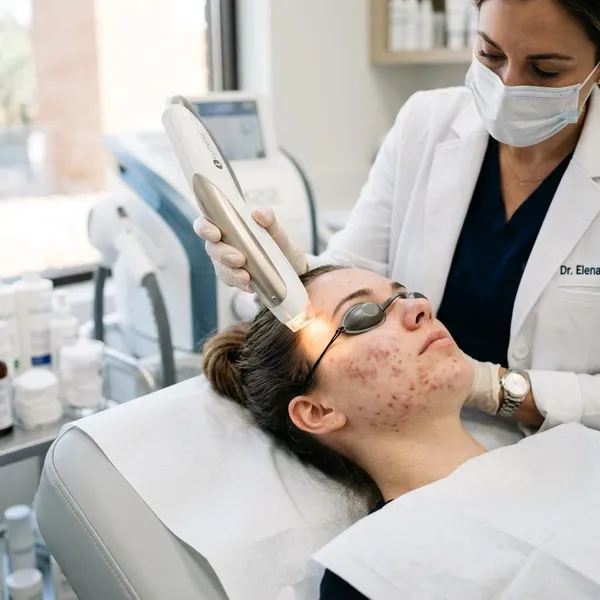
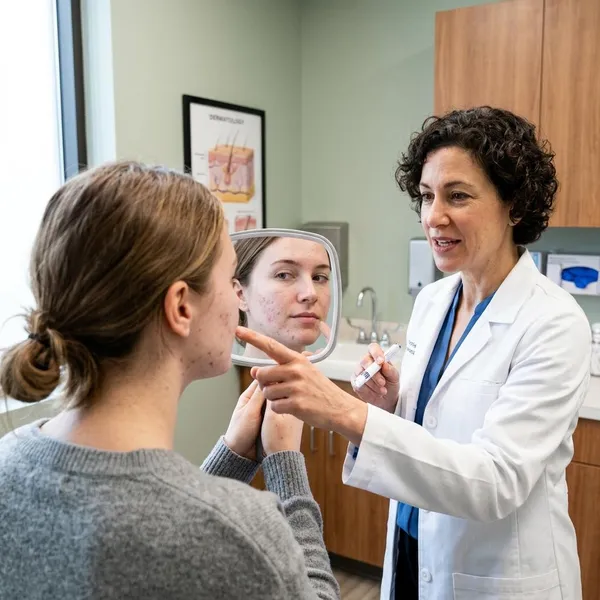
A professional IPL session is more than the light flashes. The useful part starts with deciding whether your skin is a good candidate that day, because recent sun exposure, strong acne products, skin tone, and current irritation can all change the risk level.
The appointment usually follows a simple flow: assessment, skin prep, eye protection, controlled pulses, cooling, and aftercare. If any of those steps are rushed, especially the assessment, that is a reason to be cautious.
Skin assessment and treatment planning
Before treatment, the provider should ask about your acne pattern, skin tone, recent tanning, medications, current skincare, and past reactions to lasers or light treatments. Strong retinoids, exfoliating acids, benzoyl peroxide, or photosensitizing medications may affect whether treatment should go ahead or be delayed.
A good consultation also narrows the goal. "I want less redness after breakouts" is a different plan from "I want to stop cystic acne" or "I want to fix pitted scars." If the goal is unclear, expectations can become unrealistic very quickly.
Skin prep and eye protection
The skin is usually cleansed so makeup, sunscreen, oil, and residue do not interfere with the session. Protective eyewear is required because intense pulsed light should not be viewed directly.
This prep stage is also a final check. If the skin is sunburned, peeling, freshly waxed, or unusually irritated from acne products, postponing treatment may be the smarter decision. Waiting can feel annoying, but treating compromised skin is a common way to turn a manageable redness problem into a bigger irritation problem.
Controlled light pulses across the treatment area
During the session, the provider places the handpiece against the skin and delivers pulses section by section. Cooling gel may be used depending on the device, and the provider should monitor the skin response rather than simply covering the face as quickly as possible.
- Final skin check: confirm no new sunburn, irritation, or medication issue.
- Cleanse and protect: remove surface products and place eye protection.
- Choose settings: match filters and energy to the skin concern and risk level.
- Treat evenly: pulse across the planned area while watching the skin reaction.
- Review response: cool the skin and explain what changes are normal afterward.
Cooling and aftercare after treatment
After treatment, the skin may feel warm, flushed, or slightly tender. Cooling and soothing products are often used before you leave, and the next few days should be kept simple: gentle cleanser, bland moisturizer if needed, and careful sun protection.
What results can you expect from IPL for acne?
The most realistic result is gradual improvement in how red, blotchy, or uneven the skin looks. Some people also notice that inflamed areas appear calmer, but IPL should not be expected to permanently stop acne on its own.
Your result depends heavily on the starting point. Mild inflammatory acne with leftover red marks is a very different situation from deep cystic acne, active picking, recent tanning, or indented scarring. The clearer your main concern is, the easier it is to judge whether IPL is a sensible option.
Improvement usually takes multiple sessions
Most people need more than one session because redness and discoloration fade gradually. A single treatment may make the skin look calmer, but bigger changes usually require a planned series and enough time between sessions for the skin to settle.
Useful signs of progress are not always dramatic at first. You might notice that red marks fade a little faster, the skin looks less flushed at normal conversation distance, or makeup sits more evenly because the background redness is softer.
- Good sign: less persistent redness between breakouts.
- Good sign: marks look softer instead of sharply red or brown.
- Recheck the plan: cysts keep forming, irritation worsens, or pigment darkens.
- Do not judge too early: one session is rarely enough to assess the full value.
Conclusion
IPL is most worth considering when acne has left your skin looking red, blotchy, or uneven, and least convincing when the main issue is deep cysts or pitted scars. Start by identifying whether you want help with active inflammation, leftover color, or texture, then choose a provider who treats that distinction seriously. If the assessment is careful and the expectations are modest, IPL can be a useful part of an acne plan rather than an expensive guess.