An ipl device for face use can be worthwhile if your goal is reducing darker facial hair on approved areas, such as the upper lip or chin. The first thing to check is not the flash count or price, but whether the device is actually cleared for facial use and safe for your skin tone and hair color. If your main concern is pigmentation, redness, or skin texture, a professional treatment is usually the better starting point.

Where can you use IPL on the face?
Facial IPL should stay in the zones your device specifically allows. For most at-home devices, that means lower-face hair removal rather than full-face treatment. The safest habit is to treat the face like a precision area, not like a larger body area where you can move quickly.
Upper lip
The upper lip is one of the most common at-home facial IPL areas when the device is face-approved. It tends to work best on visible darker hair, not fine pale fuzz, because IPL needs pigment in the hair to target the follicle.
Use careful placement here. Keep the treatment window flat on the skin, avoid flashing upward, and do not treat if the area is irritated from waxing, threading, exfoliation, or shaving. A lower setting for the first session is often the more sensible choice if your device allows adjustment.
Chin and jawline
Chin and jawline hair can be suitable for facial IPL, especially when the hairs are darker and more noticeable. This is also the area where expectations need to be realistic: hormonal chin hair can be stubborn, so a steady schedule matters more than using the strongest setting.
- Skip raised moles, cuts, tattoos, and inflamed spots.
- Do not overlap flashes more than the manual allows.
- Consider medical advice if hair growth becomes sudden, heavy, or paired with acne or cycle changes.
Cheeks when device-approved
Some devices allow cheek use, but not all do. Cheeks are often exposed to sun, retinoids, acids, and friction from cleansing, so they can react more easily than the chin or upper lip.
Areas below the cheekbones
Many brands describe facial use as "below the cheekbones" because it keeps the flashes farther from the eyes. That wording matters. It does not mean the entire face is safe to treat.
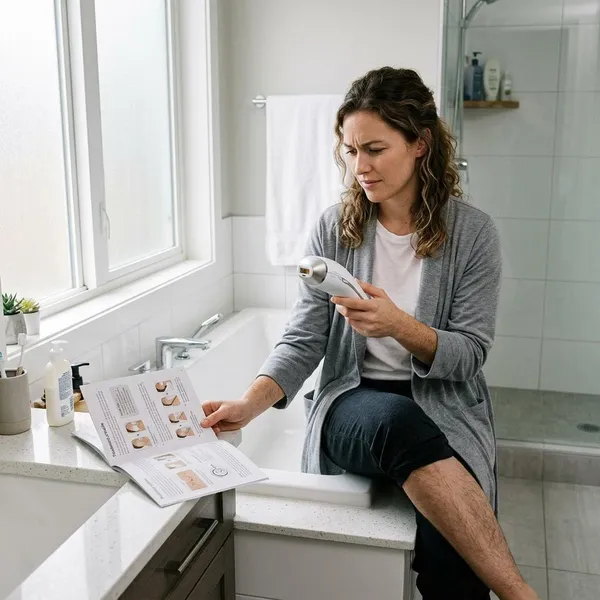
If you are unsure where the permitted boundary sits, use the manufacturer's diagram rather than guessing in the mirror. On curved areas, a smaller facial attachment gives you better control and makes it less likely that you drift too high.
Never near the eyes or eyebrows
Do not use at-home IPL on eyebrows, eyelids, or the skin close to the eyes. A smaller attachment or a skin-contact sensor does not make brow shaping safe.
For brow hair, use tweezing, trimming, threading, or professional shaping instead. The risk is not worth trying to adapt a device that was designed for lower-face hair reduction.
What should you look for in a facial IPL device?
A facial IPL device should be easy to control, suitable for your skin tone, and clearly approved for the areas you want to treat. Power sounds impressive in product listings, but on the face, precision and safety features are usually more important.
Approved facial use
Start with the manual or official product instructions. If the brand does not clearly say the device can be used on the face, do not assume it is safe because someone demonstrated it online.
Face-approved devices may include a smaller cap, lower facial settings, or stricter zone guidance. Those details are especially useful if you plan to treat the upper lip regularly rather than only testing the device once.
Skin tone detection
Skin tone detection is one of the most useful features for facial IPL because it reduces the chance of flashing on skin outside the supported range. This matters more in summer or after a holiday, when your face may be darker than it was when you bought the device.
A sensor is still not a free pass. Check the device's skin tone chart in daylight, and be cautious if you are close to the cutoff range or have uneven pigmentation in the treatment area.
Precise treatment window
A small treatment window helps you work around the upper lip, chin, jawline, and lower cheeks without drifting into restricted areas. Large windows are useful on legs, but they can feel clumsy on facial curves.
For someone treating only a few chin hairs, precision matters more than speed. A facial cap or precision head is often more useful than a wider body attachment with faster flashes.
Adjustable intensity
Adjustable intensity lets you start cautiously and increase only if your skin tolerates it within the device's instructions. The upper lip may feel sharper than the jawline, so having only one fixed setting can be limiting.
Cooling or comfort features
Cooling plates, sensitive modes, clear contact sensors, and automatic adjustment can make facial sessions easier to repeat. They do not replace proper use, but they can reduce the urge to rush or skip sessions because the treatment feels unpleasant.
- Cooling: helpful for heat-sensitive upper-lip or chin areas.
- Sensitive mode: useful for beginners or reactive skin.
- Contact guidance: helps prevent poor placement on small facial zones.
How to use IPL on your face
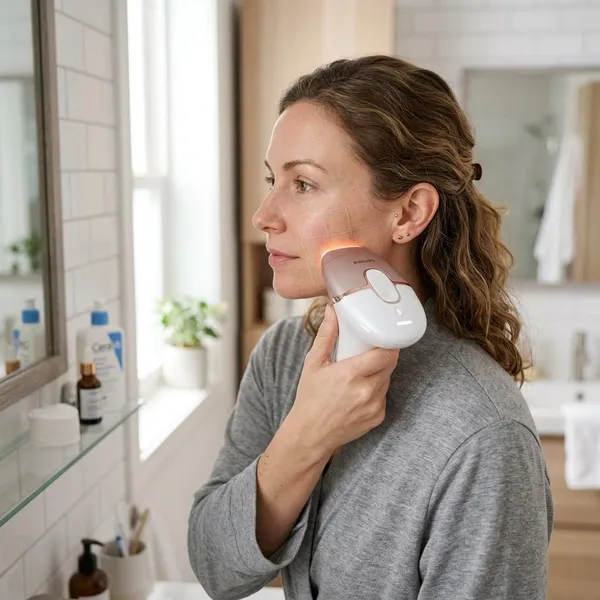
A safe facial IPL routine is mostly about preparation and restraint. Check compatibility, prepare the skin, test first, treat only approved zones, and then wait for the next scheduled session. More flashes or more frequent use will not automatically mean faster results.
If you use strong skincare actives, tan easily, or get irritation after shaving, build extra caution into your routine. Your face is not always in the same condition from week to week.
Check device compatibility
Before each first facial session, confirm three things: the device allows facial use, your skin tone is within the supported range, and your hair color is suitable. IPL is usually less effective on very light blonde, red, gray, or white hair because there is not enough pigment for the light to target.
Also check your current skin condition. Recent sunburn, a fresh tan, irritated skin, or strong exfoliation can turn an otherwise suitable area into a poor treatment choice for that day.
Shave the treatment area
Shaving is usually recommended before IPL because it leaves the hair root under the skin while removing surface hair that could heat up. Waxing, threading, and plucking remove the root, which can make IPL less useful.
Use a clean razor and keep it gentle. If shaving leaves redness, stinging, or tiny cuts, wait until the skin feels calm before treating.
Clean and dry your skin
Remove makeup, sunscreen, oils, moisturizer, and heavy skincare before using the device. Clean, dry skin helps the treatment window sit evenly and makes it easier to spot irritation.
Patch test first
A patch test is especially important on the face, even if you have used IPL on your legs or underarms before. Choose a small approved area, use the recommended setting, and wait for the time stated by the manufacturer before treating more skin.
Treat only approved areas
Stay inside the device's facial map and avoid eyes, eyebrows, moles, tattoos, cuts, inflamed acne, and unusually dark spots unless the instructions specifically say otherwise. Careful placement is not just safer; it also gives more even coverage.
- Treat upper lip and chin only if the device approves those zones.
- Use a facial cap when the brand requires one.
- Stop if the skin feels painfully hot rather than briefly warm.
Follow the recommended schedule
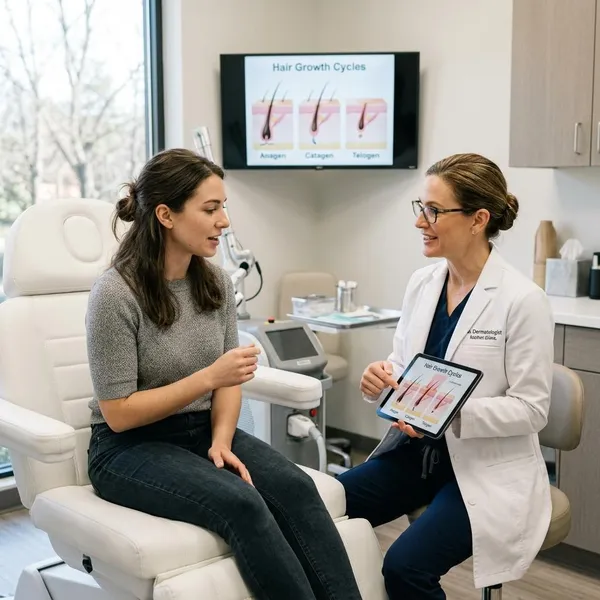
Follow the brand's timing instead of treating whenever new hair appears. Hair grows in cycles, and IPL needs repeated sessions to catch different follicles at the right stage.
At-home IPL vs professional facial IPL
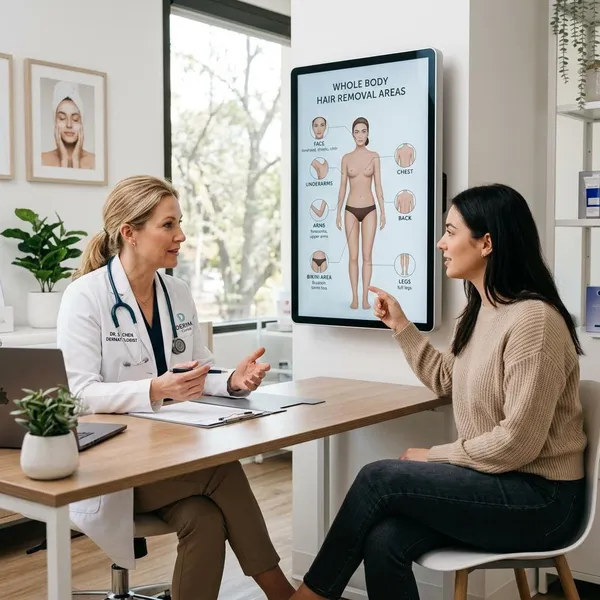
At-home and professional IPL are related, but they are not interchangeable. Home devices are mainly built for repeated hair-reduction sessions in approved areas. Professional IPL can be stronger, more adjustable, and more suitable for certain skin concerns when used by a trained provider.
The right choice depends on your goal. If you want to reduce upper-lip or chin hair privately over time, a well-matched home device may make sense. If you are trying to treat brown spots, redness, visible vessels, or mixed facial concerns, a clinic consultation is the safer route.
Home IPL mainly targets unwanted hair
At-home facial IPL is most realistic for unwanted hair reduction. It can help slow regrowth and make hair appear finer over time, but it usually requires consistency and later maintenance.
It is not the best tool for melasma, acne marks, broken capillaries, or general "skin rejuvenation" unless the device is specifically designed and cleared for that purpose. For many shoppers, this distinction prevents disappointment.
Professional IPL can target some skin concerns
Professional IPL may be used for some pigmentation, sun damage, redness, or visible vascular concerns, depending on your skin and the clinic's equipment. Suitability is not automatic, and some conditions can worsen with the wrong light treatment.
If your concern is skin tone rather than facial hair, start with an assessment instead of buying a home hair-removal device and hoping it will do both jobs.
Treatment strength and settings differ
Home devices use lower energy and fewer settings because they are meant for non-professional use. That wider safety margin is useful, but results can be slower and narrower in scope.
| Goal | More sensible option | Why it matters |
|---|---|---|
| Upper-lip or chin hair | Face-approved home IPL | Private, repeatable, and practical for gradual reduction |
| Dark spots or redness | Professional consultation | Needs assessment and more precise settings |
| Very sensitive or recently tanned skin | Wait or ask a professional | Current skin condition can change safety |
Conclusion
A facial IPL device is a sensible option when your target is darker unwanted hair on approved lower-face areas and you are willing to follow a steady routine. Choose facial approval, skin tone compatibility, precision, and comfort before chasing maximum power. If your goal moves beyond hair reduction, or if your skin is recently tanned, irritated, or hard to classify on the tone chart, it is better to pause and get professional guidance than force a home treatment.