IPL can be safe and useful for some darker skin tones, but it is not something to try casually if your skin is near the dark end of a device's chart. The first things to check are your exact treatment-area skin tone, your hair color, recent tanning, and whether the device specifically approves that combination. If any of those are borderline, the safer choice is often a professional laser option or a non-light-based method.
Is IPL hair removal safe for dark skin?
IPL hair removal is not automatically unsafe for dark skin, but the safety window is smaller. IPL uses light that is absorbed by pigment, and darker skin contains more melanin in the skin itself. That means the skin can take in some of the heat that the device is supposed to direct toward the hair follicle.
More melanin increases light absorption
Melanin is the reason IPL can work on dark hair, but it is also the reason darker skin needs more caution. When the skin has more pigment, it can absorb more of the light before that energy reaches the follicle. This is why a setting that feels fine on lighter lower legs may be too much for a darker bikini line or underarm area on the same person.
If your skin often leaves dark marks after irritation, ingrown hairs, acne, or waxing, be extra conservative. That history does not always rule out IPL, but it does suggest your skin may react strongly to heat or inflammation.
Higher energy raises the risk of skin injury
Higher power does not simply mean faster results. On darker skin, raising the intensity can increase the chance of burns, blisters, lingering dark spots, or lighter patches. Sharp pain, strong redness, swelling, blistering, grayish patches, or unusual darkening after treatment are signs to stop rather than "push through."
- Safe mindset: use the approved setting, even if progress feels slow.
- Risky shortcut: increasing the level because the hair has not reduced quickly.
- Stop signal: pain or skin changes that feel stronger than mild temporary warmth.
Device limits vary by skin tone
Device limits matter more than brand popularity. Many home IPL devices are made mainly for light to medium skin with dark hair. Some newer models include darker brown tones, automatic sensors, or lower-energy modes, but many still exclude very dark skin.
A sensor should be treated as a backup, not permission. If the manual says your tone is outside the approved range, skip IPL for that area even if the device is willing to flash.
Does IPL work on dark skin with dark hair?
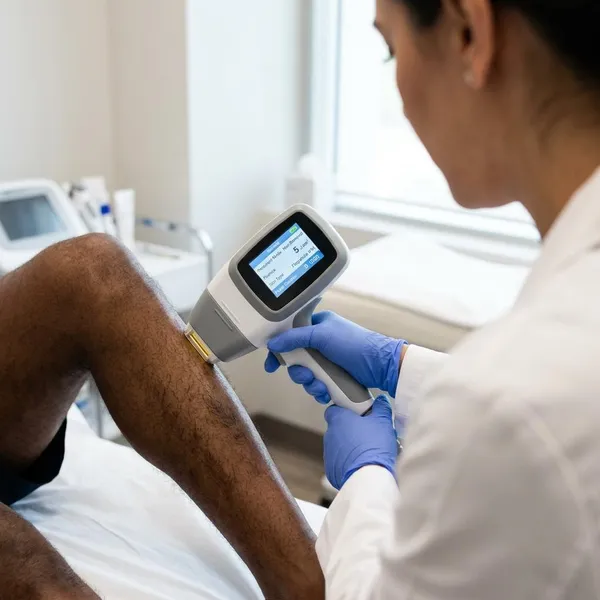
IPL can work on dark skin with dark hair when the skin tone is within the device's approved range. Dark hair gives the light a stronger target, which helps the follicle heat up enough to slow future growth. The challenge is that darker skin leaves less room for strong energy settings.
Dark hair gives IPL a stronger target
Black and dark brown hair usually responds best because it contains more pigment. Coarse hair often responds better than fine hair too. For example, dense dark underarm hair may respond more clearly than fine facial hair, even on the same skin tone.
Darker skin narrows the safe energy range
With darker skin, the device may need to stay at a lower intensity to protect the surface of the skin. That can still reduce hair, but it may take longer and may need more maintenance. This is where expectations matter: a slower result may be the device working safely, not necessarily failing.
Results depend on the device and settings
The best results usually come from a suitable device, dark hair, consistent timing, and correct prep. Shave before treatment so the follicle remains under the skin, but avoid waxing or tweezing because those remove the target IPL needs.
- Good candidate scenario: approved dark-brown skin tone, dark coarse hair, no recent tanning, and a normal patch test.
- Borderline scenario: skin near the darkest approved shade, darker body folds, or a history of post-inflammatory marks.
- Poor candidate scenario: very dark skin outside the chart, blonde or gray hair, recent tanning, or irritation in the treatment area.
How to check if IPL is suitable for your skin tone
Suitability is not something to guess from your general complexion. Check the exact area you want to treat, in good light, without a tan, and compare it with the device's official chart. If the area is uneven, judge by the darker parts, not the lightest patch.
Check the device's skin tone chart
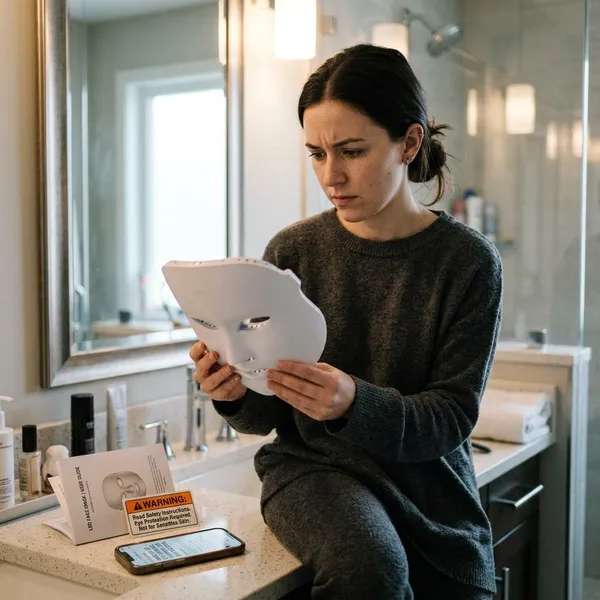
Start with the manual, not the shopping page. Look for the darkest approved skin tone and any exclusions for Fitzpatrick types, medications, skin conditions, tattoos, moles, recent sun exposure, or irritated skin. If the chart and the marketing copy seem to disagree, trust the manual.
Compare your untanned treatment area
Compare the actual area you plan to treat. Lower legs, inner thighs, underarms, and bikini areas can all be different shades. A device may be acceptable for one area and a bad idea for another, which is one of the easiest home-use mistakes to make.
Recheck after recent tanning
A tan can temporarily move your skin outside the safe range, even if IPL was suitable before. Sun exposure, tanning beds, and self-tanner can reduce the contrast between skin and hair and raise the risk of heat-related reactions. If your skin is darker than usual, wait until it returns to its normal shade before reassessing.
This matters most for summer-only users. A device that felt fine in winter may not be appropriate after a beach holiday or several weeks of outdoor sun.
Do the recommended patch test
A patch test is not a formality on darker skin. It is the small test that helps you avoid finding out too late that a setting is too strong for a larger area.
- Confirm the skin tone and hair color are approved before testing.
- Shave, clean, and dry a small discreet spot.
- Use the recommended starting level or the device's automatic setting.
- Wait the full time stated in the manual, often 24 to 48 hours.
- Do not continue if you see blistering, strong redness, unusual pain, dark marks, or light patches.
What are the alternatives if IPL is not suitable?
If IPL is outside your safe range, that does not mean you are out of options. The better choice depends on whether your main problem is skin tone, hair color, treatment area, budget, or how long you want results to last.
Long-pulsed Nd:YAG laser
Long-pulsed Nd:YAG laser is often the professional option worth asking about for darker skin. Its commonly used 1064 nm wavelength is less attracted to surface melanin than many other light-based methods, which can make it a better fit for deeper skin tones when used by an experienced provider.
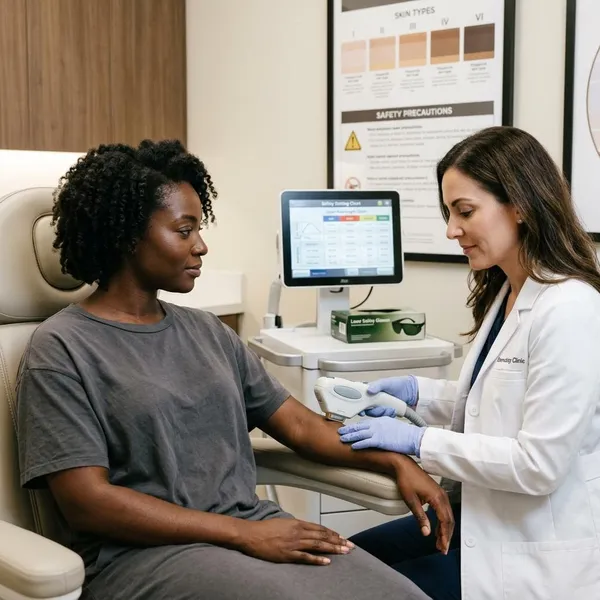
It is still not risk-free. Settings, cooling, provider experience, and your tendency to pigment all matter. If you have dark skin and coarse dark hair and want longer-term reduction, a consultation and test spot with a provider experienced in darker skin is usually more sensible than guessing with a home IPL device.
Electrolysis
Electrolysis does not rely on color contrast in the same way IPL does. It treats individual follicles, so it can work on all skin tones and on hair colors that IPL usually struggles with, including gray, white, blonde, and many red hairs.
The trade-off is time. Electrolysis is slower because each follicle is treated separately, but it can be a strong choice for small areas such as the upper lip, chin, or scattered stubborn hairs.
Shaving, waxing, or epilation
Temporary methods can be the most practical option when skin safety is the priority. Shaving is simple and low commitment. Waxing and epilation last longer than shaving but may trigger irritation or ingrown hairs for some people.
- Choose shaving if you want the lowest-risk at-home option for any skin tone.
- Consider waxing if your skin tolerates it and you want smoother results for longer.
- Use epilation carefully if you are prone to ingrown hairs or post-inflammatory marks.
Conclusion
IPL is worth considering only when your treatment area is clearly within the device's approved skin tone range, your hair is dark enough to target, and your patch test is calm. If your skin is very dark, recently tanned, easily marks after irritation, or paired with blonde or gray hair, forcing IPL is not a smart trade-off. A slower but safer method is almost always better than chasing hair reduction at the cost of burns or lasting pigment changes.