If you are checking an ipl skin tone chart, the main thing is not your overall complexion but the exact skin-and-hair combination you want to treat. Start with the skin in the treatment area, then check your natural hair root color, and only use a device if that exact pairing is supported by its own chart. If your skin is recently tanned, irritated, or close to the darkest supported shade, pause and recheck before flashing.
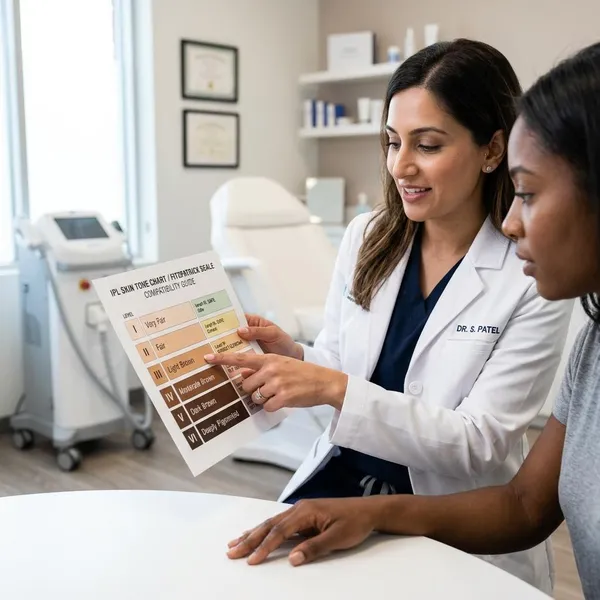
How to read an IPL skin tone chart
An IPL chart is a compatibility check, not a general beauty chart. It helps you decide whether the light can target pigment in the hair without too much of that energy being absorbed by the skin. The safest way to use it is in this order: treatment area first, natural hair root second, device-specific support last.
Check the skin in your treatment area
Look at the exact area you plan to treat, preferably in natural daylight. Legs, underarms, face, bikini line, knees, and elbows can all sit at different points on the chart. If one part of the area is darker than the rest, use the darker shade as your safety match.
Match your skin shade to the device chart
Use the chart from the device you own or plan to buy, not a random skin tone image online. Brands often use similar-looking shade blocks, but their cutoffs can differ because energy levels, filters, and safety systems are not identical.
- Clearly within range: continue to the hair color check and patch test.
- Between two shades: choose the darker match and be cautious.
- Outside the supported range: do not try to make it work with a lower setting.
Match your natural hair color
Check the root color, not dyed lengths, bleached ends, or sun-lightened tips. IPL works below the skin surface, so the pigment in the follicle matters more than what the visible hair looks like after coloring or summer exposure.
Confirm the combination is supported
Skin tone and hair color have to work together. Fair skin with black or dark brown hair is usually the easiest match. Fair skin with very light blonde hair may still be a poor candidate because the follicle lacks enough pigment. Dark hair on deeper brown skin depends heavily on the exact device limit.
- Compare the treatment area with the device chart.
- Check your natural hair root color.
- Confirm that the chart supports that exact pairing.
- Do a small patch test if the manual recommends it or if you are unsure.
Recheck after tanning or skin tone changes
A tan can move you from "supported" to "not supported" even if the device was fine in winter. That includes sun tanning, tanning beds, and visible darkening after outdoor holidays. If the area looks darker than your normal baseline, wait and compare it again instead of following your old setting automatically.
This matters most for seasonal users. Someone who treats their legs safely in January may need to pause in July after regular sun exposure. The safer check is visual: if the skin no longer matches the same shade block, do not assume last month's result still applies.
Why Fitzpatrick type is only a starting point
The Fitzpatrick scale is useful because it describes how skin tends to react to sun exposure, from very fair skin that burns easily to deeply pigmented skin that rarely burns. IPL brands often refer to it, but a type number alone is too broad for a safe home-use decision. Your device chart, treatment area, recent tanning, and patch response are more practical than the label itself.
Device limits vary by model
Two IPL devices can look similar and still have different compatibility limits. One may stop at lighter to medium tones, while another may support some deeper tones with stricter controls. Do not borrow a friend's device result or rely on a product page headline; the manual for the exact model is the only chart that counts.
Skin shade varies within each type
Fitzpatrick type is not the same as a precise visible skin shade. One Type III person may look fair in winter and tan quickly, while another may have an olive tone all year and sit closer to a device cutoff. If your shade is borderline, treat the darker match as the safer answer.
Different body areas can differ in tone
Body-area differences are one of the easiest things to miss. Underarms, bikini lines, elbows, knees, and areas with shaving bumps or friction can be darker or more reactive than nearby skin.
Use this practical split: low-risk areas such as evenly toned lower legs may be easier to assess, while darker or more sensitive zones deserve a separate check and usually a more cautious patch test. If the device chart excludes that specific area's tone, skip that area even if another part of your body is compatible.
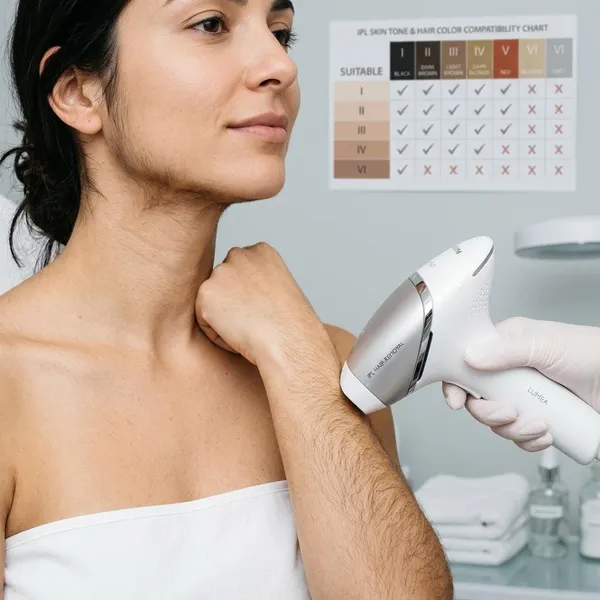
Which hair colors work best with IPL
IPL usually works best when there is enough dark pigment in the follicle and enough contrast between hair and skin. Darker hair gives the device a clearer target. Lighter hair can be frustrating because the skin may be safe to treat while the hair itself does not absorb the light well enough.
Black and dark brown hair respond well
Black and dark brown hair are normally the strongest match for IPL because they contain more dark pigment. If the skin tone is supported, this combination often gives the clearest reduction in regrowth over a consistent treatment schedule.
It still is not instant hair removal. IPL works on hairs in active growth phases, so repeated sessions are needed. The advantage is simply that dark hair gives the light a better target than lighter shades do.
Brown and dark blonde hair may respond
Brown and dark blonde hair sit in the "possible, but less predictable" range. Medium-brown roots may respond quite well, while dark blonde roots can be slower or patchier. This is where checking the root color honestly matters more than hoping the overall hair looks dark enough.
| Root color | What to expect | Best next step |
|---|---|---|
| Medium to dark brown | Often a reasonable candidate if skin tone is supported | Use the normal chart check and patch test |
| Dark blonde | May respond, but results can be slower | Buy only if the brand lists it as supported |
| Dyed darker hair with pale roots | Often weaker than it looks | Judge by the natural root, not the dye |
Light blonde and red hair respond poorly
Light blonde, red, grey, and white hair usually respond poorly because there is not enough of the right kind of pigment for IPL to target efficiently. Increasing intensity does not reliably fix that problem and may only make the skin more irritated.
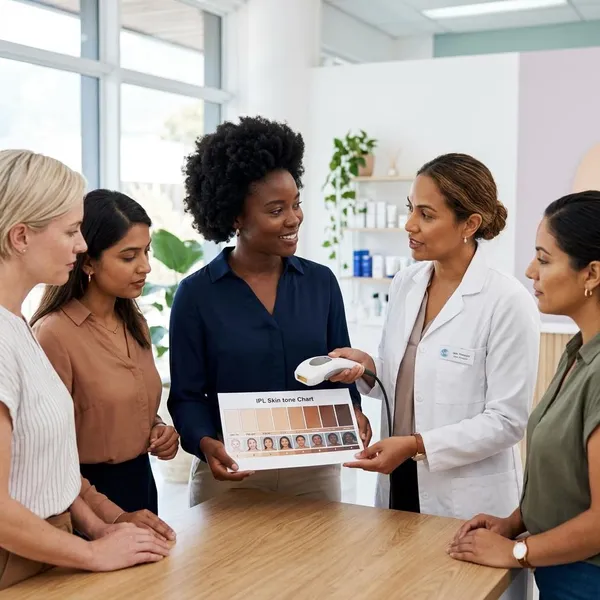
Is IPL safe for darker skin tones
IPL can be suitable for some darker skin tones, but only when the device specifically supports them. The issue is melanin: darker skin can absorb more light energy before it reaches the hair follicle, which raises the chance of pain, burns, or pigmentation changes. The chart is there to stop you from guessing.
Some devices support deeper skin tones
Some newer home IPL devices support deeper tones than older models, often by using tighter energy control, automatic adjustment, or more careful skin reading. That can help some users with brown or dark-brown skin, but it does not mean every dark skin tone is safe for every handset.
If you are buying mainly because a device claims "wider skin tone support," look for the actual shade chart before you pay. Marketing language is broad; the chart is where the real limit appears.
Compatibility limits vary by device
One model may support only lighter skin tones, while another may extend further. Some devices also set different rules for facial use, bikini line use, or recently tanned skin. A safe match on one device does not transfer automatically to another.
Skin sensors help prevent unsafe flashes
A skin tone sensor can be a useful backup because it may block flashes or adjust intensity when the skin appears too dark for the device. It is especially helpful if your tone varies across body areas or changes between seasons.
It is not a permission slip for unsupported skin. If the manual excludes your tone, the sensor does not make it safe; it only works within the device's intended limits.
Unsupported skin raises the risk of injury
Using IPL on unsupported skin raises the risk of strong stinging, prolonged redness, blistering, scabbing, and lighter or darker marks afterward. Recently tanned or irritated skin can be risky even if your normal untanned skin is supported.
Conclusion
The most useful way to use an IPL chart is to make it a stop-or-go check: treatment-area skin tone first, natural root color second, exact device support third. If the match is clear, you can move on to patch testing and a realistic schedule; if the match is borderline, recently tanned, or excluded, forcing treatment is not worth the risk. A device that fits your actual skin-and-hair combination will save more time than one that only looks suitable on a product page.