For many people, is IPL safe has a conditional answer: it can be safe when your skin tone, hair color, treatment area, and device settings all fit the instructions. The main risks are not mysterious; they usually come from treating tanned skin, using IPL on excluded areas, choosing too high an intensity, or ignoring early warning signs.
Who needs extra caution with IPL?
The first thing to check is not the brand or the price of the device. It is whether your skin is in a condition where light and heat are likely to be tolerated well. IPL uses non-ionizing light, but it still heats pigment, so people with more pigment in the skin, temporary tanning, light sensitivity, or irritated skin need a more careful approach.
Users with recently tanned skin
Recently tanned skin is one of the clearest reasons to pause IPL. A tan means there is more melanin in the skin, so the light may be absorbed by the skin surface rather than mainly by the hair follicle. That raises the chance of burns, blistering, and uneven pigmentation.
Users outside the device skin tone range
If your skin tone is outside the range shown in the manual, do not treat that area with the device. Most home IPL devices work best when there is clear contrast between darker hair and lighter skin. When the skin itself absorbs too much light, heat can build in the wrong place.
Built-in skin sensors are useful, but they are not permission to ignore the compatibility chart. Treat the chart as the rule and the sensor as a backup.
Users with photosensitivity
People whose skin reacts strongly to sunlight or bright light need extra caution with IPL. A normal setting for someone else may cause unusual redness, itching, rash-like irritation, or discomfort on light-sensitive skin.
A small skin test is still worth doing, but it cannot guarantee that a larger area will behave the same way. If you already know your skin flares after brief sun exposure, it is safer to ask a dermatologist before trying IPL at home.
Users taking photosensitizing medication
Some medicines and topical treatments can make skin more reactive to light. This may include certain acne treatments, antibiotics, anti-inflammatory medicines, diuretics, antifungals, retinoids, and some herbal supplements, depending on the product and timing.
Users with irritated or damaged skin
IPL should wait if the skin is sunburned, cut, infected, inflamed, peeling, raw, or unusually tender. Even mild post-shaving irritation or over-exfoliation can make treatment feel harsher and increase the chance of a lingering reaction.
- Low-risk situation: skin is calm, intact, not recently tanned, and within the device chart.
- Higher-risk situation: skin is darker than usual, reacting to products, recently treated with strong actives, or affected by a flare-up.
- Best decision when unsure: delay the session and check the manual or a professional source before flashing.
Where should you avoid using IPL?
A device can be suitable for your legs or underarms and still be wrong for other areas. Location matters because some skin is thinner, more pigmented, closer to the eyes, or specifically excluded by the manufacturer. If the manual does not clearly allow an area, skip it.
Around the eyes and eyebrows
Do not use IPL around the eyes or on the eyebrows. Closed eyelids are not enough protection, and the brow area sits too close to structures that should not be exposed to intense light.
Many home devices allow facial use only below the cheekbones, such as the upper lip, chin, or jawline. "Face-safe" rarely means the whole face.
Over tattoos and permanent makeup
Tattoos and permanent makeup can absorb IPL energy and heat up quickly. That can cause pain, blistering, burns, and visible damage to the ink.
Over very dark pigmented spots
Very dark moles, birthmarks, or concentrated pigmented spots should not be flashed directly. These areas can attract more energy than the surrounding skin and may burn or change color.
On areas excluded by the device manual
The manual wins over influencer advice, review videos, and advice from someone using a different model. Commonly excluded areas include genitals, nipples, the anus, inside the nose or ears, and some facial zones.
- Read the treatment-area page before using a new body part.
- Check the warnings for eyes, tattoos, moles, and intimate areas.
- Map the no-flash zones before turning the device on.
- Use another hair removal method where IPL is not clearly approved.
Is at-home IPL safe?
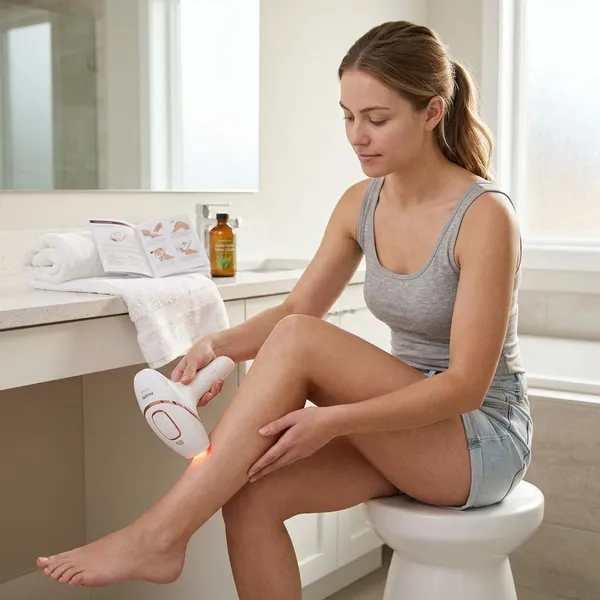
At-home IPL can be safe for suitable users, especially because consumer devices are generally designed with lower energy than professional systems. The trade-off is that you become the person responsible for checking skin tone, choosing settings, preparing the skin, and stopping when something looks wrong.
Home devices have specific compatibility limits
Every home device has its own skin tone and hair color limits. Dark blond, brown, or black hair on lighter approved skin usually gives the clearest target. Very light blond, red, gray, or white hair often responds poorly because there is little pigment for the light to target.
Built-in sensors can improve safe use
Skin tone sensors and contact sensors reduce some obvious mistakes. A sensor may block a flash on skin that appears too dark, while a contact sensor can prevent accidental flashes when the window is not fully against the skin.
These features do not detect everything that matters. They cannot reliably judge recent tanning, medication, a hidden irritated patch, or whether you are drifting too close to a tattoo.
User error can still cause problems
Most avoidable at-home IPL problems come from rushing: treating too often, flashing the same patch repeatedly, skipping the skin test, using a high level too early, or treating skin that has just been in the sun.
A beginner should treat IPL like a slow routine, not a quick fix before a holiday. For long-term use, consistency at the correct interval is usually safer than trying to force faster results with extra sessions.
Device instructions should take priority
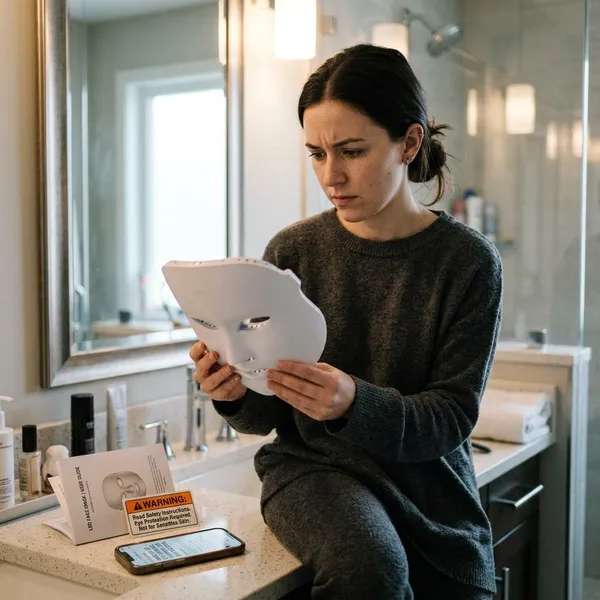
Follow the instructions for your exact model, not general IPL advice. Brands differ on facial use, bikini-line limits, patch testing, treatment intervals, attachments, shaving, intensity levels, and aftercare.
How to use IPL more safely
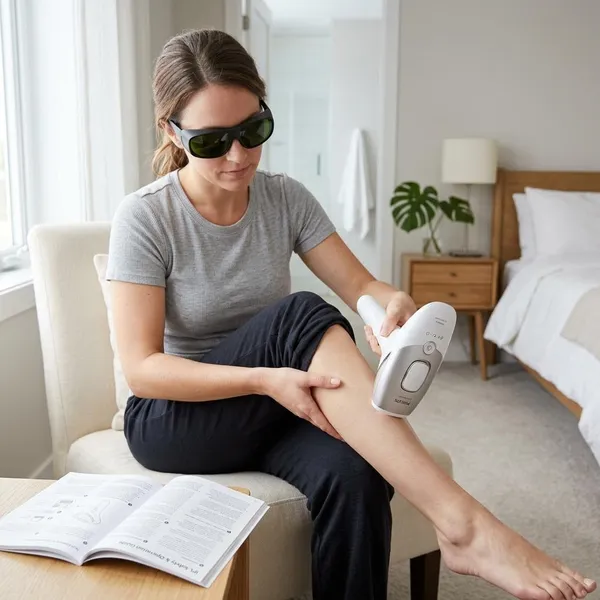
Safe use starts before the first flash. The most useful routine is: confirm compatibility, avoid tanning, test a small patch, start with an approved setting, follow the schedule, and protect the skin afterward.
Check skin and hair compatibility
Use the chart for your exact device and check the specific area you plan to treat. Your forearm, bikini line, and face may not all have the same tone or sensitivity, so one safe area does not automatically approve another.
Avoid treating recently tanned skin
Do not treat skin that is visibly darker than its usual tone. Dates can be misleading; the better check is whether the area has actually returned to baseline after sun exposure, tanning beds, outdoor sports, or self-tanner.
Complete the recommended skin test
Do the patch test exactly as the device instructions describe and wait the full observation period. The goal is not just to see whether the flash hurts; it is to check whether redness, swelling, heat, or irritation settles normally afterward.
Use the recommended intensity
Choose an intensity that is approved for your skin tone and tolerable on that area. A mild warm snap can be normal. Sharp pain, strong heat, or skin that looks increasingly angry means the setting is too aggressive or the area is not suitable.
- First session: start cautiously, even if the device allows a higher level.
- Sensitive area: use the lower approved range and watch the reaction closely.
- Repeated discomfort: stop instead of pushing through.
Follow the treatment schedule
IPL works with hair growth cycles, so extra sessions usually do not mean faster results. They are more likely to add irritation. Follow the device schedule for the initial phase and maintenance phase rather than flashing whenever you notice regrowth.
Protect treated skin from excess sun
After treatment, keep exposed areas protected from strong sun and avoid adding unnecessary irritation. Gentle cleansing, basic moisturizer, and sunscreen on exposed skin are usually more sensible than strong acids, scrubs, retinoids, or heat-heavy activities right away.
When should you stop using IPL?
Some mild warmth, pinkness, or slight follicle swelling can happen after IPL and often settles within hours. Stop when the reaction moves in the wrong direction: worsening redness, blistering, burns, pigment changes, or any eye-related symptom.
Redness keeps getting worse
Pause treatment if redness spreads, becomes hotter, or feels more tender instead of calming down. Cool the area gently, avoid harsh skincare, and do not treat over it again while it is irritated.
If it keeps worsening or does not improve as expected, get medical advice rather than lowering the setting and trying again immediately.
Blisters or burns develop
Blisters or burns are a clear stop sign. Do not test another flash, scrub the area, or apply strong active skincare. Protect the skin and seek medical advice promptly if the burn is painful, widespread, oozing, or on a sensitive area.
Pigmentation changes appear
New darker patches, lighter patches, or uneven color changes mean IPL should be paused. Continuing before you know the cause can make pigmentation harder to settle, especially after tanning or on skin prone to post-inflammatory marks.
Eye symptoms occur
Eye pain, blurred vision, flashing lights, unusual light sensitivity, or any visual change after IPL needs urgent assessment. Do not wait to see whether it passes, and do not use the device again near the face until you have proper guidance.
Conclusion
IPL is safest when you treat it as a controlled light-based treatment, not a casual beauty gadget. If your skin and hair match the device, the area is approved, your skin is calm and untanned, and you are willing to follow the schedule, it can be a reasonable option; if any of those checks fail, waiting or choosing another method is the safer decision.