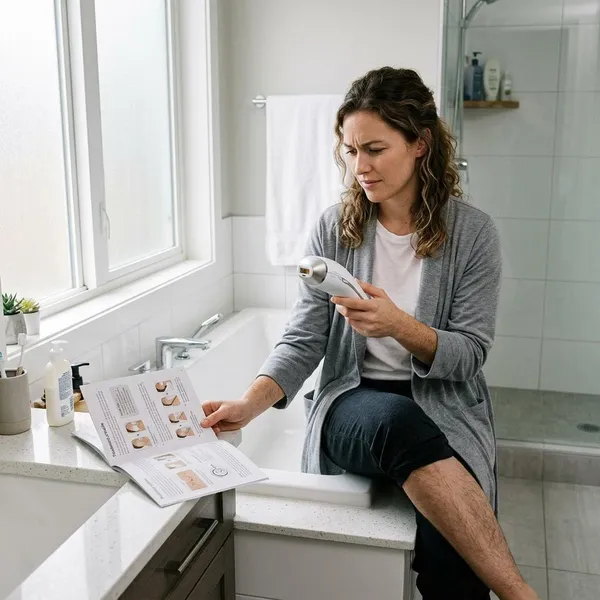
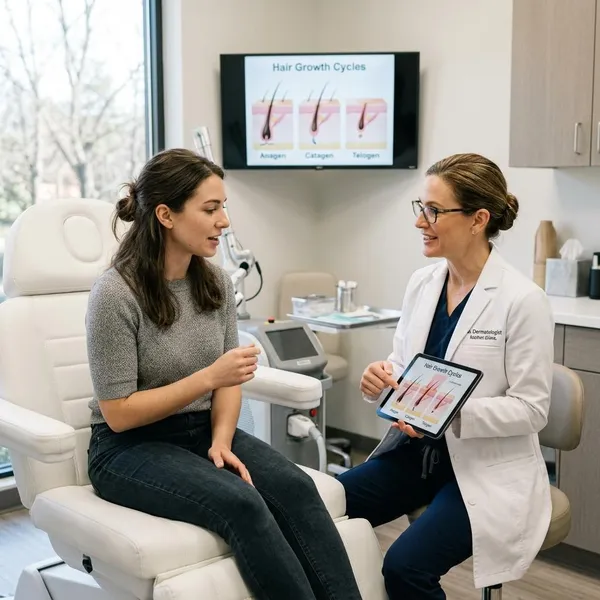
If you are looking at a peach fuzz ipl hair removal device, the honest answer is that IPL usually is not the best match for true peach fuzz. It works by targeting pigment in the hair, so soft, fine, light facial fuzz often gives the light very little to grab onto. Before buying or using one, check three things first: whether the hair is genuinely dark, whether the area is approved for facial treatment, and whether your skin tone is within the device's safe range.
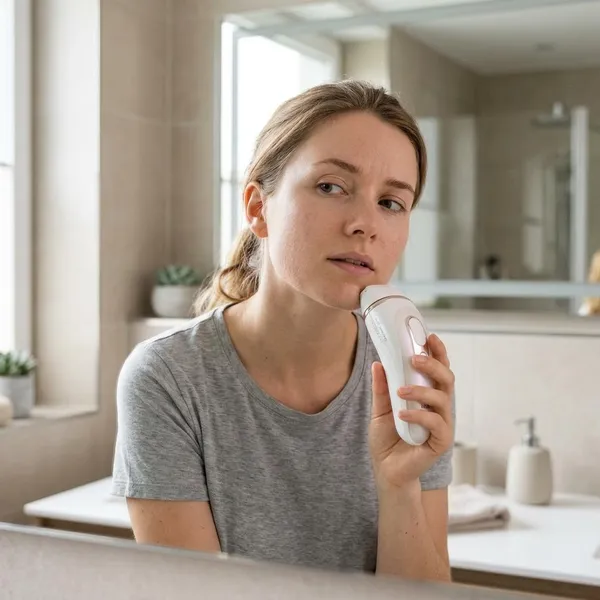
Why does IPL struggle with peach fuzz?
IPL is usually disappointing on peach fuzz because the hair is a weak target. The technology works best when there is enough contrast between the hair and surrounding skin, and when the hair shaft is thick enough to absorb and transfer heat toward the follicle.
That is why someone may get decent results on legs or underarms but see almost no change on the cheeks or jawline. The device is not always the problem; the hair type often is.
Fine hair contains less melanin
Peach fuzz, or vellus hair, usually contains much less melanin than darker terminal hair. Since IPL relies on melanin to absorb light, pale or translucent facial fuzz often does not heat well enough for meaningful reduction.
Less pigment absorbs less light
Less pigment means less light absorption, and that usually means weaker results. You can follow the treatment schedule carefully, shave first as directed, and still see little change if the hair itself does not absorb enough energy.
- Good IPL target: dark, visible, slightly coarse facial hair.
- Poor IPL target: pale, soft, downy fuzz on the cheeks or sides of the face.
- Unclear case: upper lip hair that looks darker in some lighting but fine in natural light.
Higher settings cannot fix poor targeting
Turning the device up is one of the most common mistakes. If the hair is too fine or too light, a higher setting usually does not make it a better target; it may simply make the skin more irritated.
This matters more on the face than on larger body areas. The upper lip, chin, and jawline can react with redness or stinging, especially if you keep increasing intensity to chase a result that the hair type cannot realistically provide.
When can facial IPL still make sense?
Facial IPL can still be useful, but mainly for facial hair that behaves more like body hair: darker, coarser, and clearly visible against a compatible skin tone. It is less about "face versus body" and more about whether the individual hairs are suitable targets.
The safest way to decide is to separate your facial hair into zones. Soft cheek fuzz, a few coarse chin hairs, and a darker upper lip shadow should not all be judged the same way.
Dark upper lip hair
Dark upper lip hair can respond better than peach fuzz when the strands are visibly pigmented and not too fine. If the hair creates a noticeable shadow even after shaving, IPL may have a better chance of slowing regrowth over time.
Still, the upper lip is a sensitive area. Use only a device approved for facial use, avoid treating too close to the lips or nose unless the manual allows it, and do not shorten the waiting time between sessions just because the area is small.
Coarse chin hair
Coarse chin hair is often a more realistic IPL target than soft fuzz. A person with repeated dark chin regrowth over a small patch may see more benefit than someone trying to treat a full face of pale vellus hair.
If you only have two or three stubborn chin hairs, IPL may be more effort than it is worth. Threading, tweezing, or electrolysis can be more precise for isolated hairs, while IPL makes more sense for a recurring patch of darker growth.
Compatible skin and hair tones
The first serious check is not the brand name; it is the skin tone and hair color chart for that exact device. IPL generally needs enough contrast to target the hair without overheating the surrounding skin.
- More suitable: darker facial hair on a skin tone listed as safe by the device maker.
- Less suitable: blond, red, gray, white, or very fine facial hair.
- Do not guess: if your skin tone is outside the approved range, treating longer or stronger is not a safe workaround.
Device-approved facial areas
Only use IPL on facial areas the manufacturer specifically approves. Many devices allow certain zones such as the upper lip, chin, or jawline, but restrict use near the eyes or on areas where the skin is more delicate.
What works better for peach fuzz?
For true peach fuzz, removal methods that do not depend on pigment are usually more satisfying. The right choice depends on whether you want smoother skin today, tidier small areas, or the longest-lasting result possible.
If your main issue is makeup catching on fuzz or your skin looking textured in bright light, surface removal is often enough. If the goal is permanent reduction, electrolysis is the option to look at more seriously.
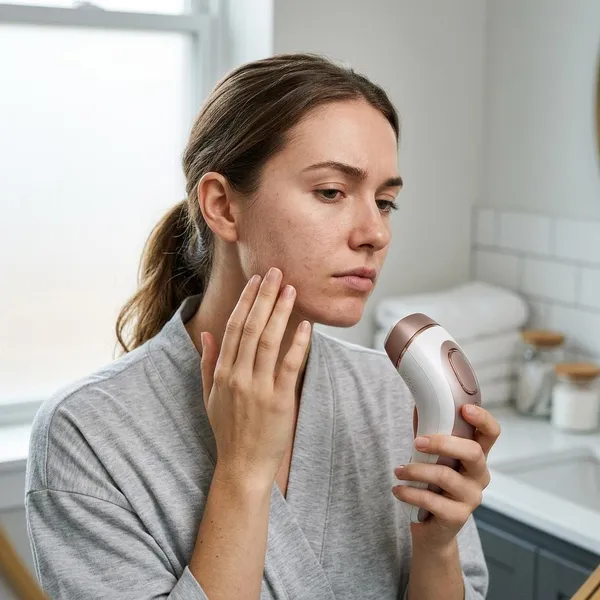
Dermaplaning for surface smoothing
Dermaplaning is a good fit when peach fuzz is mostly a texture issue. It removes fine facial hair at the surface and can make skin feel smoother, especially before makeup, photos, or an event where you want a cleaner finish.
It is not permanent, and it should be done gently. Avoid dermaplaning over active breakouts, irritated skin, or right after strong exfoliating products, because the goal is a smooth surface, not an angry one.
Facial shaving for quick removal
Facial shaving is the simplest option for quick peach fuzz removal. It does not care whether the hair is blond, gray, fine, or barely pigmented, so the result is much more predictable than IPL for soft facial fuzz.
Shaving does not make peach fuzz grow back thicker. It can feel a little blunt at first because the tip has been cut, but it does not change the hair's actual color, diameter, or growth speed.
Threading for small areas
Threading works well when you want precision on a small area, such as the upper lip, brow edges, or a narrow patch of facial fuzz. Because it removes hair from the root, the result usually lasts longer than shaving.
It can be uncomfortable and may leave temporary redness, so it is better for targeted cleanup than full-face maintenance. For someone who only notices fuzz in one small strip, threading can be more practical than buying a device.
Electrolysis for permanent removal
Electrolysis is the strongest option when you want permanent removal of fine or light facial hair. Unlike IPL, it does not rely on hair pigment, which makes it better suited to peach fuzz, blond hairs, gray hairs, and mixed facial hair patterns.
The tradeoff is time. Electrolysis treats follicles individually and usually requires multiple sessions, so it is not the easiest choice for casual smoothing. It makes more sense when the hair bothers you long term and you want a more definitive route than repeated shaving or dermaplaning.
| Goal | Better option | Why it fits peach fuzz |
|---|---|---|
| Smoother skin before makeup or photos | Dermaplaning | Fast surface smoothing without needing pigment |
| Cheap, repeatable home removal | Facial shaving | Predictable for fine, light fuzz |
| Small precise areas | Threading | Removes from the root and works on light hair |
| Permanent removal | Electrolysis | Treats follicles individually without relying on melanin |
Conclusion
IPL is worth considering only if the facial hair is dark, coarse enough to target, and in an approved treatment area for your skin tone. For true peach fuzz, it is usually smarter to choose a method that matches the problem: shaving or dermaplaning for quick smoothing, threading for small precise areas, and electrolysis if you want the most permanent solution.