Home IPL can be a sensible hair-removal option for the right user, but FDA clearance and CE marking are not magic safety guarantees. The safest way to judge a device is to verify the exact model, check whether the claims match official records, and make sure the device suits your skin tone, hair color, and treatment habits.
What does FDA clearance mean for home IPL?
FDA clearance means a specific device has gone through a U.S. regulatory review route for a stated use. For home IPL, that is usually about whether the product can be legally marketed for hair reduction under the details submitted by the manufacturer.
The part many shoppers miss is scope. FDA clearance is useful, but it does not mean every device from the same brand is covered, and it does not mean the device is suitable for every skin tone, every body area, or every user.
Clearance applies to specific devices
FDA clearance is tied to the device identified in the record, not to a whole product family. If a brand sells several IPL handsets with similar names, only the model that matches the listing should be treated as cleared.
510(k) is based on substantial equivalence
Many home IPL devices that use FDA clearance language refer to the 510(k) pathway. In plain English, the manufacturer shows that the device is substantially equivalent to another legally marketed device for a similar intended use.
- Useful: it creates a traceable regulatory record.
- Limited: it is not a personal safety assessment for your skin.
- Worth checking: the intended use in the record should match the sales claim.
FDA cleared is not FDA approved
"FDA cleared" and "FDA approved" are not the same thing. Most home IPL devices should not be marketed as FDA approved unless the seller can show that exact approval route applies.
If a listing uses "approved" loosely, treat it as a reason to verify more carefully. Accurate brands usually use precise regulatory wording because the difference is not just a technicality.
Clearance does not guarantee zero side effects
Even a cleared device can cause redness, irritation, pigment changes, burns, or blistering if it is used on unsuitable skin, over recent tanning, at too high an intensity, or on areas the manual excludes.
What does CE marking mean for home IPL?
CE marking is a European conformity mark. It means the manufacturer states that the product meets the applicable EU requirements for that type of product, supported by the relevant documentation.
It should not be read as "the EU tested this exact IPL device and guarantees it is safe for me." For a buyer, CE marking is one checkpoint, not the final answer.
It shows conformity with applicable EU rules
A legitimate CE mark should connect to a real product, a real manufacturer or responsible party, and documentation such as a Declaration of Conformity. The model name on that paperwork should match what you are buying.
It is not an EU safety approval
CE marking is not the same as a separate authority personally approving every home IPL device for every user. In many cases, it involves the manufacturer declaring conformity and keeping technical documentation.
What safety features matter beyond certification?
The best safety features are the ones that stop common home-use mistakes before they happen. A first-time user needs the device to prevent wrong settings and poor contact; a regular user needs it to keep sessions consistent instead of encouraging shortcuts.
When comparing devices, give priority to features that control light output, confirm proper skin contact, and make unsuitable use harder.
Skin tone detection
Skin tone detection helps reduce the chance of using IPL where the skin may absorb too much light energy. It is especially important for users near the darker end of the device's allowed skin-tone chart.
Still, treat the sensor as a backup, not permission to ignore the manual. Recent tanning, self-tanner, uneven pigmentation, or dark marks can make a "normally suitable" area less safe for treatment.
Adjustable intensity levels
Adjustable intensity lets you start low, patch test, and increase only if your skin reacts normally. That matters on sensitive areas such as underarms or the bikini line, where jumping straight to a high setting can be a bad trade-off.
Skin contact sensors
A skin contact sensor should stop the device from flashing unless the treatment window is properly against the skin. This reduces accidental flashes into the air and discourages sloppy angles.
For beginners, a device that feels slightly slower because it requires firm contact is often safer than one that fires too easily.
Clear treatment-area guidance
Good instructions should say exactly where the device can and cannot be used. "For body and face" is too vague if it does not explain facial limits, eye-area restrictions, or areas to avoid.
- Check before buying: whether the manual names approved body areas.
- Check before using: whether moles, tattoos, broken skin, or irritated areas must be avoided.
- Be extra cautious: with facial use, because eye safety and positioning matter more.
Eye safety design
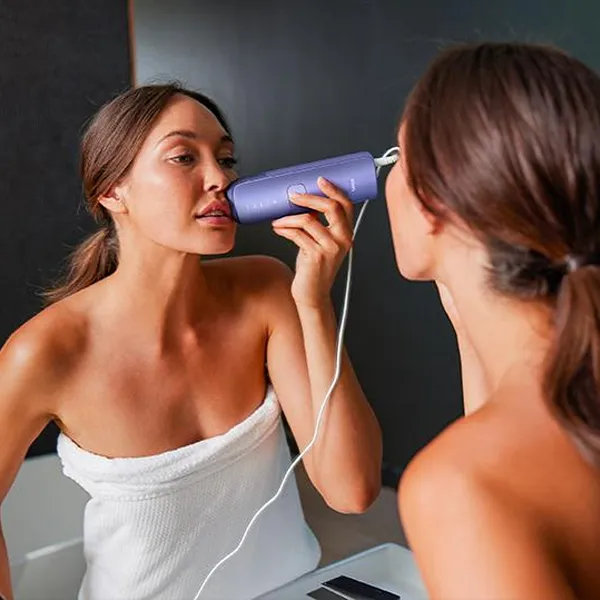
IPL flashes are bright enough that eye safety should be taken seriously. Look for design features such as a recessed treatment window, contact-based flashing, and instructions that clearly limit facial use.
Clear contraindications and warnings
Strong warnings are not a nuisance; they are one of the clearest signs that a brand understands real use. The manual should explain who should not use the device or who should ask a clinician first.
Pay close attention if you have a history of pigment changes, active skin conditions, recent sunburn, tattoos in the treatment area, or medication that can increase light sensitivity. In those cases, the right decision may be to delay treatment or get professional advice instead of trying to "use a lower setting and hope."
How to verify IPL safety claims
Start with the claim that can be checked, not the one that sounds most reassuring. "FDA cleared," "CE marked," and "dermatologist tested" all mean different things, so the first job is to connect the claim to the exact device.
The fastest useful check is model number first, database or documentation second, and consistency across the device, box, manual, and seller page third.
Find the exact model number
Look for the model number on the product page, packaging, device label, and manual. A product name such as "IPL hair removal handset" or a broad series name is not enough.
If the seller cannot tell you the exact model, or the listing shows different model names in different images, that is a practical red flag. It may still be a real product, but you cannot verify the claim cleanly.
Check the FDA 510(k) database
For a U.S. FDA clearance claim, search the FDA 510(k) database using the company name, device name, or 510(k) number if the seller provides one.
Do not stop at finding any result. Check whether the record refers to a home-use IPL hair reduction device and whether the manufacturer, model, and intended use line up with the product being sold.
Check the CE documentation
For CE claims, look for a Declaration of Conformity or other manufacturer documentation that identifies the device. The document should not be a generic certificate with no model detail.
Useful paperwork usually makes three things clear: the company responsible, the product or model covered, and the applicable regulatory framework or standards. If those details are missing, the CE claim is hard to trust.
Match the records to the device
This is where many vague claims fall apart. Compare the model number, manufacturer name, device description, intended use, and regional version across the official record, the manual, the packaging, and the seller page.
A small spelling difference may be harmless, but a different model code, different manufacturer, or different intended use is not something to brush aside. When the records do not clearly match, choose a device that is easier to verify.
Be cautious with vague certification claims
Phrases such as "FDA technology," "internationally certified," "European approved," or "medical-grade IPL" are weak unless they are backed by specific records.
- Better claim: exact model plus a traceable FDA 510(k) reference.
- Better CE evidence: model-specific Declaration of Conformity.
- Better seller behavior: clear manual, consistent labels, and no evasive answers.
How to check a Ulike IPL device
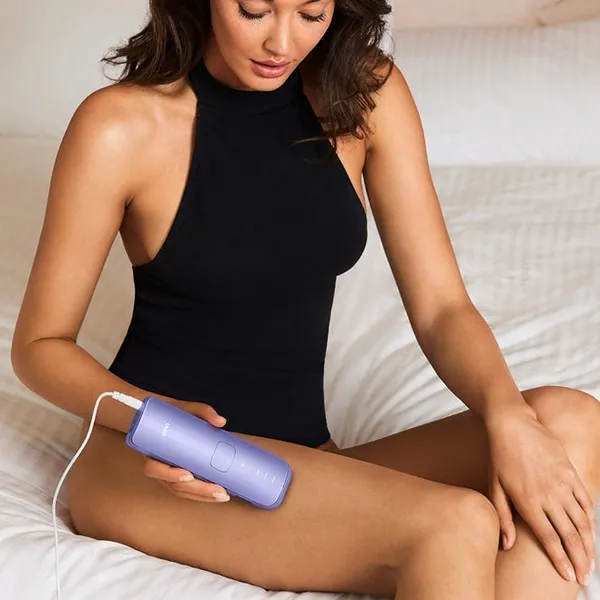
Check a Ulike IPL device the same way you would check any home IPL product: exact model first, regulatory claim second, personal suitability third. A familiar brand name can be reassuring, but it should not replace model-level verification.
Confirm the exact Ulike model
Find the exact Ulike model name or code on the official product page, box, device label, and manual. The wording should be consistent across those sources.
If you are comparing two similar-looking Ulike devices, do not assume they share the same documentation or safety features. Different generations or regional versions may have different manuals, accessories, or claims.
Match it to the FDA listing
If the U.S. product page claims FDA clearance, compare the Ulike model to the relevant FDA record. Look at the listed company, device description, intended use, and any model information available.
A screenshot of a badge is weaker than a database match. If the official record does not clearly connect to the device you are buying, ask the seller or choose a clearer source.
Check regional CE information
For a Ulike device sold in a CE-relevant market, check the regional documentation rather than assuming one country's listing applies everywhere. The model, manufacturer or responsible party, and packaging should all match.
This matters when buying while traveling or ordering across borders. A device that looks familiar online may arrive with different labeling or documents, and that makes verification harder.
Review skin and hair suitability
Before using the device, compare your skin tone and hair color with the suitability chart in the manual. IPL generally depends on contrast between hair pigment and skin, so very light hair or darker skin may reduce effectiveness or increase risk depending on the device.
Think about your timing too. Someone using IPL year-round on untanned skin has a different risk profile from someone starting treatments in summer after recent sun exposure. If your skin has recently tanned or burned, delaying treatment is usually the safer choice.
Follow the device safety instructions
Use the manual as the rulebook, not as optional fine print. The most common mistakes are starting too high, skipping the patch test, treating after tanning, overlapping flashes too heavily, or using the device on areas the manual excludes.
- Screen first: check contraindications, skin tone, hair color, and treatment-area limits.
- Prepare the area: shave, clean the skin, and remove lotion, deodorant, or oils.
- Patch test: use the recommended starting setting and wait as instructed.
- Treat methodically: avoid repeated flashes over the same small spot.
- Stop if needed: persistent pain, blistering, or unusual pigment change is a reason to pause and seek medical advice.
Conclusion
FDA clearance and CE marking are worth checking, but they are only the starting point for judging a home IPL device. The smarter decision is to verify the exact model, look for safety features that prevent real user mistakes, and be honest about your own skin tone, tanning history, treatment area, and sensitivity. If those pieces do not line up clearly, it is safer to wait, ask questions, or choose a better-documented device.