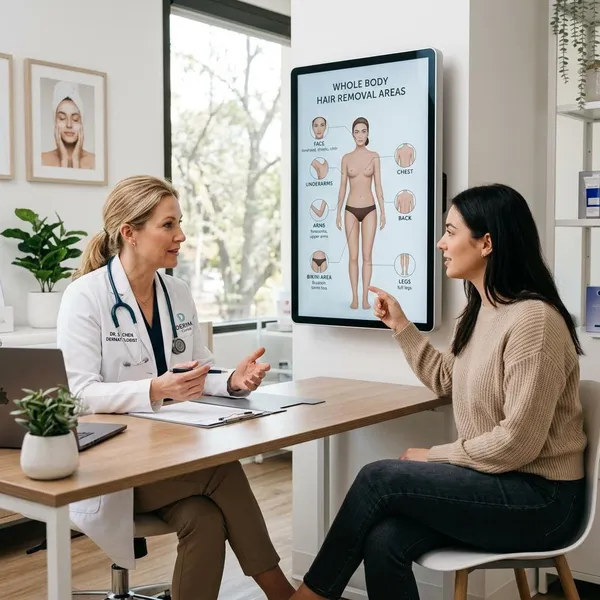
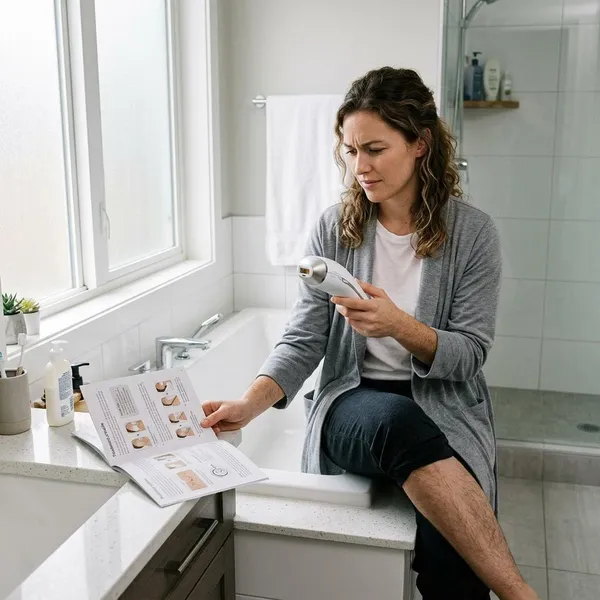
IPL hair removal is a light-based way to reduce hair growth over time, not a one-session fix or a guaranteed permanent removal method. It works best when the device can clearly "see" dark hair against a suitable skin tone, so the first thing to check is not the price or the number of flashes, but whether your skin, hair color, treatment area, and health situation are actually compatible.
What does IPL hair removal mean?
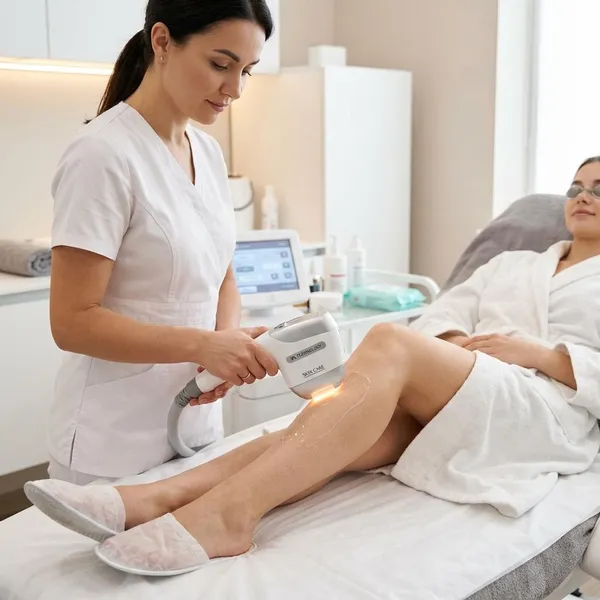
IPL stands for Intense Pulsed Light. For hair removal, it means a device sends flashes of broad-spectrum light into the skin so the pigment in the hair absorbs the energy. That energy is then converted into heat, which can weaken the follicle's ability to keep producing strong hair.
The important word is reduction. IPL is not the same as shaving, where the visible hair is cut at the surface, and it is not a promise that every follicle will stop working forever. A realistic result is slower regrowth, finer hair, and longer gaps between shaving or trimming.
How IPL hair removal works
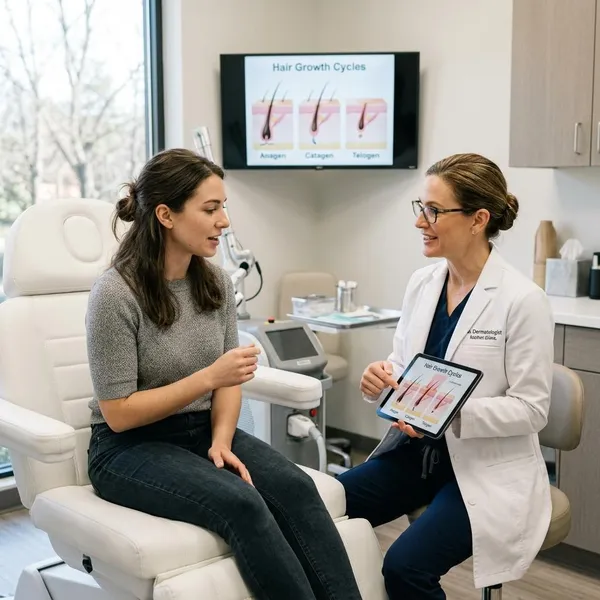
The process is simple in principle: the device flashes light, the hair pigment absorbs it, and heat affects the follicle. The reason it takes weeks rather than one treatment is that hairs grow in cycles, and IPL only works well on hairs that are in the right growth stage at the time of treatment.
Light is absorbed by pigment in the hair
IPL depends on melanin, the pigment that gives hair its color. Dark brown and black hair usually absorb the light best, while light blonde, red, gray, and white hair often respond poorly because there is not enough usable pigment for the device to target.
This is also why contrast matters. Dark hair on light to medium skin is usually the easiest match for many home IPL devices. If the surrounding skin has more pigment, the device may not be suitable, or it may need a lower setting or a different technology altogether.
Heat targets the hair follicle
Once the hair absorbs the light, the energy turns into heat and travels toward the follicle. The aim is to stress the growth structures enough that future hair becomes slower, finer, or less dense.
The feeling is often described as a quick warm snap. Legs may feel easy to treat, while underarms, bikini line, and upper lip can feel sharper because the skin is more sensitive or the hair is denser. If a flash feels hot, painful, or leaves lingering redness, the setting or device may not be right for that area.
Repeat sessions treat hairs as they grow
Repeated sessions matter because not every hair is active at the same time. A single pass can treat some follicles and miss others, so results usually appear in stages: first slower regrowth, then patchier growth, then less frequent maintenance.
- Shave first: leave the root under the skin, but remove surface hair so the light is not wasted above the skin.
- Treat clean, dry skin: avoid lotion, deodorant, oils, and self-tanner unless the device instructions say otherwise.
- Follow the schedule: early sessions are usually closer together; later sessions become maintenance.
- Do not switch to waxing: pulling the root out makes it harder for IPL to target the follicle.
What results can you expect from IPL?
Expect gradual improvement, not instant bare skin. A good sign is needing to shave less often, seeing finer regrowth, or noticing that some patches stay smooth longer than before. Complete hair disappearance after only a few sessions is not a sensible benchmark.
Gradual reduction in regrowth
Early results are often easiest to notice in your routine. If you used to shave your lower legs every two days and later only need to shave once a week, that is meaningful progress even if some hair is still present.
Results that vary by hair, skin, and device
Results vary most by four things: natural hair color, skin tone, treatment area, and device strength. Coarse dark underarm or leg hair often responds more clearly than fine facial hair. Hormone-influenced areas, such as the chin or lower abdomen, may need more regular touch-ups.
Device design matters too, but a stronger-looking device is not automatically better for every user. Skin tone sensors, adjustable intensity levels, and clear area approvals are often more useful than choosing purely by power claims.
Maintenance rather than guaranteed permanent removal
IPL is best treated as long-term hair management. Some follicles may stay quiet for a long time, while others recover or produce new growth later, especially during hormonal changes.
That does not make IPL pointless. For many people, a short maintenance session every few weeks or months is still easier than constant shaving or waxing. It suits people who are comfortable with a routine; it is less ideal if you want a one-time treatment and never want to think about hair removal again.
How is IPL different from laser hair removal?
IPL and laser hair removal both use light energy, but they deliver it differently. Laser is more focused; IPL spreads light across multiple wavelengths. In everyday terms, laser is often the more precise professional option, while IPL is commonly the more accessible home-maintenance option.
Broad-spectrum light versus a single wavelength
Laser devices use one concentrated wavelength aimed at the follicle. IPL uses a broader range of light, so the energy is less focused. That broader spread is one reason IPL is common in home devices, but it can also mean results take longer or require more maintenance.
Device-specific skin and hair suitability
The safest choice depends on the exact device, not just the label "IPL" or "laser." One IPL model may allow certain medium skin tones, while another may not. Professional laser systems also vary, and some are better suited to darker skin tones when used by trained providers.
Treatment schedules and maintenance needs
Home IPL usually asks for more frequent early sessions because the energy level is designed for consumer use. Clinic laser or professional IPL may use stronger settings with appointments spaced farther apart.
| Situation | IPL may suit you if | Laser may be worth considering if |
|---|---|---|
| Budget and convenience | You prefer treating small areas at home on your own schedule. | You are willing to book appointments for a more supervised plan. |
| Speed of results | You can accept gradual change over several weeks. | You want a stronger professional approach and faster visible reduction may matter more. |
| Suitability concerns | Your skin tone and hair color clearly match the device chart. | Your skin tone, hair type, or medical history needs more careful assessment. |
How to check whether IPL suits you
Before buying or using an IPL device, check suitability in this order: skin tone, natural hair color, approved body areas, then health and medication warnings. Skipping this step is the most common mistake because IPL can look simple while still being unsuitable for certain skin, hair, or health situations.
Check the device's skin tone chart
Use the chart for the skin on the area you want to treat, not the lightest part of your body. If your legs are tanned, your bikini line is darker, or your face has pigmentation marks, those areas need to be judged separately.
Do not use self-tanner to "even out" the area before IPL. Artificial tan can increase light absorption at the skin surface and may raise the risk of irritation or discoloration. If you are close to the darkest approved shade, choose the most cautious setting allowed by the instructions or get professional guidance first.
Check your natural hair color
Look at the hair near the root, not dyed or sun-lightened ends. IPL targets the natural pigment below the skin, so dyeing blonde or gray hair darker does not make the follicle more responsive.
- Usually better match: black, dark brown, and some medium brown hair.
- Often weak response: light blonde, red, gray, and white hair.
- Worth testing carefully: mixed-color or fine hair, if the manufacturer allows a patch test.
Confirm the approved body areas
A device approved for legs is not automatically approved for every area. Many home IPL devices allow legs, arms, underarms, and bikini line, but rules can differ for the face, nipples, genitals, tattoos, moles, and areas close to the eyes.
Review health and medication restrictions
Read the safety warnings before the first flash, especially if you take medication, have a skin condition, are recently tanned, or have had strong reactions to light-based treatments before. Some medications and skin treatments can make skin more light-sensitive, and active irritation, sunburn, broken skin, or recent cosmetic procedures may make IPL a poor idea until the skin has recovered.
If hair growth is sudden, heavy, or appears alongside other symptoms, it is sensible to ask a clinician before treating it as a simple grooming issue. IPL can help reduce visible hair for some people, but it cannot diagnose or fix the reason new hair growth has appeared.
Conclusion
IPL is worth considering when your natural hair color, skin tone, treatment area, and health situation all fit the device guidance, and when you are happy to treat it as a routine rather than a permanent cure. If any of those checks are unclear, sort them out before buying a device; the best result comes from choosing a method that suits your body, not from pushing a light-based treatment where it does not belong.