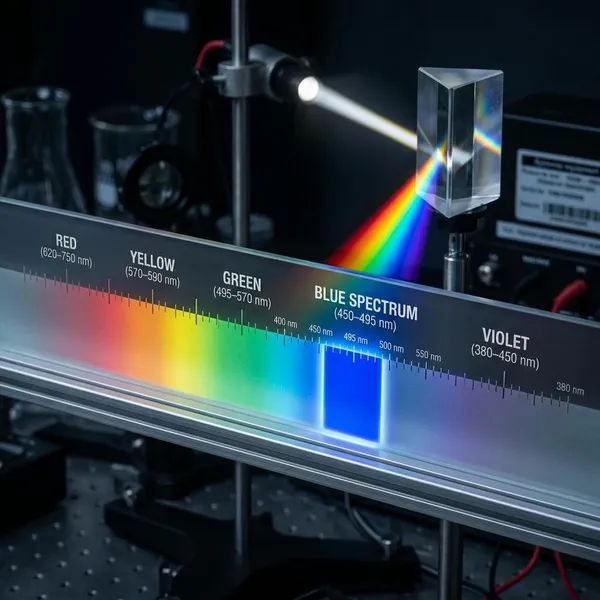
If you are checking a blue light device for acne, the wavelength to look for is usually around 415 to 420 nm. Blue light therapy can sit anywhere in the broader 400 to 470 nm range, but not every blue wavelength is aimed at the same skin goal. For breakouts, wavelength matters most when it matches the surface-level bacterial target and comes with a realistic treatment dose.
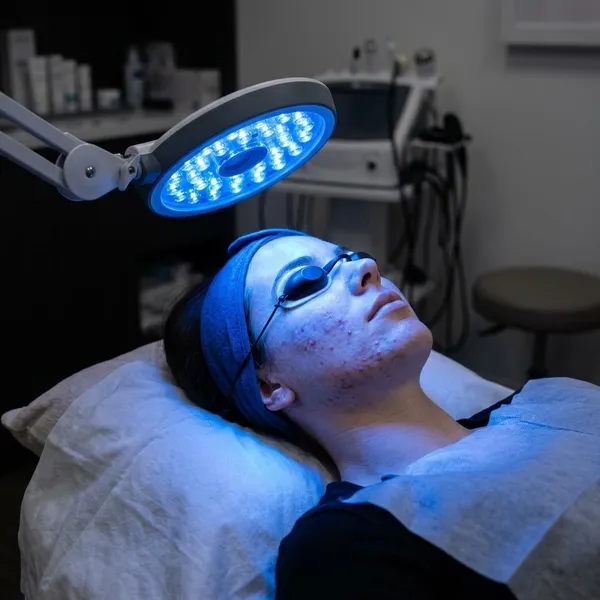
Blue Light Therapy Wavelengths Compared
Blue light therapy is often described as one category, but the exact wavelength gives you a better clue about what the device is designed to do. A device marketed for acne should ideally state its wavelength clearly, not just say "blue LED."
400 to 420 nm for acne-focused treatments
400 to 420 nm is the range most closely tied to acne-focused blue light treatment. The commonly discussed point is 415 nm, because it sits near the absorption range of porphyrins produced by Cutibacterium acnes.
This is the range I would pay the most attention to if the goal is frequent small pimples, oily breakout-prone areas, or mild to moderate inflammatory acne. It is less convincing as a stand-alone choice for deep, painful cysts, where the problem is not only surface bacteria.
420 to 450 nm for general blue LED applications
Devices in the 420 to 450 nm range can still be useful, but they are often positioned more broadly. You may see them in LED masks that combine blue light with red light or in beauty tools aimed at "blemish-prone" skin rather than acne treatment specifically.
- Occasional blemishes: this range may be reasonable if the device is easy to use consistently.
- Persistent acne: look for clearer acne-specific data, not just a blue glow and marketing claims.
- Sensitive skin: check whether the protocol is gradual and whether eye protection is addressed.
450 to 470 nm in broader consumer device ranges
450 to 470 nm is still blue light, but it is not the range most often highlighted for acne-related bacterial targeting. If a product in this range promises breakout control, the wavelength alone should not be the selling point.
Why Is 415 to 420 nm Used for Acne Treatment?
415 to 420 nm is used for acne because it lines up with a known surface-level mechanism: acne-related bacteria produce compounds that can absorb blue light. That makes this range more specific than simply choosing any blue-colored LED.
The useful way to think about it is not "blue light kills acne," but "the right blue wavelength may help reduce bacterial activity in the upper skin layers." That distinction matters if you are deciding between a mild breakout tool and medical acne care.
Blue light targets acne-related bacteria near the skin surface
Blue light is a surface-focused treatment, which fits many acne situations because acne-related bacteria and clogged pores are often close enough to the outer layers of skin to be reached. For small recurring pimples on the forehead or chin, that surface action can make sense.
For deep nodules, cystic acne, or acne that is leaving scars, the same shallow action is a limitation. In that situation, blue light may be a supporting option, but it should not delay dermatologist-guided treatment.
Porphyrins in bacteria absorb blue light energy
Cutibacterium acnes can produce porphyrins, and these molecules absorb blue light energy. When that happens, it can trigger reactive oxygen species that may damage the bacteria.
This is why 415 nm blue light therapy gets more attention than a random blue LED. The value is in the match between wavelength and target, not in the color alone.
Light-triggered reactions help reduce bacterial activity
The antibacterial effect is photochemical, not abrasive. Blue light does not scrub pores, peel the skin, or heat blemishes away; it depends on repeated exposure to create a useful response in the treated area.
- Good fit: mild inflammatory breakouts and recurring surface pimples.
- Weak fit: deep cysts, severe acne, or acne mainly driven by hormonal changes.
- Common mistake: stopping after a few sessions and judging the device too early.
How Does Blue Light Wavelength Affect Skin Treatment?
Wavelength affects what the light is most likely to interact with and how far it can travel into the skin. Within the blue range, the differences are smaller than the difference between blue and red light, but they still matter when a product is making acne claims.
If your main concern is acne, start with the wavelength, then check the device output and schedule. If your concern is redness, recovery, or visible aging, blue light alone is usually not the most relevant tool.
Shorter blue wavelengths focus on surface-level concerns
Shorter blue wavelengths are mainly useful for concerns close to the skin surface. That is why lower blue ranges are commonly connected with acne-prone skin rather than deeper structural changes in the dermis.
Longer wavelengths within the blue range have different effects
Longer blue wavelengths may still have skincare uses, but they may not match the acne-related porphyrin mechanism as closely as 415 to 420 nm. This does not make them useless; it means the claim needs more support from the rest of the device design.
For example, a full-face mask using 445 nm might still be more practical for someone with scattered mild blemishes than a tiny 415 nm spot device they never use properly. Wavelength matters, but real-world use matters too.
Light penetration changes depending on wavelength
As wavelength increases, light generally penetrates farther, but blue light remains shallow compared with red or near-infrared light. That is why blue light is usually judged by how well it treats surface-level targets, not by whether it reaches deeper tissue.
A useful buying check is to match the claim to the depth: acne-related surface support is plausible; deep collagen remodeling from blue light alone deserves skepticism.
Why Does Blue Light Only Reach the Skin Surface?
Blue light has a shorter wavelength, so it scatters and is absorbed more readily in tissue than longer wavelengths. That keeps most of its effect close to the surface, which is both its strength and its limitation.
Blue light has limited penetration compared with red light
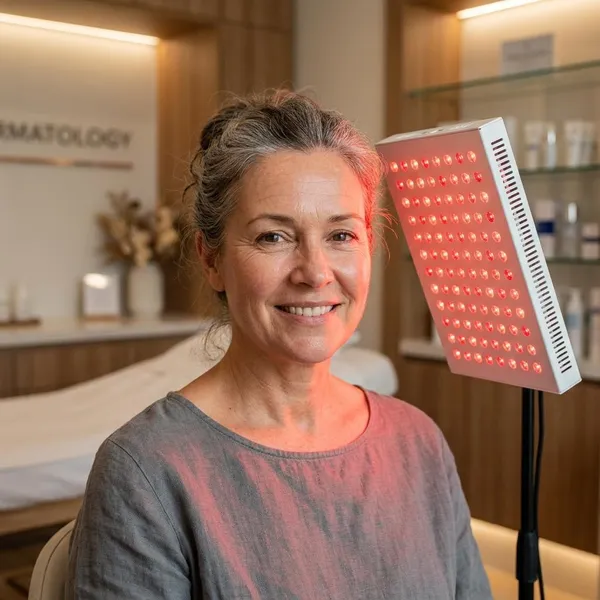
Blue light does not travel as deeply as red light. Red and near-infrared wavelengths are longer, so they are usually chosen when the target is deeper than the outer skin layers.
That difference explains why many acne LED masks combine colors: blue is aimed at surface bacteria, while red is often included for calming visible redness or broader skin support. They are not interchangeable wavelengths.
Surface action makes it suitable for acne-related concerns
The shallow reach of blue light is useful when the problem is also shallow. Someone dealing with small, recurring pimples after sweating, sunscreen use, or makeup wear may be a better match for blue light than someone with painful cystic acne along the jawline.
Red and near-infrared light target deeper skin layers
Red and near-infrared light are generally used when a device is trying to reach deeper skin layers than blue light can reach. That is why they appear in products marketed for recovery support, visible redness, or signs of aging.
- Choose blue first when the main issue is mild, surface-level acne.
- Consider red plus blue when breakouts come with visible redness or irritation.
- Seek professional advice when acne is painful, cystic, or scarring.
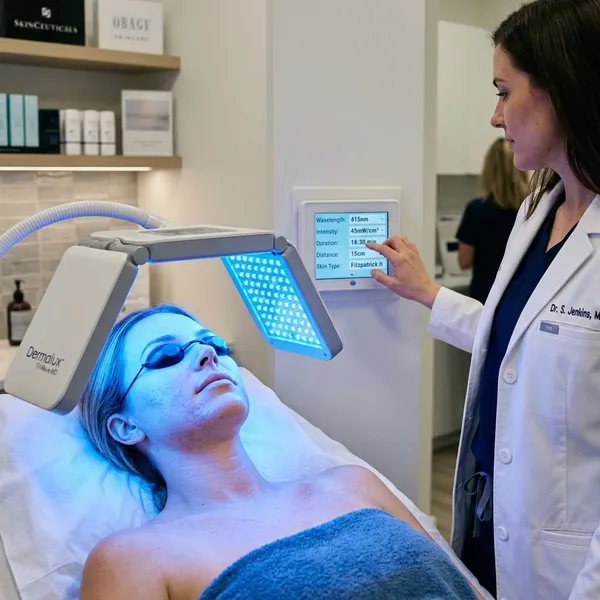
What Factors Matter Besides Wavelength?
Wavelength is the first specification to check, but it is not enough by itself. A device can use a sensible acne wavelength and still disappoint if the output is weak, the treatment area is tiny, or the routine is too awkward to maintain.
The better buying question is: does the whole setup make sense for your skin concern and your routine? A clinic treatment may offer stronger supervision, while an at-home blue light device may be easier to use regularly for mild recurring breakouts.
Light intensity and treatment dose
Intensity and dose determine whether enough light energy reaches the skin during a session. A visible blue glow does not prove the device is delivering a useful treatment dose.
Before buying, look for a clear protocol: session length, frequency, distance from the skin if relevant, and any safety instructions. If those details are missing, I would treat strong acne claims cautiously even if the wavelength sounds right.
Device design and coverage area
Design decides whether you will actually use the device. A small spot wand can be fine for one pimple before an event, but it becomes tedious for someone treating the forehead, cheeks, and chin several times a week.
A mask or larger panel may be more practical for repeated mild breakouts, as long as it fits comfortably and gives even coverage. Convenience is not a cosmetic detail here; it affects consistency.
Treatment schedule and consistency
Blue light usually needs repeated sessions rather than one dramatic treatment. If the schedule is unrealistic for your life, the "best" wavelength on paper may not matter much.
- Check the wavelength first. For acne, 415 to 420 nm is the key reference range.
- Check the protocol next. Look for clear session timing and frequency.
- Match the format to the breakout pattern. Spot tools suit isolated pimples; masks suit wider areas.
- Reassess if acne is severe. Painful, deep, or scarring acne needs more than a home LED routine.
Conclusion
For acne, 415 to 420 nm is the most useful blue light therapy wavelength to recognize, but it should not be the only detail you use to judge a device. Start with the wavelength, then look at dose, coverage, schedule, and whether your acne is surface-level enough for blue light to make sense. If the device cannot explain those basics clearly, it is safer to be skeptical than to assume every blue LED works the same way.