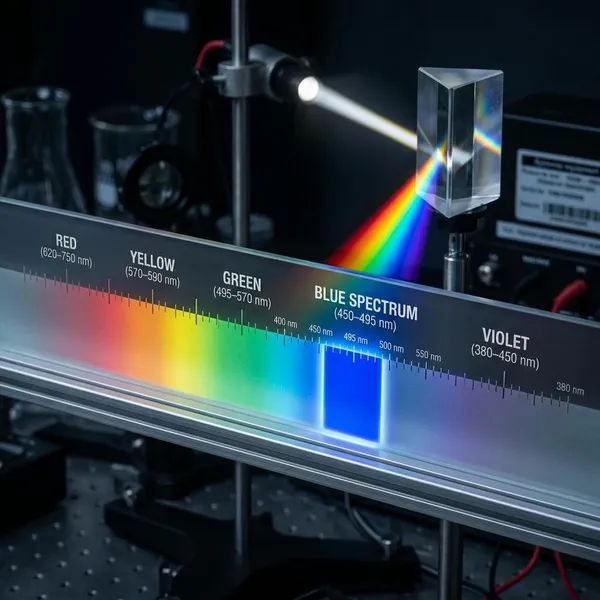
If you are checking the blue light wavelength for acne, look first for a device or treatment in the 405 to 420 nm range. The single number you will see most often is 415 nm, because it is closely tied to how blue light interacts with acne-related bacteria near the skin surface. Wavelength matters, but it should not be the only thing you judge; acne type, device quality, and treatment consistency matter just as much.
What Blue Light Wavelength Is Used for Acne?
Acne-focused blue light usually sits in the low 400-nanometer range. For a buyer or patient, the practical starting point is simple: if a product claims to help acne but does not state a wavelength, it is harder to judge than one that clearly lists a relevant range.
Blue light acne therapy commonly uses 405 to 420 nm
Blue light acne therapy commonly uses about 405 to 420 nm. This range is discussed because it overlaps with the light absorption behavior of porphyrins produced by Cutibacterium acnes, one of the bacteria involved in inflammatory acne.
For everyday comparison, treat 405 to 420 nm as the main acne-relevant window. A device that only says "blue LED" may still emit blue light, but without the nanometer range you cannot tell whether it is aimed at acne or just general beauty marketing.
415 nm is the most commonly discussed acne treatment wavelength
415 nm is the wavelength most often mentioned for acne because it sits in the best-known blue light range for porphyrin activation. It is a useful benchmark when comparing home masks, handheld devices, or clinic-based LED treatments.
Do not read 415 nm as an automatic guarantee. A weak device, poor coverage, unclear safety instructions, or an unrealistic schedule can still make a "415 nm" product a poor choice. The number is a strong first filter, not the whole decision.
Why Does 415 nm Blue Light Work for Acne?
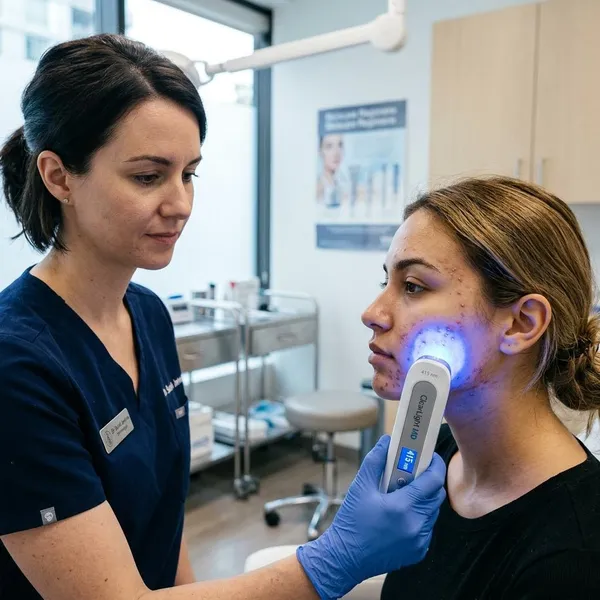
415 nm blue light is used for acne because it can activate light-sensitive compounds made by acne-related bacteria. That mechanism is why the exact wavelength range matters more than a vague claim that a device uses "blue light."
Blue light activates bacterial porphyrins
C. acnes naturally produces porphyrins, and these compounds absorb blue light strongly in the low 400 nm range. When they absorb that light, they enter an excited state and begin reactions that can stress or damage the bacteria.
This is different from exfoliating acids or retinoids. Blue light is not mainly trying to peel the skin or clear a blocked pore; it is using a bacterial weakness. That is why it tends to make more sense for inflamed breakouts than for blackheads alone.
Reactive oxygen species help reduce Cutibacterium acnes activity
After porphyrins absorb blue light, they can generate reactive oxygen species. These unstable molecules may reduce Cutibacterium acnes activity in the treated area, which can help lower one contributor to papules and pustules over time.
The key phrase is "over time." If someone expects one session to flatten every active spot by the next morning, blue light will probably feel disappointing. It is better viewed as repeated antibacterial support, not an emergency blemish eraser.
How Does Blue Light Therapy Treat Acne?
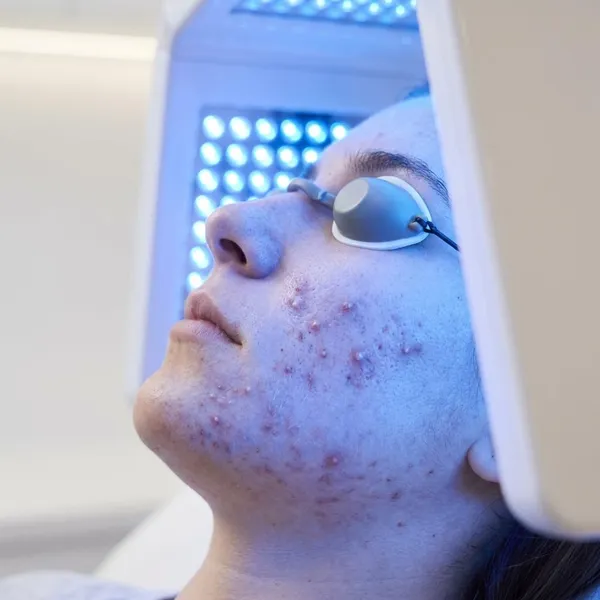
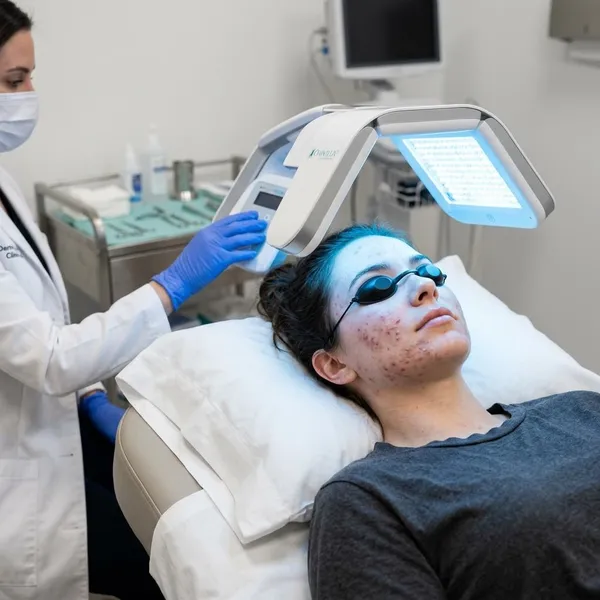
Blue light therapy treats acne by exposing breakout-prone skin to visible blue wavelengths that target acne-related bacteria. In practice, it is most useful when the breakouts are near the surface and when the treatment is repeated consistently.
Blue light targets acne-related bacteria near the skin surface
Blue wavelengths do not penetrate as deeply as some other light wavelengths, so they are better matched to surface-level inflammatory acne. If your main issue is recurring red bumps across the chin or cheeks, blue light may fit the problem better than if your main issue is deep, tender cysts under the skin.
Blue light works without UV exposure
Modern blue light acne devices use visible blue light, not ultraviolet light. That distinction matters because UV exposure carries well-known skin-damage risks, while acne LED devices are designed around non-UV wavelengths.
Still, "non-UV" does not mean "use it however you want." Follow the device timing, distance, and eye-protection instructions, especially if your skin is already dry or irritated from benzoyl peroxide, retinoids, or other active treatments.
Repeated treatments support gradual acne improvement
Blue light usually needs a consistent schedule for several weeks before you can judge whether it is helping. Many device routines are built around repeated short sessions, but the exact timing should come from the specific product or clinician.
- Before each session: use clean, dry skin so makeup or sunscreen does not block the light.
- During treatment: keep to the stated time and distance instead of adding extra minutes.
- After a few weeks: look for fewer new inflamed spots, not instant perfection.
If you only use a device when a large blemish has already appeared, results are usually less impressive than with steady use on recurring breakout areas.
Which Acne Types Respond Best to Blue Light?
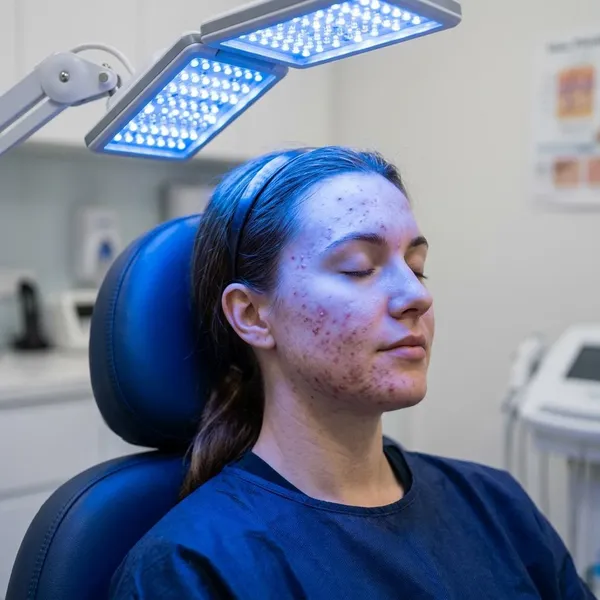
Blue light is generally a better match for mild to moderate inflammatory acne than for severe or cystic acne. The closer the problem is to surface-level bacterial activity and inflammation, the more reasonable blue light becomes as an option.
Mild to moderate inflammatory acne
Mild to moderate inflammatory acne is the most realistic use case. Think of repeated red bumps, small inflamed spots, or breakouts that return in familiar areas but are not dominated by deep cysts.
For a low-risk situation, such as occasional cheek or chin breakouts, a well-specified home device may be worth trying alongside a gentle routine. For long-term, stubborn acne that keeps worsening, it is better to involve a dermatologist rather than keep buying new gadgets.
Papules and pustules that respond to antibacterial support
Papules and pustules often make the most sense for blue light because they are inflamed and usually closer to the surface. These are the red bumps and white-topped inflamed spots where antibacterial support may be relevant.
| Breakout pattern | Blue light fit | Better first check |
|---|---|---|
| Recurring red bumps or small pustules | Often reasonable | Wavelength, coverage area, and routine consistency |
| Mostly blackheads or closed comedones | Less direct | Pore-clogging triggers and exfoliating or retinoid options |
| Deep, painful cysts | Weak as a standalone choice | Dermatology care and scarring risk |
Severe or cystic acne that may need medical treatment
Severe or cystic acne usually needs medical treatment rather than blue light alone. Deep nodules and cysts sit below the level that blue light can reliably affect, and they carry a higher risk of lasting marks or scars.
If lesions are painful, widespread, leaving dark marks or scars, or not improving after consistent basic care, do not let a home light device delay proper treatment. Blue light can sometimes be a supporting tool, but it should not become a reason to postpone stronger care when the acne pattern is high risk.
How to Choose a Blue Light Acne Treatment
Choosing a blue light acne treatment is mostly about matching the device to the problem. Start with the wavelength, then look at acne severity, coverage area, safety guidance, and whether the schedule is realistic enough for you to keep using it.
Check the stated wavelength range
Look for a stated blue light wavelength in the acne-relevant low 400 nm range, commonly 405 to 420 nm or around 415 nm. If the product page does not list a wavelength at all, compare it with options that do.
- Good sign: clear nanometer range, treatment time, eye-safety notes, and intended use.
- Weak sign: "blue light for clear skin" with no wavelength or technical details.
- Pause before buying: miracle claims, vague specifications, or no usage limits.
Match treatment type to acne severity
A home device is usually most sensible for mild to moderate inflammatory acne or maintenance between flare-ups. It can be a practical choice if your breakouts are manageable and you are willing to use the device regularly.
Clinic treatment or dermatologist-guided care is the safer route when acne is severe, cystic, scarring, or emotionally distressing. In that situation, stronger medical options may be needed, and light therapy may only be one small part of a broader plan.
Compare device quality and usage schedule
Device quality matters because wavelength alone does not tell you how evenly or effectively light reaches the skin. Coverage area is also practical: a tiny spot tool may be fine for one recurring area, while a mask or panel is easier for both cheeks, the jawline, or the forehead.
Choose the schedule you will actually follow. A slightly less flashy device with clear instructions and a realistic routine is often more useful than an expensive option that feels too annoying to use after the first week.
Conclusion
The most useful wavelength check is 405 to 420 nm, with 415 nm as the familiar acne-focused reference point. If your breakouts are mild to moderate and mostly inflamed surface spots, blue light can be a reasonable support tool; if acne is deep, painful, scarring, or rapidly worsening, skip the device-shopping loop and get medical advice first.