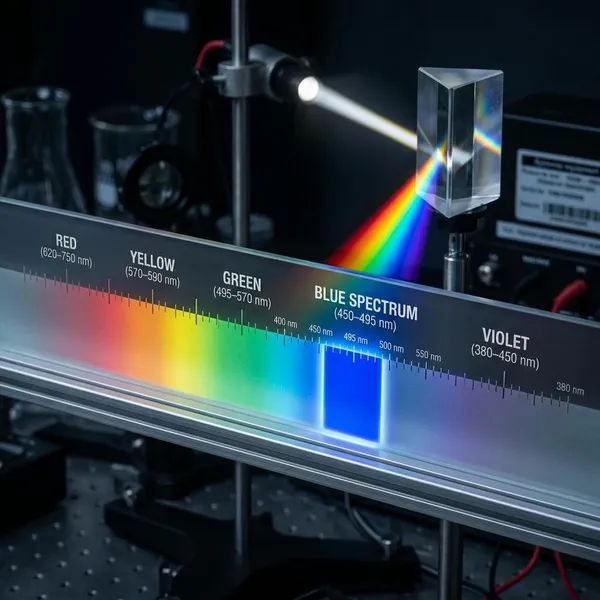
When comparing infrared vs red light wavelength, the useful first split is simple: red light is visible and usually sits around 620–700 nm, while infrared starts beyond visible red and is invisible to the eye. For most home devices, red light is the more obvious choice for skin-level goals, near-infrared is usually chosen when deeper reach is wanted, and far-infrared belongs more to heat and sauna-style products.
Red Light and Infrared Wavelength Ranges Explained
Wavelength is the clearest way to tell what a device is actually using. Product names can be vague, especially when "infrared" is used for both near-infrared LED panels and far-infrared heating products.
Visible red light wavelength range
Visible red light is usually described as roughly 620 to 700 nanometers. In consumer light therapy devices, you will often see 630 nm, 650 nm, or 660 nm listed. If a mask or panel gives off a clear red glow, that visible light is part of what you are seeing.
This range is commonly chosen for areas close to the surface, such as the face, neck, or other exposed skin. For someone buying a simple skincare mask, red light is usually the first wavelength category to check.
Near-infrared wavelength range used in light therapy
Near-infrared is invisible, so a device can be working even if the near-infrared LEDs do not look bright. Common light therapy wavelengths include 810 nm, 830 nm, and 850 nm, although exact ranges vary by manufacturer and reference.
- Check the listed nm value. "Infrared" alone is too broad.
- Do not judge by brightness. Near-infrared may look dim because your eyes cannot see it.
- Match it to the target area. It is usually chosen for larger or deeper areas than visible red alone.
Far-infrared wavelength range used mainly for heat applications
Far-infrared is a different buying category for most people. You usually notice it as warmth rather than light, which is why it appears in infrared saunas, heated mats, sauna blankets, and warming panels.
A far-infrared sauna blanket is not a direct substitute for a red light face mask. If your goal is sweating, warmth, or relaxation, far-infrared may make sense. If your goal is targeted LED exposure, look at red and near-infrared wavelengths instead.
Key Differences Between Red Light and Infrared
The practical differences show up in four places: what you can see, how the wavelength behaves, how deeply it may interact with tissue, and whether the device is mainly light-based or heat-based. This is also where many product descriptions become confusing, because a bright red panel and an infrared sauna can both sound "therapeutic" while being built for very different experiences.
Visibility and appearance
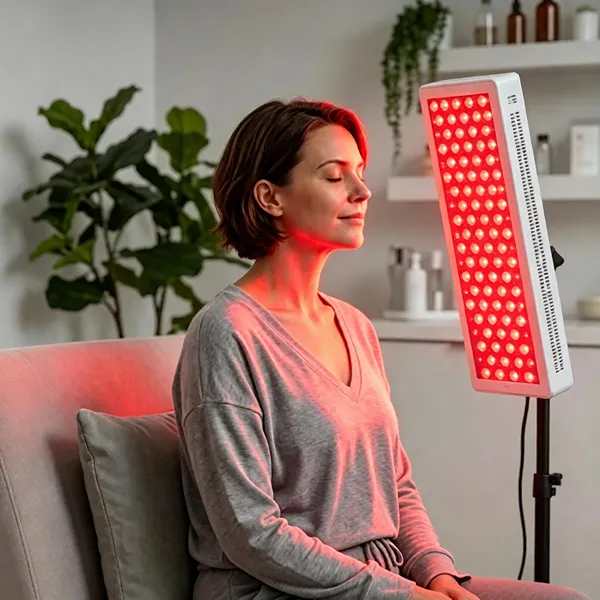
Red light is visible, so it gives the familiar red glow in masks, panels, and handheld devices. Near-infrared is not visible to the naked eye, although a product may still show a faint red glow from other LEDs or indicator lights.
Wavelength length and energy behavior
Red wavelengths are shorter than infrared wavelengths. In simple terms, that shift from visible red into infrared changes how the light is absorbed and scattered, which is one reason different wavelengths are chosen for different device goals.
Longer does not automatically mean better. A 660 nm red light can be the better fit for a face routine, while an 850 nm near-infrared panel may be more relevant for a larger body area. A far-infrared heater belongs in a heat comparison, not a direct red LED comparison.
Penetration depth and tissue interaction
Near-infrared generally has greater penetration potential than visible red light, but depth is not fixed by wavelength alone. Skin thickness, body area, distance from the device, output, and session time all affect what actually reaches the target.
A useful way to think about it: red light is usually the more surface-focused option; near-infrared is the deeper-reach option; far-infrared is mainly the warming option.
Heat production and device characteristics
Red and near-infrared LED devices are usually designed for light exposure, not strong heating. They may feel mildly warm, especially close to the body, but heat is not usually the main feature.
Far-infrared products are different. A sauna, heating mat, or warming panel is expected to feel hot because the point is thermal comfort. If a product's main promise is sweating or deep warmth, compare it with other heat products rather than with a red light mask.
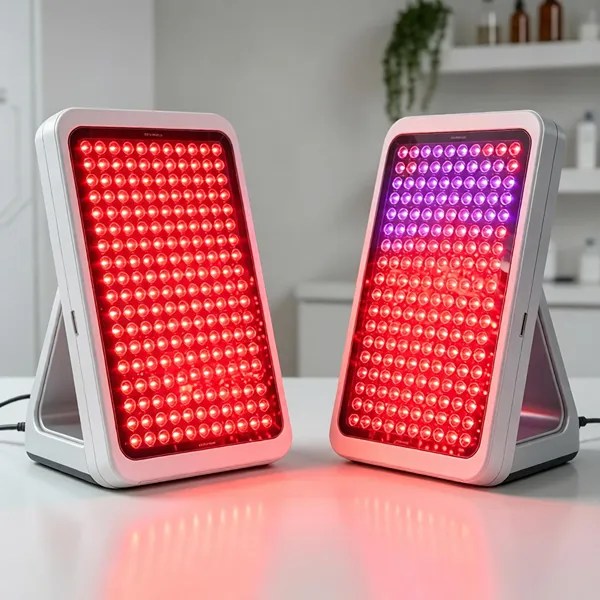
Which Penetrates Deeper Red Light or Infrared?
Near-infrared usually penetrates deeper than red light, so it is often the better match when the target is not just the skin surface. That said, "deeper" should not be read as a guaranteed result from any device with an infrared label. A poorly specified panel can still be a poor choice, even if the wavelength sounds right.
Longer wavelengths can generally reach deeper tissue layers
As a rule of thumb, near-infrared wavelengths can reach deeper tissue layers than visible red wavelengths. This is why near-infrared appears so often in larger panels, wraps, and recovery-oriented devices.
For example, someone comparing a face mask for appearance goals may be fine starting with red light. Someone looking at a panel for a larger area such as thighs, shoulders, or knees would usually pay closer attention to whether near-infrared is included.
Penetration depends on more than wavelength alone
Depth also depends on how the device is used. A panel held too far away, used for too short a time, or built with weak output may deliver less useful exposure than the wavelength number suggests.
- Distance: farther away usually means less light reaches the body.
- Session time: very short sessions may not match the intended dose.
- Body area: thin facial skin and larger muscle areas are not the same target.
- Device design: beam angle, LED density, and output all matter.
Device power dose and tissue properties also matter
Power and dose matter, but more power is not automatically better. The practical question is whether the manufacturer gives clear guidance for distance, session length, and intended body area. If those details are missing, treat strong penetration claims cautiously.
This is especially important for injury, pain, medical conditions, or sensitive skin. General wavelength information can help you compare products, but it should not replace advice from a qualified clinician when the goal is health-related rather than general wellness.
Red Light vs Infrared Uses
The easiest way to avoid buying the wrong product is to separate three use cases: skin-level light exposure, deeper-reach LED light exposure, and heat. Red light, near-infrared, and far-infrared overlap in marketing language, but they do not serve the same purpose in everyday use.
Red light for surface-level skin applications
Red light is commonly used for visible skin areas because it is easy to aim, easy to see, and commonly built into face masks and beauty panels. If your routine is mainly about the face, neck, or another exposed area, red light is usually the most direct starting point.
For occasional home use, the practical checks are simple: look for the wavelength number, follow the recommended distance, and avoid assuming that a longer session is automatically better.
Near-infrared for deeper light therapy applications
Near-infrared is often used when the goal is broader body exposure or a target below the surface. It is common in panels and wraps aimed at recovery routines, larger muscles, or joints.
Because you cannot see near-infrared, the buying decision depends more on the product page. A good listing should state the wavelengths, suggested distance, session time, and intended use area. If it only uses vague phrases like "advanced infrared energy," there is not much to evaluate.
Far-infrared for heat-based uses
Far-infrared is mainly for heat. Choose it when you want warmth, sweating, or a sauna-like session, not when you are trying to copy the experience of a red LED mask or near-infrared panel.
Combination devices using multiple wavelengths
Combination devices often pair a red wavelength, such as 660 nm, with a near-infrared wavelength, such as 850 nm. This can be practical when one household wants different things from one panel: one person may care about face and skin use, while another wants a device for larger body areas after exercise.
The main check is whether the device clearly lists each wavelength and lets you understand what is turned on during a session. Some products allow separate red and near-infrared modes; others run both together.
How to Choose Between Red Light and Infrared
Start with the job you want the device to do, then read the wavelength numbers. That order matters. If you start with marketing claims, a red light mask, a near-infrared recovery panel, and a far-infrared sauna blanket can sound more similar than they really are.
Choosing for skin and appearance goals
For skin and appearance goals, visible red light is usually the cleanest choice. It is common in face masks and skincare panels, and it suits areas close to the surface.
- Best fit: face, neck, hands, or other exposed skin areas.
- Useful extra: near-infrared if you want a more versatile panel.
- Less relevant: far-infrared if your main goal is not heat.
Choosing for recovery and deeper tissue goals
For deeper tissue or recovery-oriented goals, near-infrared usually deserves more attention than red light alone. Look for exact wavelengths, realistic use instructions, and a device size that matches the body area you actually want to cover.
A small handheld device may be fine for a small target area, while a larger panel is more practical for legs, back, or shoulders. If you are dealing with persistent pain, injury, pregnancy, photosensitivity, or medication that affects light sensitivity, get professional guidance before treating it as a simple gadget purchase.
- First check the goal: skin, deeper body area, or heat.
- Then check the wavelength: red, near-infrared, far-infrared, or a combination.
- Then check use details: distance, session time, and target area.
- Be wary of vague claims: "deep infrared" without numbers is not enough.
Conclusion
The best choice is less about red light versus infrared as a slogan and more about matching the wavelength category to the job: red light for visible, surface-level use; near-infrared when deeper reach is the reason for buying; far-infrared when heat is the point. If a product does not clearly list its wavelengths and basic use guidance, that is a good reason to slow down before buying.