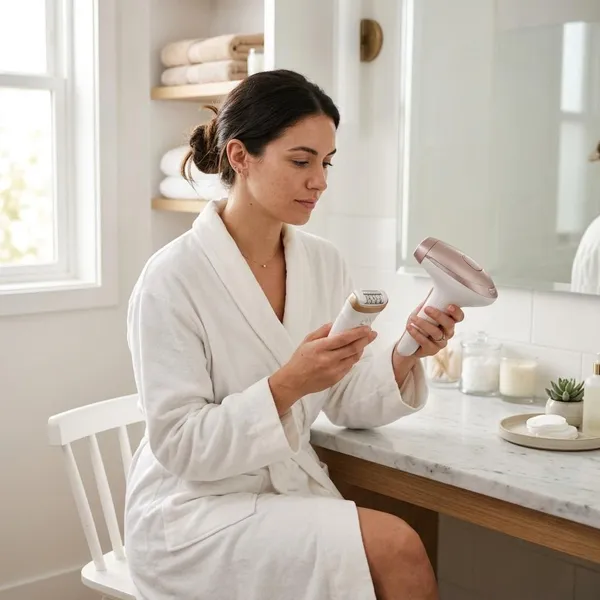
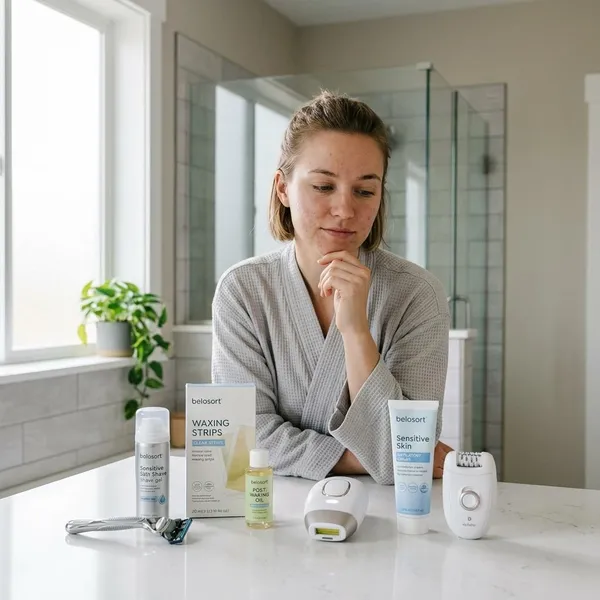
For most people comparing IPL vs laser hair removal, the first decision is not which sounds more advanced, but which one fits your skin tone, natural hair color, budget, and patience. Laser is usually the faster, more precise option, while IPL is often easier to use at home and cheaper over time if you are a good candidate.
How do IPL and laser differ?
Both methods use light to heat pigment in the hair and weaken the follicle over repeated sessions. The difference is how focused that light is, how much control the treatment allows, and whether you are using a home device or being treated in a clinic.
Broad-spectrum light versus one wavelength
The practical difference is this: laser uses one focused wavelength, while IPL uses a wider flash of mixed light wavelengths. That focused laser beam can target the follicle more directly, which is why professional laser often works faster on coarse, dark hair.
IPL still targets pigment in the hair, but the energy is more spread out. That makes it useful for home devices, where lower output and built-in safety limits are part of the design. The tradeoff is slower progress and a bigger need for consistency.
Device types and treatment settings
Clinic laser systems are usually stronger and more adjustable than home IPL devices. A provider may be able to change settings based on your skin tone, hair thickness, treatment area, and how your skin responds during the session.
Home IPL devices are more standardized. Many have skin tone sensors, intensity levels, and safety locks, which can be helpful, but they cannot always be fine-tuned for tricky areas or more complex skin types.
How do IPL and laser results compare?
Laser usually gives faster visible reduction, but IPL can still work well when the device matches your skin and hair and you follow the schedule closely. Neither method should be treated as instant or guaranteed permanent removal.
Speed of hair reduction
If your goal is smoother skin before a holiday, wedding, or summer season, laser usually has the advantage because each session delivers more targeted energy. People with coarse dark hair often notice patchier regrowth sooner with laser than with home IPL.
IPL tends to feel more gradual. Hair may first grow back finer or slower before the area looks clearly reduced. That does not mean it is failing, but it does mean skipped sessions can make a big difference.
Sessions and treatment time
Hair grows in cycles, so both IPL and laser need repeated sessions. One treatment cannot catch every follicle at the right growth stage.
Professional laser is often planned as a series of clinic appointments, while home IPL usually starts with frequent use for several weeks or months before switching to maintenance. Exact schedules vary by provider, device, body area, and your response, so the safest check is to compare the treatment plan before you commit.
| Situation | Often the better fit | Why it matters |
|---|---|---|
| You want faster reduction on coarse dark hair | Laser | More focused energy usually makes each session more efficient. |
| You prefer privacy and treating at home | IPL | The routine is easier to fit around your own schedule. |
| You often abandon long routines | Laser | Clinic appointments may keep the process more structured. |
| You want low-cost upkeep after initial reduction | IPL | A suitable home device can be useful for touch-ups. |
Regrowth and maintenance
Long-term hair reduction is the more accurate phrase for both methods. Some follicles may stay quiet for a long time, while others can recover or be affected by hormones.
Lower legs may stay smooth with less effort than areas such as the chin, upper lip, bikini line, chest, or lower abdomen, where hormone-driven growth can keep appearing. If you are treating one of those areas, plan for maintenance instead of assuming the first course will be the end of it.
How to check skin and hair suitability
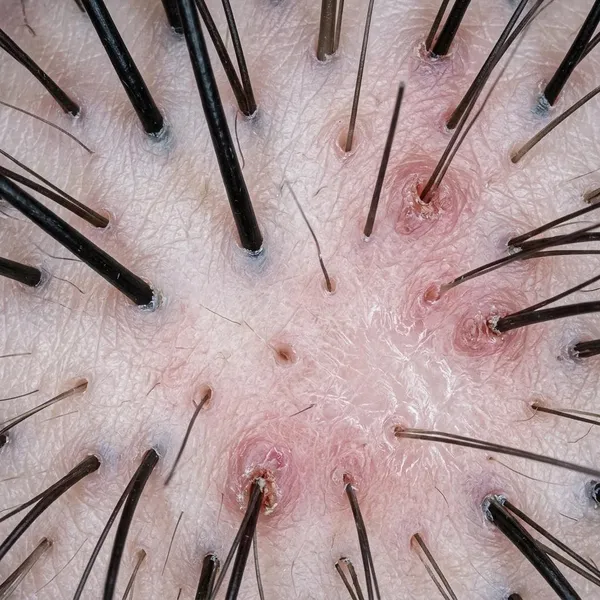
Suitability should come before price, reviews, or convenience. The wrong match can mean weak results, irritation, burns, or pigment changes, especially because both IPL and laser interact with melanin.
Match the treatment to your skin tone
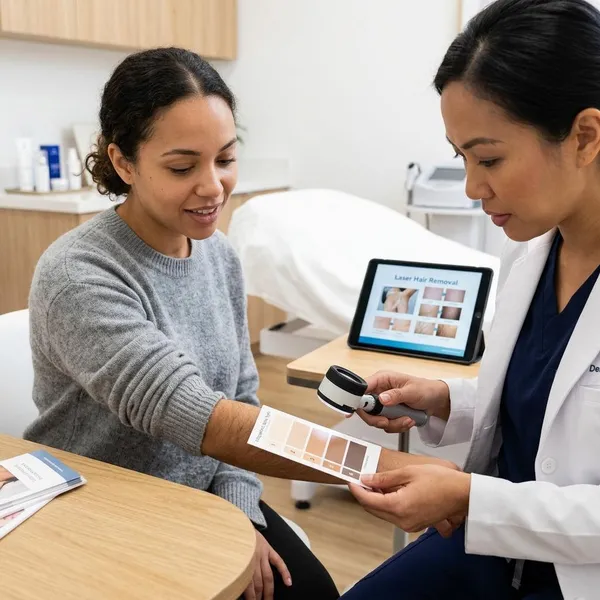
Lighter skin with dark hair is usually the easiest combination for both IPL and laser. With medium, olive, brown, or deeper skin tones, the choice becomes more careful because the surrounding skin may absorb more light.
For darker skin tones, professional laser is often the safer route when the clinic has suitable technology and experience with deeper complexions. Many home IPL devices are not suitable for the deepest skin tones, so do not rely on marketing photos alone. Check the device's skin tone chart in natural light and avoid treating recently tanned or self-tanned skin.
Check your natural hair color
Black and dark brown hair usually respond best. Medium brown can also respond well if there is enough contrast with the skin.
Very light blonde, gray, white, and many red hairs are poor candidates because the light has little pigment to target. A common mistake is judging by dyed hair; the device responds to the natural hair at the root, not the color you apply on top.
Confirm the treatment area
Legs, underarms, arms, bikini line, chest, and back are common treatment areas, but facial use depends on the device or clinic system. Many home devices allow limited facial use below the cheekbones, but the eye area should be avoided unless you are under appropriate professional care.
- Upper lip or chin: check whether the device is approved for facial use, and expect more upkeep if the growth is hormone-related.
- Bikini line: confirm the exact area allowed; "bikini" does not always mean all intimate areas.
- Male beard area: be cautious, because dense facial hair can react strongly and may need professional assessment.
- Tattoos, moles, irritated skin, or broken skin: do not treat directly over these areas unless a qualified provider says it is safe.
Review health restrictions
Pause before treatment if you are using photosensitizing medication, have active irritation, recent sunburn, open wounds, or a history of pigment problems. Pregnancy, certain skin conditions, and hormone-related conditions such as PCOS are also situations where professional advice is sensible.
A patch test is a practical safety step, not a formality. Treat a small area first, wait as directed by the device maker or provider, and look for unusual redness, swelling, blistering, or color change before treating a larger area.
How to choose between IPL and laser
Once you know you are a candidate, the choice becomes more personal: do you want faster supervised results, or are you happy with a slower home routine that costs less to keep using?
Start with skin and hair suitability
Start with the non-negotiables: your natural hair color, your current skin tone, and the area you want to treat. If those do not match the device or treatment type, a cheaper price will not make it a good choice.
For dark hair on fair to light-medium skin, both options may be realistic. For deeper skin, sensitive skin, frequent tanning, or previous hyperpigmentation, a clinic consultation is usually worth the extra step before buying anything.
Decide between home and clinic treatment
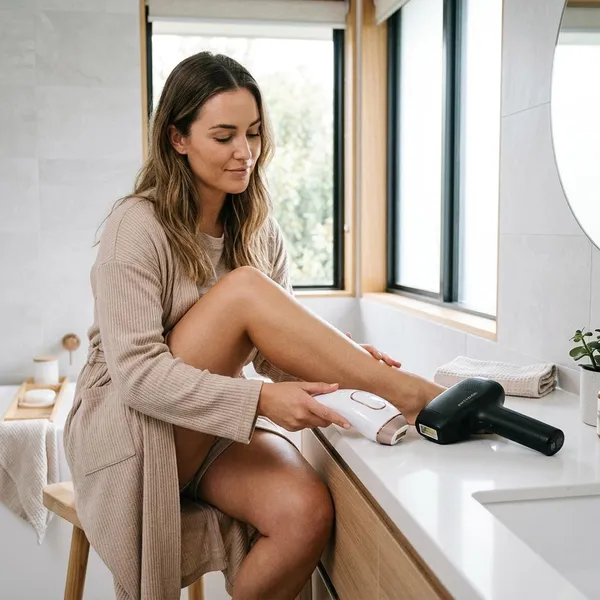
Home IPL makes sense if you like privacy, can follow instructions carefully, and do not mind building treatment into a routine. It is a good fit for someone who wants year-round upkeep and would rather do short sessions at home than book appointments.
Clinic laser is a better fit if you want faster progress, are treating a sensitive area, or need someone to adjust the settings as your skin and hair respond. It can also be the more sensible choice if you are preparing for a time-sensitive event and do not want to gamble on your own consistency.
Compare the full treatment cost
The useful cost comparison is not device price versus one laser session. Compare the full path to a result you would actually be satisfied with.
- Home IPL: lower entry cost over time if the device suits you and you keep using it.
- Clinic laser: higher upfront cost, but often faster progress and less self-management.
- Wrong match: the most expensive option is the one that irritates your skin or sits unused in a drawer.
Before paying, check what is included: number of sessions, treatment area size, patch test policy, cancellation rules, and whether future touch-ups are priced separately.
Weigh results against ongoing upkeep
If you want the strongest reduction with less trial and error, lean toward laser. If you are comfortable with slower improvement and like the idea of handling touch-ups at home, IPL can be the more convenient choice.
Conclusion
The safest way to choose is to screen your skin tone, natural hair color, and treatment area first, then decide how much time, money, and maintenance you are willing to commit. Laser is usually the stronger choice for speed, precision, and complex cases, while IPL is better suited to straightforward home upkeep when you are a good candidate and can stay consistent.