If you want to know what kills hair follicles, focus on one distinction: removing a hair is not the same as destroying the follicle that grows it. Electrolysis is designed to permanently disable individual follicles, laser can reduce growth by damaging some follicles, and serious scarring, burns, radiation, or long-term tension can also cause permanent loss. Shaving, waxing, plucking, creams, and home mixtures usually do not kill follicles.
Which treatments can destroy hair follicles?
A treatment has to reach the follicle's growth area deeply enough to stop it from making another hair. That is why surface methods feel effective for a few days or weeks but do not give permanent results.
For cosmetic hair removal, the real choice is usually between precision and coverage:
- Choose electrolysis when the goal is true permanent removal on a small or detailed area, such as chin, upper lip, or scattered coarse hairs.
- Choose laser when you want faster reduction over a larger area, such as legs, underarms, chest, back, or bikini line.
- Expect repeat sessions with both methods because hair grows in cycles and not every follicle is ready to treat at the same time.
Electrolysis targets individual follicles
Electrolysis can permanently destroy a treated follicle when it is performed correctly. A fine probe is placed into the follicle opening, and controlled energy damages the tissue responsible for producing hair.
Its biggest practical advantage is that it does not rely on hair pigment. Light blond, gray, white, red, and fine facial hairs that respond poorly to laser may still be suitable for electrolysis. The tradeoff is time: one follicle is treated at a time, so a small facial area is realistic, while a full leg plan may require a much bigger commitment.
Poor technique can leave irritation, infection risk, pigment changes, or small scars, so this is not a method to treat casually. If permanent removal is the goal, the provider's training and hygiene matter almost as much as the method itself.
Laser damages follicles to reduce growth
Laser hair removal is better understood as long-term reduction, not a guarantee that every treated follicle is dead. The laser targets pigment in the hair, heat travels into the follicle, and some follicles are injured enough to grow back more slowly, more finely, or not at all.
Dark, coarse hair usually responds best because it gives the laser a clearer target. Very light hair, very fine hair, and hormonally influenced areas may need more patience or maintenance sessions. For someone who wants fewer underarm hairs before summer, laser may be a sensible option; for someone who wants one stubborn gray chin hair gone for good, electrolysis is usually the more direct choice.
What can cause unwanted follicle destruction?
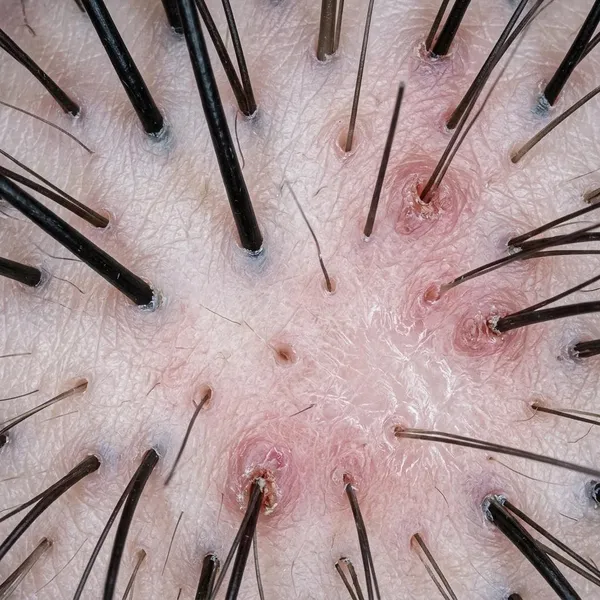
Unwanted follicle destruction usually happens when the skin around the follicle is damaged badly enough that it heals with scar tissue. Once scar tissue replaces the normal follicle structure, hair cannot grow from that spot in the usual way.
The first thing to check is whether the skin still looks normal. Shedding with normal-looking skin is less alarming than hair loss with burning, tenderness, redness, scaling, shiny patches, or areas where you no longer see follicle openings. Those signs are worth taking seriously because early treatment may protect follicles that are inflamed but not yet destroyed.
Scarring hair loss conditions
Scarring hair loss, or scarring alopecia, can permanently destroy follicles by inflammation. It may start with itching, burning, soreness, scale, redness, or a patch that slowly spreads instead of filling back in.
Severe burns and injuries
Deep burns, major wounds, severe chemical burns, and some surgical scars can physically destroy follicles. In these cases, the issue is not that the hair cycle has paused; the follicle may no longer exist in the scarred skin.
A superficial scrape or mild irritation usually should not be treated as permanent follicle damage. A deeper injury is different, especially if the area blisters badly, becomes an open wound, or heals with thick, tight, or shiny scar tissue. Harsh scalp chemicals left on too long can fall into this higher-risk category, so burning during a chemical treatment is a stop-now warning, not something to push through.
Prolonged pulling or tension
Repeated tension can move from reversible thinning to permanent follicle damage. Tight braids, heavy extensions, glued styles, tight buns, and constant ponytails put the same follicles under stress again and again, often around the hairline and temples.
- Early warning: soreness, small bumps, breakage, or thinning edges.
- Better next step: loosen the style, reduce weight, and give the area time without tension.
- Higher-risk pattern: years of pulling on the same area, especially if the skin starts to look smooth or bare.
Occasional styling for an event is not the same risk as daily tight styling for months or years. The longer the same follicles are pulled, the less forgiving they become.
Radiation damage in treated areas
Radiation can damage or destroy follicles inside the treated field. Unlike general shedding from some medications or illnesses, radiation-related hair loss is usually limited to the area that received treatment.
Regrowth depends on factors such as dose, location, skin reaction, and whether scarring develops. The treating medical team is the right source for individual expectations because the same-looking hair loss can be temporary in one treatment plan and permanent in another.
Which methods do not reliably destroy follicles?
Most everyday hair removal methods remove the hair, not the follicle. They can be perfectly useful for grooming, but they should not be mistaken for permanent follicle destruction.
Shaving and trimming
Shaving and trimming do not kill hair follicles because they only cut hair above the skin. Stubble may feel thicker because the cut end is blunt, but the follicle has not been changed.
Waxing, threading, and plucking
Waxing, threading, and plucking remove hair from the root, so they last longer than shaving, but they do not reliably destroy the follicle. A pulled hair with a bulb attached can look dramatic, yet the follicle often produces another hair later.
Repeated pulling can sometimes make regrowth look finer or patchier over time, but that effect is inconsistent. It is also not the same as controlled permanent hair removal. Be more cautious on delicate facial skin or areas prone to ingrown hairs, where repeated trauma may leave irritation or discoloration even when the follicle survives.
Hair removal creams
Hair removal creams break down the exposed hair shaft so it can be wiped away. They usually do not reach the living follicle deeply enough to stop future growth.
- Use them for: short-term smoothness without razor cuts.
- Avoid them when: skin is already irritated, broken, sunburned, or recently treated with harsh products.
- Do first: patch test on a small area and remove the product on time.
A true chemical burn could harm follicles, but that would be accidental damage, not a safe method for permanent removal.
Homemade hair removal remedies
Homemade remedies such as turmeric pastes, lemon mixtures, baking soda scrubs, oils, or herbal blends do not reliably kill follicles. At best, they may remove some surface hair, soften the feel of regrowth, or irritate the skin enough to make the area seem temporarily different.
Can damaged follicles recover?

Some damaged follicles recover; destroyed follicles do not. The key is whether the follicle is still present but temporarily disrupted, or whether it has been replaced by scar tissue.
If hair loss follows stress, illness, childbirth, a medication change, rapid weight loss, or a temporary scalp irritation, the follicle may simply be resting or shedding. If hair loss follows a deep injury, a shiny scar, long-term traction, radiation, or an inflammatory scalp disorder, the chance of permanent damage is higher.
Recovery may follow temporary damage
Temporary shedding can improve once the trigger is corrected, although visible regrowth often takes time because hair cycles move slowly. The scalp usually still looks fairly normal, even if the shedding feels alarming.
Destroyed follicles cannot regrow hair
A truly destroyed follicle cannot grow a new hair because the working structure is gone. Oils, scalp massage, serums, and cosmetic products may help nearby living hair look better, but they cannot rebuild a follicle that has been replaced by scar tissue.
When loss is permanent, the more realistic options are camouflage, styling changes, treating the condition to prevent spread, or asking a specialist whether hair transplantation is appropriate for that specific area.
Early treatment may protect remaining follicles
Early treatment matters most when the loss is patchy, painful, itchy, inflamed, spreading, or linked to tight styling. Those are the situations where waiting can allow more follicles to move from injured to permanently lost.
- Check first: skin symptoms, shiny patches, missing follicle openings, and whether regrowth is appearing.
- Change now: stop tight pulling, harsh chemicals, and repeated irritation on the same area.
- Get help sooner: if the area hurts, burns, scales, expands, or stays bare.
Conclusion
The safest way to judge follicle damage is to separate temporary hair removal from true follicle destruction. Electrolysis, some laser results, scarring conditions, deep injuries, radiation, and long-term traction can permanently stop growth, while shaving, waxing, plucking, creams, and home remedies usually cannot. If the skin looks normal and hairs are cycling back, patience may be enough; if the area is painful, shiny, scarred, or spreading, treat it as something worth checking early.