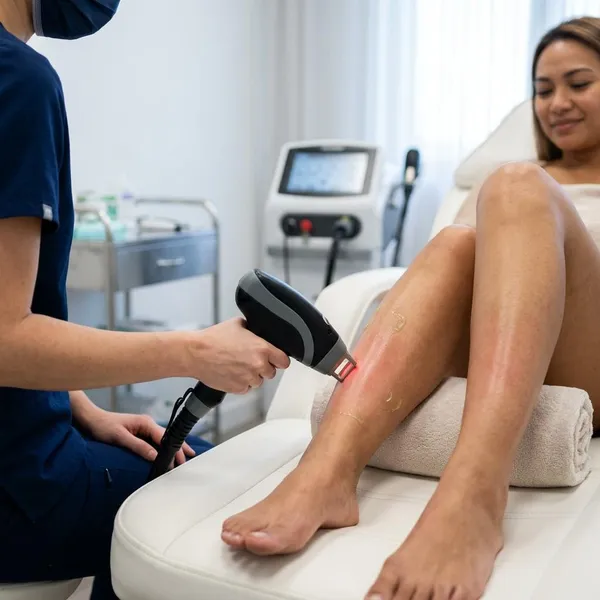
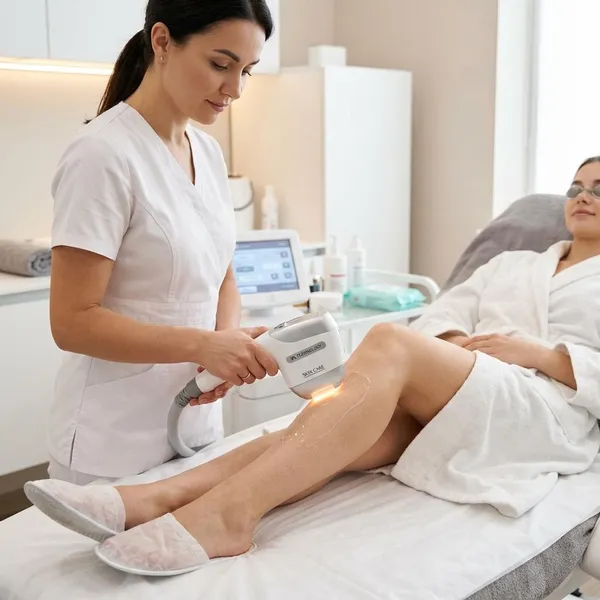
Laser hair removal is a light-based treatment that reduces unwanted hair by heating the follicle so it grows back more slowly, more finely, or sometimes not at all for a long time. It is usually a good fit when the hair is darker and thicker, but it is not a one-session fix and it is better described as long-term hair reduction than guaranteed permanent removal.
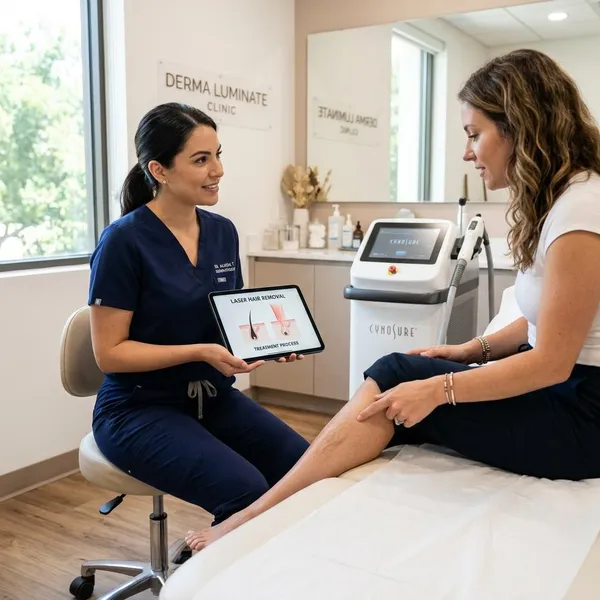
What is laser hair removal?
Laser hair removal is a cosmetic treatment that uses concentrated light to target hair at the root. The pigment in the hair absorbs the light, the energy turns into heat, and that heat weakens the follicle's ability to keep producing strong hair.
The first thing to understand is that hair grows in cycles. A laser can only affect follicles that are in the right growth phase during the appointment, so a proper result usually takes a series of treatments. If you are planning around a holiday, wedding, or summer clothes, it is better to start months ahead rather than expecting smooth skin after one visit.
How laser hair removal works
The basic idea is simple: the laser needs a visible target, enough heat must reach the follicle, and repeated sessions are needed because not all hairs are ready to be treated at the same time. That is why your hair color, skin tone, and treatment schedule matter so much.
Light targets pigment in the hair
The laser is drawn to melanin, the pigment that gives hair its color. Dark, coarse hair usually responds best because it gives the laser a stronger target. Very light blond, white, gray, or some red hairs often respond poorly because there is not enough pigment for the device to lock onto.
Heat damages the follicle
Once the hair absorbs the light, that energy becomes heat. The goal is to heat the follicle enough to reduce future growth while keeping the surrounding skin protected. This is where proper settings, cooling, and an experienced operator make a real difference.
- Good response: hair grows back slower, thinner, or patchier.
- Limited response: hair is too light, too fine, or hormonally driven.
- Higher-risk response: skin is recently tanned, irritated, or treated with unsuitable settings.
Repeat sessions target growing hairs
Multiple sessions are needed because only some hairs are in the active growth phase at any one time. Many people are advised to plan for around 6 to 8 sessions, but the real number depends on the area, hair type, hormones, and how consistently appointments are spaced.
Face and neck areas can be more stubborn because hormones often influence growth there. Legs, underarms, and bikini areas may respond more predictably when the hair is dark and coarse.
How to check if laser hair removal suits you
Start with three checks: whether your hair has enough pigment, whether your skin can be treated safely with the right device, and whether your goal is realistic. If any of those are uncertain, a consultation is more useful than guessing from before-and-after photos.
Assess your hair color and thickness
Dark, thick hair is usually the easiest to treat because it absorbs laser energy well. Fine, pale, gray, white, or very red hair may not respond enough to make treatment worthwhile.
If your main concern is dark leg hair or underarm hair, laser may save a lot of shaving over time. If your concern is soft light facial hair, ask directly whether laser is likely to help or whether another option, such as electrolysis, may be more suitable.
Match the laser to your skin tone
Skin tone matters because the laser must target the hair without overheating the surrounding skin. Many skin tones can be treated, but not every device or setting is appropriate for every complexion.
Be especially careful if your skin is darker, easily hyperpigments, or has recently tanned. A vacation tan, self-tanner, or sunburn can make treatment riskier, so it is worth postponing rather than trying to squeeze in a session at the wrong time.
Review the treatment area
The area changes the comfort level, timing, and likely result. Upper lip sessions may take only minutes but can feel sharp. Full legs or back take longer but may be easier to tolerate because the sensation is spread out.
- Underarms and bikini line: often good candidates when the hair is dark and coarse.
- Face and chin: may need maintenance because hormones can trigger regrowth.
- Large areas: often more practical with laser than waxing if you want long-term reduction.
- Light scattered hair: may be disappointing if the laser cannot see enough pigment.
Discuss medications and skin conditions
Tell the provider about medications, acne treatments, retinoids, recent peels, skin infections, cold sores, eczema, keloid scarring, pregnancy, or a history of skin cancer. These details do not always rule out treatment, but they can change the timing, settings, or aftercare.
What happens during laser hair removal?
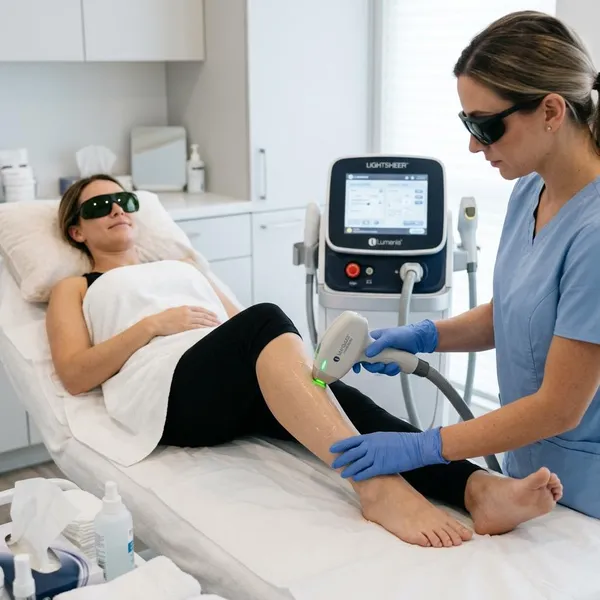
A normal appointment is fairly straightforward: the provider checks your skin, prepares the area, protects your eyes, treats the skin with laser pulses, cools the area, and gives aftercare instructions. The part that matters most is not the speed of the appointment, but whether the assessment and settings are right for you.
Consultation and skin assessment
The consultation should cover your skin tone, hair color, treatment area, medical history, medications, tanning, and previous reactions to skin treatments. Some clinics may do a small test patch, especially if your skin is more reactive or the area is visible.
Skin preparation and eye protection
The treatment area is usually cleaned, and everyone in the room should wear protective eyewear. Laser light can be dangerous to the eyes, so this step is not optional.
You are often asked to shave before the appointment, usually close enough that surface hair does not burn but the follicle remains under the skin. Waxing, plucking, and threading are usually avoided during a laser course because they remove the root the laser needs to target.
Laser treatment and cooling
During treatment, the provider moves the laser across the area in pulses. The feeling is often described as warm pinpricks or a rubber band snap. Cooling air, chilled tips, or gel may be used to make the treatment more comfortable and reduce stress on the surface of the skin.
Small areas can be quick; larger areas may take much longer. A slight burnt-hair smell can happen and is not unusual, but sharp pain, excessive heat, or blistering sensations should be mentioned immediately.
Aftercare and follow-up instructions
After treatment, the skin may look red, bumpy around the follicles, or mildly swollen for a few hours and sometimes longer. Treat it gently: avoid strong sun, tanning beds, hot baths, harsh scrubs, and irritating actives until your provider says it is safe.
- Use sun protection: treated skin is more vulnerable to irritation and pigmentation changes.
- Shave if needed: shaving is usually fine between sessions.
- Do not wax or pluck: removing the root can make the next session less effective.
- Report unusual reactions: blistering, severe pain, or lasting color changes should be checked.
What results can you expect?
Expect gradual reduction, not instant bare skin. Hair often comes back slower, softer, and patchier after several sessions, but the timeline is different for each person.
Gradual hair reduction
Some people notice a change after the first session, but the bigger shift usually appears after multiple visits. Early results can look uneven because different follicles respond at different times.
Less frequent hair removal
The main practical benefit is usually less routine hair removal. If shaving causes razor bumps on your bikini line or neck, even partial reduction can make the skin calmer and easier to manage.
For someone who wants a low-maintenance routine year-round, laser may be more appealing than repeated waxing. For someone who only wants smooth skin for one short trip next week, shaving or waxing may be more realistic because laser needs time.
Regrowth and possible touch-ups
Some regrowth is normal months or years later. Follicles can recover partly, and hormonal changes can wake up new growth, especially on the face, chin, or neck.
Touch-ups are common if you want to keep the result consistent. Professional laser treatment is also different from home IPL: home devices are usually less powerful and may be useful for maintenance, but they should not be expected to match clinic-level speed or precision.

Conclusion
Laser hair removal is worth considering when your hair and skin type give the laser a clear, safe target and you are comfortable committing to several sessions. Check hair color first, then skin safety, then the treatment area and medical factors; if those line up, it can be a practical way to cut down shaving, waxing, and ingrown-hair irritation over the long term.