If your goal is ATP-related mitochondrial support, think in wavelength ranges rather than one perfect number: red light around 630nm and 660nm, and near-infrared light around 810nm, 830nm, and 850nm, are the ranges most often discussed in photobiomodulation research and device design. The practical first step is simple: match the wavelength to the tissue depth, then check whether the device can deliver a credible dose.
What Are the Best Wavelengths for Mitochondrial ATP Production?
The wavelengths most commonly associated with mitochondrial ATP production are not random LED numbers. In red light, 630nm and 660nm are widely used. In near-infrared, 810nm, 830nm, and 850nm appear often in photobiomodulation discussions.
Red light wavelengths commonly used around 630nm and 660nm
630nm and 660nm are usually the red light wavelengths to look for when the goal is close to the surface: facial skin, scalp, mild surface irritation, or cosmetic support. They may still interact with mitochondrial pathways, but their practical strength is that they do not need to travel far to reach the intended tissue.
A simple example: someone buying a facial mask for skin texture does not usually need to chase the deepest-penetrating wavelength. A well-designed red light mask using credible 630nm or 660nm LEDs may make more sense than a powerful near-infrared panel that is awkward to use consistently on the face.
Near-infrared wavelengths commonly used around 810nm, 830nm, and 850nm
810nm, 830nm, and 850nm are commonly chosen when the target is deeper than the skin surface. These wavelengths are often used in panels and wraps aimed at muscles, joints, exercise recovery, and broader body areas.
- Choose 810nm if you want a near-infrared wavelength that is frequently discussed in PBM research.
- Choose 830nm or 850nm if you are comparing common consumer panels and wraps for deeper tissue use.
- Choose a mixed device if you want one setup for both skin-level and deeper targets.
Red Light vs Near Infrared Light for ATP Production
Red and near-infrared light can both be relevant to ATP-related mitochondrial processes, but they are not interchangeable in real use. Red light is usually the better fit for superficial targets, while near-infrared is usually the better starting point when the target sits deeper under the skin.
Red light for more superficial tissue targets
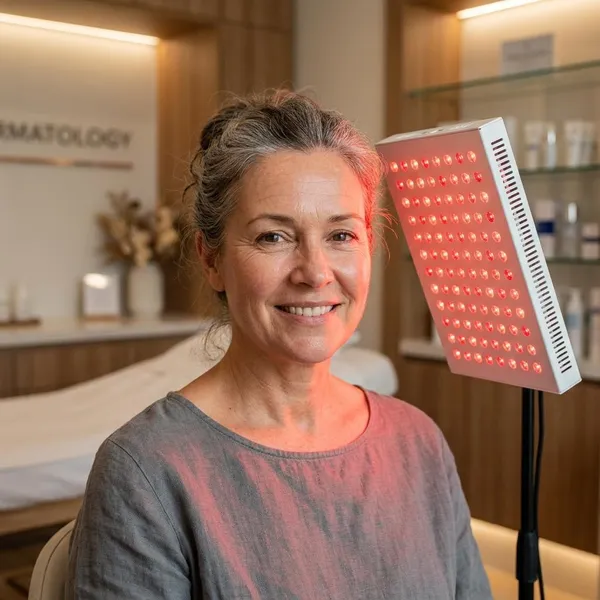
Red light around 630nm to 660nm is most useful when the tissue is easy to reach. That is why it is common in face masks, scalp devices, and skin-focused panels.
For someone using light therapy mainly for facial skin, visible red light also has a practical advantage: it is easy to see where the light is landing. That makes repeated sessions easier to position, which matters more than people think. A theoretically strong wavelength used inconsistently is not very helpful.
Near-infrared light for deeper tissue applications
Near-infrared light around 810nm to 850nm is generally more relevant for deeper tissue applications because it can penetrate farther than visible red light in many conditions. This is why it appears so often in devices marketed for muscles, joints, soreness, and recovery.
The important caution: deeper penetration does not mean "more ATP" in every situation. If your target is surface-level skin, near-infrared may not be the better choice. If your target is a thick muscle group after training, red light alone may be less relevant because less useful light may reach the tissue you care about.
Why Do These Wavelengths Affect Mitochondria?
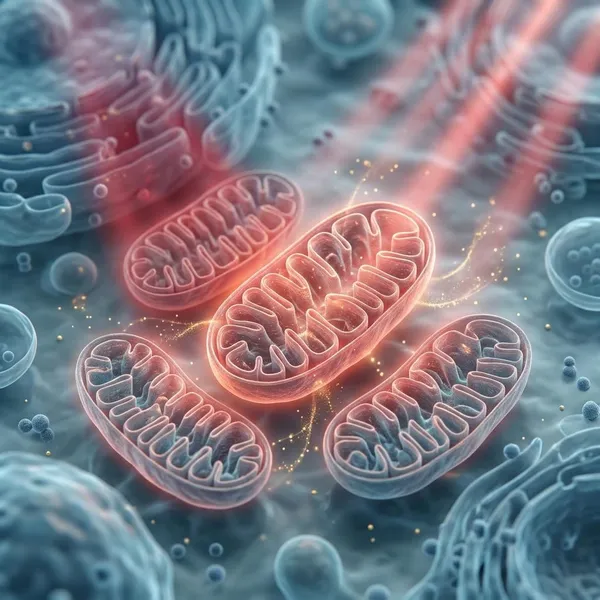
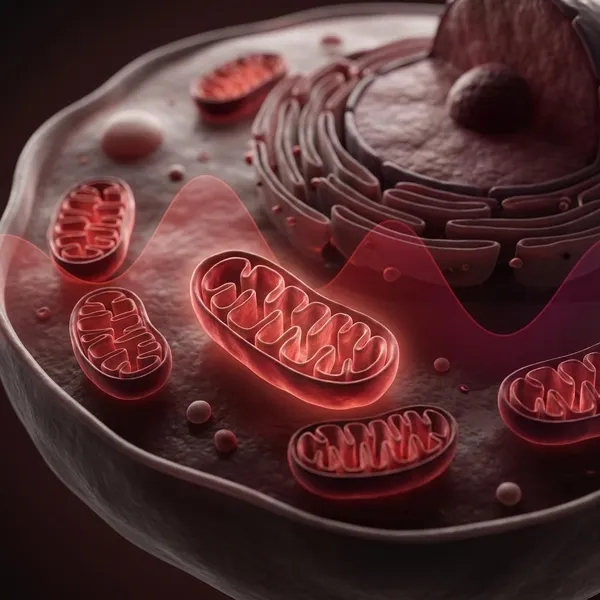
These wavelengths are studied because red and near-infrared light may interact with cellular systems involved in energy metabolism, oxygen use, and signaling. The best-known proposed target is cytochrome c oxidase, an enzyme in the mitochondrial electron transport chain.
Cytochrome c oxidase as a key light-sensitive target
Cytochrome c oxidase is often discussed because it helps cells use oxygen during ATP production. If certain red and near-infrared wavelengths are absorbed by this system, they may affect electron transport, redox balance, and related signaling pathways.
This is the reason wavelengths such as 660nm and 810nm appear repeatedly in serious PBM discussions. The numbers are not just marketing decoration; they are tied to plausible cellular targets and recurring research interest.
How light influences cellular energy pathways
Light may influence cellular energy pathways by changing how mitochondria handle electron transport, oxygen availability, nitric oxide signaling, membrane potential, and reactive oxygen species signaling. ATP is part of the picture, but it is not the only possible outcome.
That wider view helps set expectations. A person using a panel for recovery may not feel a sudden "energy boost" after one session. If there is a benefit, it may show up more gradually as improved tissue tolerance, smoother recovery, or less lingering discomfort after repeated use.
Why red and near-infrared light support cellular signaling
Red and near-infrared light may support cellular signaling because cells respond to small changes in stress state, oxygen handling, and repair demand. In that sense, photobiomodulation is closer to a signal than a fuel source.
This also explains why context matters. A healthy resting tissue, an irritated patch of skin, and a sore muscle after training may not respond in the same way, even if the same wavelength is used.
How Photobiomodulation Influences ATP Production
Photobiomodulation may influence ATP production by affecting mitochondrial function and cellular signaling. It is not a replacement for oxygen, nutrients, sleep, training recovery, or medical care.
How mitochondria naturally produce ATP
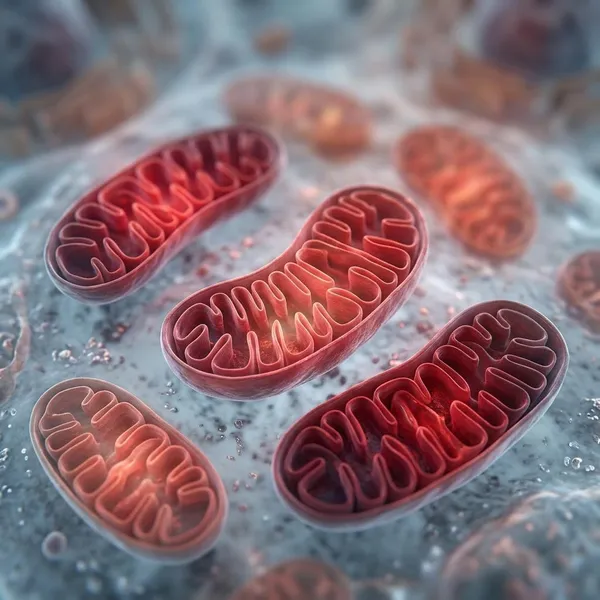
Mitochondria produce ATP mainly through oxidative phosphorylation. Nutrients are broken down, electrons move through the electron transport chain, oxygen helps complete the process, and ATP becomes available as usable cellular energy.
The process depends on many basics: oxygen supply, nutrient status, enzyme activity, membrane gradients, and the condition of the tissue. If those foundations are poor, light therapy alone is unlikely to create dramatic results.
How light exposure may affect mitochondrial function
Light exposure may affect mitochondrial function by interacting with photoacceptive molecules and shifting cell signaling. Possible effects discussed in PBM research include changes in electron transport efficiency, nitric oxide availability, redox signaling, and ATP-related activity.
Why light therapy is not simply adding energy to cells
Light therapy is not like charging a battery. A brighter lamp, a longer session, or a more powerful panel is not automatically better. The response depends on wavelength, delivered dose, distance, session length, tissue type, and the condition of the target area.
- Do not shop by brightness alone. Visible intensity tells you little about near-infrared output.
- Do not assume longer is better. More exposure may not improve the response.
- Do not ignore fit. A panel, mask, wrap, and handheld device deliver light differently.
Why There Is No Single Perfect ATP Wavelength
There is no single perfect ATP wavelength because wavelength is only one part of the biological response. Tissue depth, skin and tissue optical properties, device output, treatment distance, exposure time, and individual context all change the result.
Different tissues respond differently to wavelengths
Skin, fat, muscle, connective tissue, and nerve-rich areas scatter and absorb light differently. A wavelength that makes sense for facial skin may not be the best choice for a deep hip area or a large thigh muscle.
A low-risk cosmetic routine and a higher-concern pain or neurological use case should also be treated differently. For general skin or recovery use, choosing a credible device and following conservative instructions is usually the sensible path. For eye-related, neurological, severe pain, or medical conditions, it is better to involve a qualified clinician rather than guessing with a consumer panel.
Dose and irradiance affect biological response
Dose and irradiance can matter as much as wavelength. Too little light may do very little; too much light may not improve the response and may be counterproductive in some situations. This is often described as a biphasic dose response.
A practical check is to look for irradiance measured at a stated distance, not just a large power number. A panel used close to the body can deliver a very different dose from the same panel used across the room. Session time only means something when you know the output and distance.
Device design changes real-world results
Device design changes how much useful light actually reaches the body. Lens angle, LED quality, heat control, treatment area, power output, and measurement honesty can all affect the result.
When comparing products, check these points before worrying about tiny wavelength differences:
- Stated wavelength peaks: Look for specific numbers such as 660nm or 850nm, not vague "healing spectrum" claims.
- Irradiance at distance: The measurement should say how far the sensor was from the device.
- Coverage area: A tiny handheld unit and a large panel do not treat the same area efficiently.
- Use instructions: Clear distance and session guidance is more useful than dramatic marketing language.
- Safety notes: Eye comfort, heat, medications, and sensitive conditions deserve caution.
Conclusion
The most practical choice is to start with the target tissue, not the biggest ATP claim: use red wavelengths such as 630nm or 660nm for surface-level goals, and consider near-infrared options such as 810nm, 830nm, or 850nm when the target is deeper. A credible device, sensible dosing, and a realistic use case matter more than chasing one supposedly perfect wavelength.