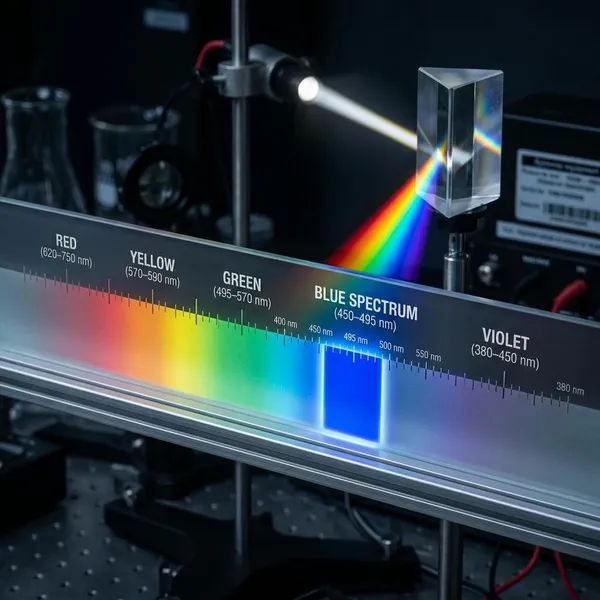
For a face mask, the most useful red light therapy mask wavelength range is usually 630–660 nm for visible red light, with 810–850 nm added if you want near-infrared exposure. Start by matching the wavelength to your main goal: visible skin concerns usually point to red light, while a dual-light mask makes more sense if you want broader, deeper light exposure too.
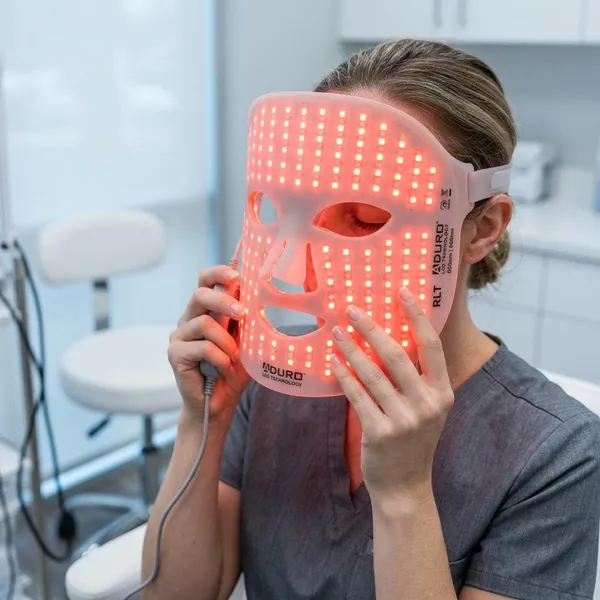
What wavelength should a red light therapy mask use?
A good face mask will usually list visible red light around 630–660 nm. Many stronger or more versatile masks also include near-infrared light around 810–850 nm, often shown as 830 nm or 850 nm on the product page.
The mistake is choosing by the highest number alone. Wavelength tells you what type of light the mask uses, but it does not prove the mask is powerful, evenly designed, or comfortable enough to use consistently.
630–660 nm for visible red light
630–660 nm is the main visible red range used in facial masks. It is commonly chosen for skin-focused goals such as dullness, uneven tone, texture, mild redness, and the appearance of fine lines.
- 630 nm: often described as more surface-focused.
- 660 nm: often used when brands want slightly deeper red-light exposure.
- Both together: a normal and practical setup for cosmetic facial use.
810–850 nm for near-infrared light
Near-infrared light sits beyond visible red light, so 810–850 nm usually will not look bright to your eyes. A mask can still be emitting near-infrared even if you only see the red LEDs.
This range is typically used when a device is meant to offer deeper light exposure than visible red alone. That can be useful if you want a more complete device, but it should come with clear product details: which wavelengths are used, whether red and near-infrared run together, and what the recommended treatment time is.
Red light vs near-infrared in face masks
Red light and near-infrared are often grouped together, but they are not interchangeable. Red light is visible and more skin-surface oriented, while near-infrared is usually included for deeper exposure below the upper skin layers.
Red light works closer to the skin surface
Visible red light is the more direct choice for common facial skincare goals. If you want support for smoother-looking texture, a more even tone, or early visible aging signs, a 630–660 nm mask is usually more relevant than chasing a very high wavelength.
Near-infrared reaches deeper tissue
Near-infrared generally reaches deeper than visible red light, which is why 810–850 nm appears in many dual-light masks. It is not automatically "better" for every face-care goal; it is better when deeper exposure is actually something you want.
Dual-light masks combine both ranges
Dual-light masks usually pair 630 or 660 nm red light with 830 or 850 nm near-infrared. They can be a smart choice when you do not want to pick between surface-focused and deeper-light use.
| Your situation | More sensible choice |
| First mask, mainly tone and texture | Red light at 630–660 nm may be enough |
| Long-term use and broader goals | Dual-light red plus near-infrared is more flexible |
| Sensitive skin or easily irritated skin | Prioritize clear instructions and shorter starter sessions |
Be careful with masks that list many wavelengths but do not explain how they are used. More numbers on the box do not help much if the output, coverage, and treatment modes are unclear.
Which wavelength is best for your goals?
The best wavelength depends on what you are trying to improve. For visible facial skin concerns, start with 630–660 nm. For deeper light exposure, look for 810–850 nm, ideally in a dual-light mask rather than as a vague add-on claim.
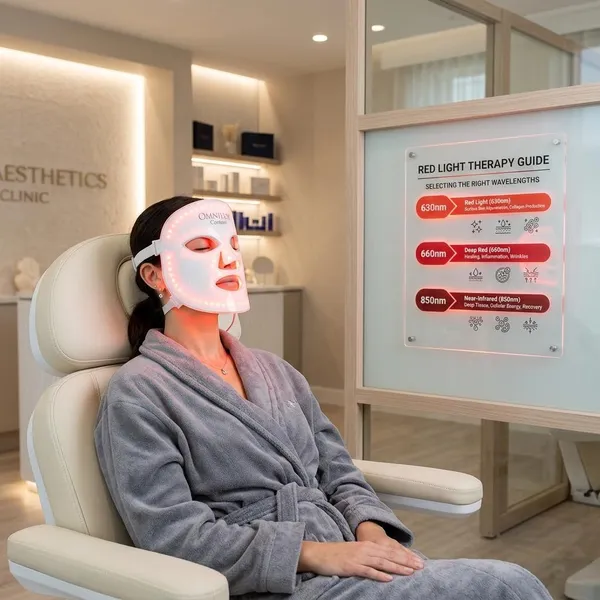
630–660 nm for skin-focused use
Choose 630–660 nm if your main goals are cosmetic: fine lines, rough texture, dullness, uneven tone, or general skin appearance. This is the most practical range for many home users because it lines up with what people usually expect from a facial LED mask.
If you are a beginner, do not overcomplicate the choice between 630 and 660 nm. A comfortable, well-covered mask in this range is usually a better buy than a poorly fitting device with a more impressive-looking spec list.
810–850 nm for deeper light exposure
Choose 810–850 nm when you specifically want near-infrared included. This is more likely to matter if you want a broader device, plan to use the mask long term, or prefer having both red and near-infrared in one routine.
- Good fit: you want one mask for both skin-focused and deeper-light use.
- Less necessary: you only want a simple cosmetic mask for occasional use.
- Check first: whether the brand clearly states the near-infrared wavelength and mode.
What matters besides wavelength?
After you confirm the wavelength range, the next checks are output, dose, coverage, time, and comfort. These details decide whether useful light actually reaches your face in a way you can repeat week after week.
Irradiance
Irradiance means how much light power reaches a given area, usually shown as mW/cm². A mask can have the right wavelength and still underperform if the light reaching the skin is weak.
Look for brands that explain how their irradiance was measured. Very high numbers without distance, test method, or treatment context are hard to trust, especially with masks that sit unevenly on the face.
Treatment dose
Treatment dose is the total energy delivered during a session. It depends on both irradiance and time, so a longer session is not automatically better and a shorter session is not automatically worse.
For home use, the better question is whether the recommended routine is realistic. A mask used consistently according to its instructions is more useful than an intense-looking device that feels too awkward to use regularly.
LED coverage
LED coverage matters because faces are curved. Check whether the LEDs reach the forehead, cheeks, chin, jawline, and mouth area evenly instead of clustering in a few easy-to-market zones.
- Good sign: LEDs are spread across the main facial areas.
- Possible problem: large gaps around the nose, jaw, or cheeks.
- Extra check: product photos show the inside layout clearly.
Treatment time
Most home masks are designed for short sessions, often around 10 to 20 minutes, but the right time depends on the device output and the manufacturer's instructions. Do not increase session length just because you want faster results.
If your skin is reactive, start on the cautious side of the recommended routine instead of jumping into maximum frequency. That is especially sensible after exfoliation, strong actives, or professional skin treatments.
Mask fit and comfort
Fit is not just a comfort detail. A mask that slips, pinches, or sits too far from the skin can make treatment uneven and harder to keep up with. Adjustable straps, a stable shape, and comfortable contact points matter more than many shoppers expect.
Before buying, imagine using the mask several times a week for months. If it looks heavy, rigid, or annoying around the nose and eyes, a simpler but more wearable model may be the smarter choice.
Conclusion
For most people, the sensible choice is 630–660 nm if the goal is visible skin improvement, or a dual-light mask with 810–850 nm added if deeper exposure is part of the plan. Do not let wavelength be the only deciding factor: a mask with clear specs, even coverage, realistic session guidance, and a fit you can actually tolerate will usually serve you better than one impressive number on a product page.