If you are looking at the red light therapy wavelength 670 nm, the useful question is not only whether 670 nm "works." It can be a sensible visible red wavelength for surface-level photobiomodulation, especially skin-focused use, but the device output, distance, session time, and safety guidance decide far more than the number on the label.
How does 670 nm red light work?
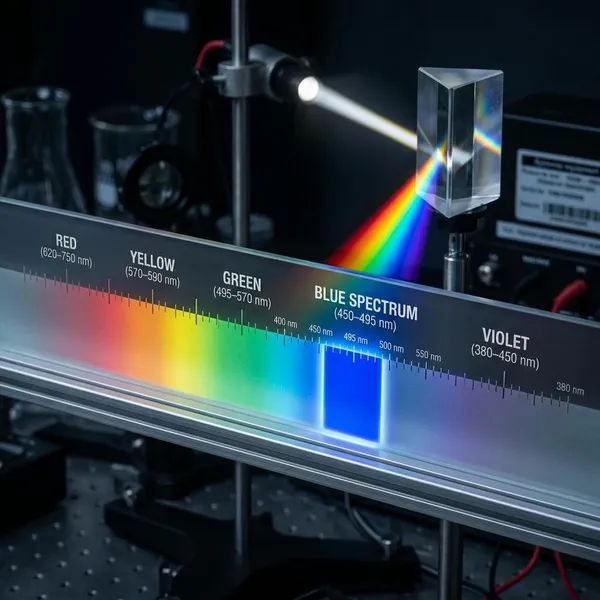
670 nm sits in the visible red range, close to commonly used wavelengths such as 630 nm and 660 nm. It is generally discussed for tissue closer to the surface rather than for deep tissue targets, where near-infrared wavelengths are more often considered.
Tissue absorbs the light energy
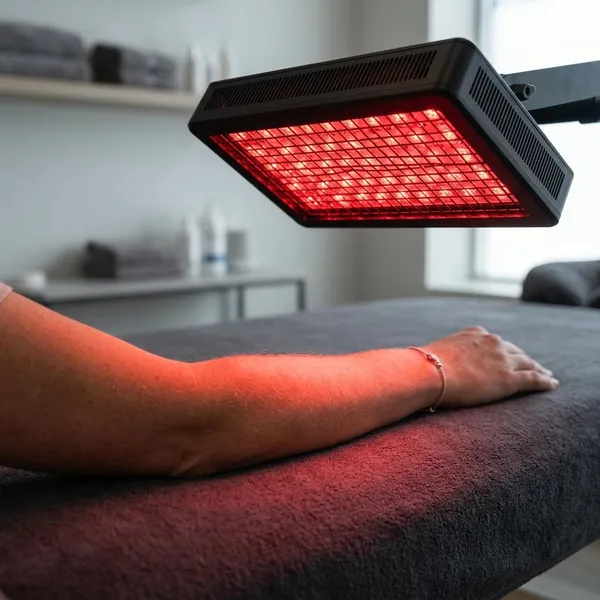
Before any cellular response is possible, some of the light has to reach and be absorbed by the target area. With 670 nm, that usually means surface-level goals such as facial skin, a small local area, or a scar-focused routine rather than a deep joint or large muscle group.
Real use can change absorption more than people expect. A lamp used too far away, a panel angled poorly, or a session done through thick fabric can reduce the delivered light even when the advertised wavelength looks right.
Cells respond through photobiomodulation
Photobiomodulation means light is used as a biological signal, not as heat or a chemical treatment. Research often looks at cellular signaling, mitochondrial activity, and local tissue response, but consumer results should be viewed as supportive rather than guaranteed or instant.
- Do not judge it by heat: a useful session does not need to feel hot.
- Do not expect overnight change: most routines depend on repeated exposure over time.
- Do not treat every body area the same: facial skin, a healing cut, and eye-related use are very different situations.
The response depends on the delivered dose
Dose is where many home routines succeed or fail. Too little exposure may not do much, while aggressive use is not automatically better and may be counterproductive for some people.
What is 670 nm red light used for?
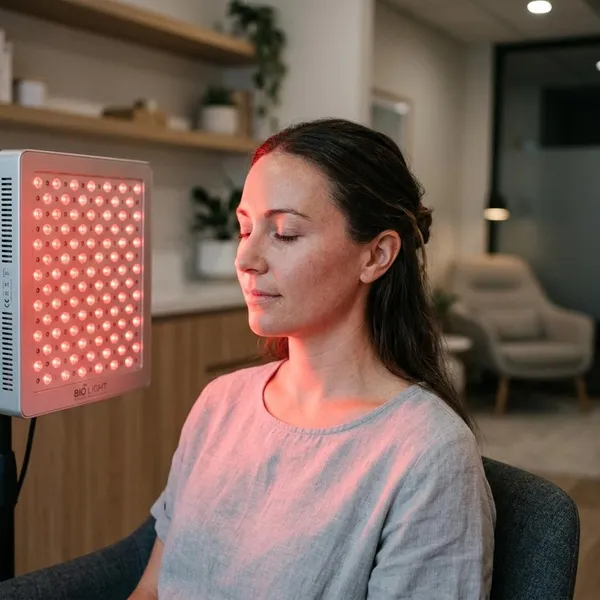
670 nm is most often considered for skin-level photobiomodulation, wound and scar-related research, and selected eye-focused research. Those uses should not be treated equally: a casual face routine is a lower-risk decision than direct eye exposure or use around a medical condition.
For a normal home buyer, the main split is between a surface goal and a broader recovery goal. If you mainly care about facial skin or a small visible area, 670 nm may fit the task. If you want to cover larger areas or target deeper tissues, comparing 670 nm with near-infrared, or choosing a mixed-wavelength device, may make more sense.
Skin-focused photobiomodulation
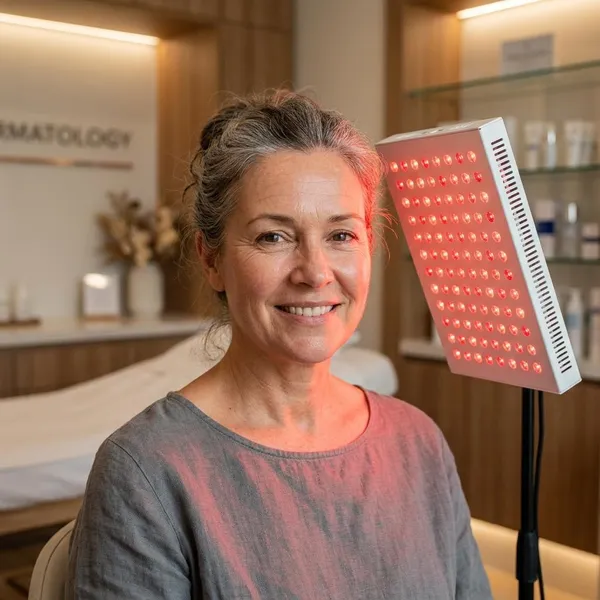
Skin is the most straightforward reason people consider 670 nm. It is commonly compared with 630 nm and 660 nm for face, neck, texture-focused routines, and general appearance support.
For a simple facial routine, comfort and repeatability matter. A device that you can position at the same distance for short, regular sessions is usually more useful than a powerful panel that is awkward to use and ends up sitting in a drawer.
Wound and scar research
670 nm also appears in wound and scar-related photobiomodulation research, mainly because the target is often close to the skin surface. For home use, this should be treated as supportive interest, not a replacement for wound care, infection management, or medical advice.
A practical boundary is worth keeping: a closed, minor scar-focused routine is very different from using light on an open, painful, infected, or unexplained wound. The second situation needs proper clinical guidance first.
Selected eye-focused research
Eye-related 670 nm research gets attention, but it is the area where caution matters most. "Used near the face" and "safe for direct eye use" are not the same claim.
If a device does not clearly state eye-safety instructions, exposure limits, and intended use, do not assume it is suitable for retinal or direct eye exposure. Anyone considering 670 nm for an eye condition should speak with a qualified clinician rather than copying a general skin routine.
What affects 670 nm red light therapy results?
The biggest practical variables are irradiance, energy dose, treatment distance, session time, and treatment frequency. They work together, so changing one usually changes the others.
Irradiance
Irradiance is the amount of light power reaching a given area, usually shown as mW/cm². It is more useful when measured at a stated distance, because an impressive number taken almost against the LEDs may not reflect normal home use.
Energy dose
Energy dose is the total light delivered over a session, often expressed as J/cm². It is shaped by irradiance and time, so LED count, wattage, or brightness by themselves are not enough to judge a device.
- Useful listing: gives irradiance at a real distance and suggested timing.
- Weak listing: gives only wattage, LED count, or vague "high power" claims.
- Risky routine: increases time aggressively because results are not immediate.
Treatment distance
Distance can quietly ruin an otherwise reasonable setup. A desktop lamp designed for close use may deliver much less light if you place it across the room, even though the wavelength has not changed.
Before buying, picture where the device will actually sit. If the recommended distance is so close that it feels uncomfortable, hard to position, or unrealistic for daily life, it may not be the right device for you.
Session time
Session time should match the device output and treatment distance. A stronger panel may need shorter sessions, while a weaker or smaller device may require more time for the same area.
The common mistake is treating "longer" as automatically better. A better approach is to follow the maker's distance-based timing if it is provided, use a timer, and avoid adding extra minutes every time you feel impatient.
Treatment frequency
Frequency is about consistency, not intensity. Some routines may be used daily, while others may make more sense several times a week depending on device strength, body area, and individual response.
If you are testing 670 nm for skin, keep the distance, timing, and frequency stable for a few weeks before changing anything. If you are using it around a sensitive area, after a procedure, or alongside a medical condition, take a more cautious route and ask a clinician first.
How to choose a 670 nm red light device
A good 670 nm device should make the routine easy to understand before you buy it. The first things to look for are exact wavelength labeling, irradiance at usable distances, clear treatment coverage, realistic placement instructions, and sensible safety guidance.
Confirm the listed wavelength
Check whether the product actually states 670 nm, not just "red light." Some devices use 630 nm, 660 nm, 670 nm, near-infrared, or a blend, and that mix affects what the product is best suited for.
Nearby red wavelengths can still be useful, but vague labeling makes comparison difficult. If a brand will not say what wavelengths are inside the device, I would treat that as a reason to keep looking.
Check irradiance and dose
Look for irradiance shown at a distance you would genuinely use, plus suggested session times. That is much more helpful than a large wattage number without context.
Check treatment coverage
Coverage should match the target area. A handheld device can be convenient for a small spot, but it becomes annoying if you need to treat the full face in sections every time.
- Small spot or scar: compact lamp or handheld may be enough.
- Face and neck: a wider panel can save time and reduce repositioning.
- Multiple body areas: coverage and mounting options matter as much as wavelength.
Check the recommended distance
The recommended distance should fit your real routine. A device that only makes sense at an awkwardly close range may be technically usable but practically frustrating.
Compare the brand's suggested distance with your intended setup: sitting at a desk, standing in front of a panel, or holding a device near one area. If those do not match, your delivered dose may be very different from the advertised routine.
Review the safety guidance
Safety guidance is not a minor detail, especially for facial use. Look for instructions on eye protection, exposure limits, who should avoid use, cleaning, and whether the device is intended for use near the eyes.
Be especially cautious if you are light-sensitive, using photosensitizing medication, treating children, dealing with an active skin problem, or considering eye-directed use. In those cases, manufacturer instructions are not a substitute for medical guidance.
Conclusion
670 nm can be a reasonable red light choice for surface-level goals, but I would not buy a device for the wavelength alone. Start by checking whether the product clearly states its wavelength, output at a usable distance, timing, coverage, and safety limits; if those details are missing, a nearby wavelength from a better-documented device may be the smarter choice.