The safest way to plan red light therapy is to match wavelength, device output, distance, and time instead of copying someone else's session length. Red light therapy wavelength dosage guidelines are useful because a five-minute session can be mild with one device and excessive with another. Start by checking what wavelength you are using, how much irradiance reaches your skin at your real distance, and whether your goal is surface-level or deeper tissue support.
Why there is no universal red light therapy dose
There is no single dose that fits every person, device, or body area. The same routine can deliver very different amounts of energy depending on the panel strength, the distance from your skin, the treatment area, and whether you are using visible red light or near-infrared light.
Different goals use different parameters
Skin-focused use usually calls for a more conservative setup than deeper recovery work. Facial skin is easy to reach and can be reactive, while muscles, tendons, and joints often need a wavelength and positioning that make more sense for deeper targets.
- Cosmetic or facial use: usually favors shorter, moderate sessions and careful response tracking.
- Scalp use: depends heavily on device design, hair coverage, and whether the light reaches the scalp well.
- Muscle or joint use: often leans toward near-infrared or combined wavelengths, but still needs dose control.
Wavelength changes how light interacts with tissue
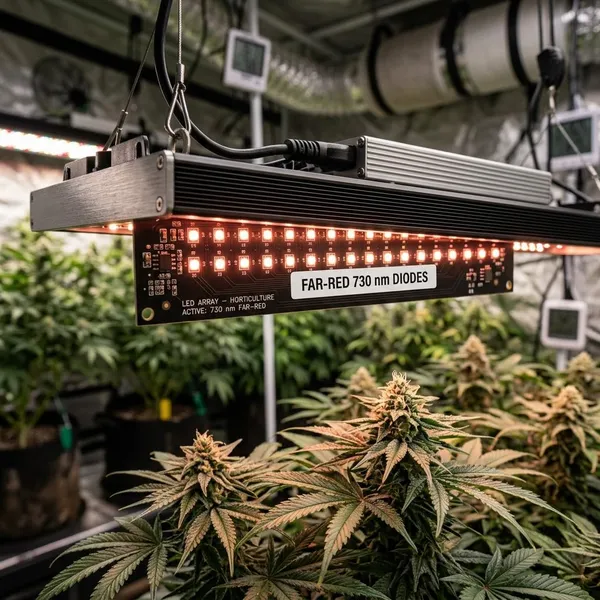
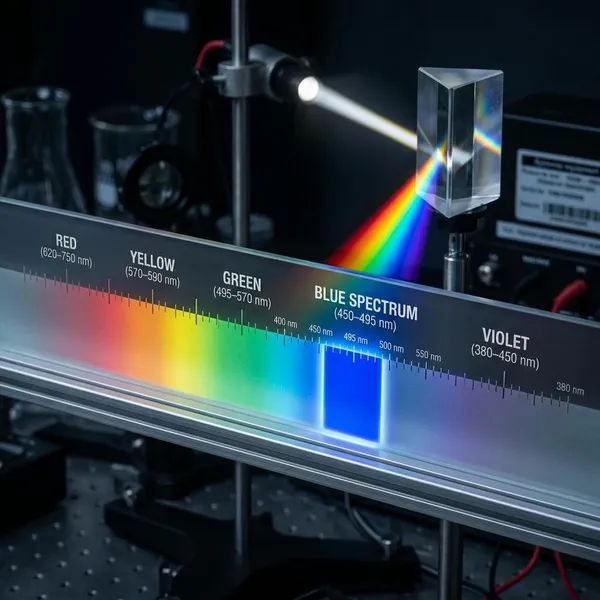
Wavelength is the "type" of light, measured in nanometers. Visible red light is commonly used in the mid-600 nm range for surface-focused goals, while near-infrared light is often found around the low- to mid-800 nm range for deeper-target applications.
Irradiance changes the rate of energy delivery
Irradiance is the power density reaching the skin, usually shown as mW/cm². It tells you how quickly energy is being delivered. Higher irradiance reaches a given dose faster; lower irradiance needs more time or closer positioning.
The useful number is the irradiance at your actual treatment distance, not the biggest number in the marketing copy. If a brand only lists peak power without saying where it was measured, treat that figure as incomplete for dosage planning.
More light is not always better
Red light therapy is often discussed as having a biphasic response: too little may do very little, while too much may reduce the benefit or increase irritation. That is why extending every session "just to be safe" can work against you.
How to choose a red light wavelength
Choose the wavelength by asking where the target is. If the goal is mostly skin-level, visible red light is usually the more natural fit. If the target sits deeper, near-infrared or a combined red/NIR setup is often more practical.
| Goal | Often-used light type | Practical starting judgment |
|---|---|---|
| Facial skin, texture, appearance | Red light | Keep sessions moderate and watch for irritation. |
| Scalp support | Red or mixed output | Device contact and hair coverage matter as much as wavelength. |
| Muscle recovery or joint comfort | Near-infrared or combined | Check distance and irradiance before increasing time. |
| Mixed home use | Combined red and NIR | Useful, but not a shortcut around dose calculation. |
Red light for skin-focused treatment
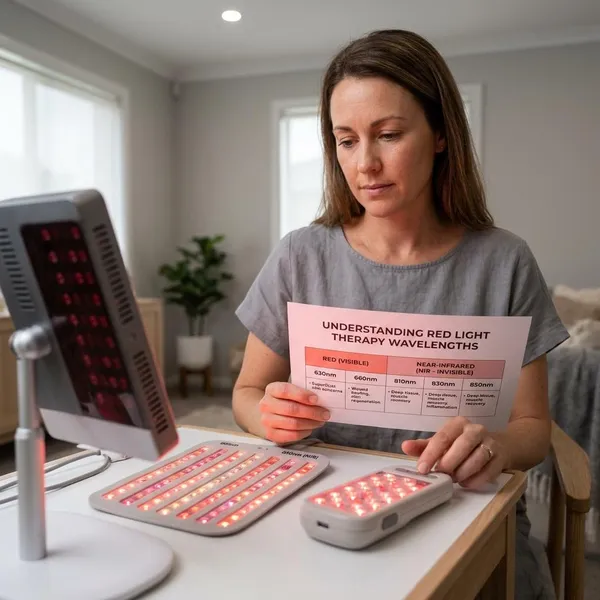
Red light, often around 630 to 670 nm in consumer devices, is commonly used for superficial goals such as facial skin appearance and general skin support. Because the target is close to the surface, long high-intensity sessions are rarely the best place to start.
Near-infrared for deeper-target applications
Near-infrared light, often around 810 to 850 nm, is commonly chosen when the goal is below the surface, such as a muscle group, tendon area, or joint. It is not visible in the same way as red light, so brightness is not a reliable sign of dose.
- Post-workout legs: a panel or wrap may make more sense than a small facial device.
- A stiff knee or shoulder: positioning and distance matter because the target is not just the skin.
- Occasional soreness: avoid turning a recovery routine into excessive daily exposure without a reason.
Combined wavelengths for broader treatment goals
Combined red and near-infrared devices can be useful if you want one setup for skin, general recovery, and occasional joint or muscle use. They are especially convenient for people who do not want separate devices for separate body areas.
How to calculate red light therapy dose
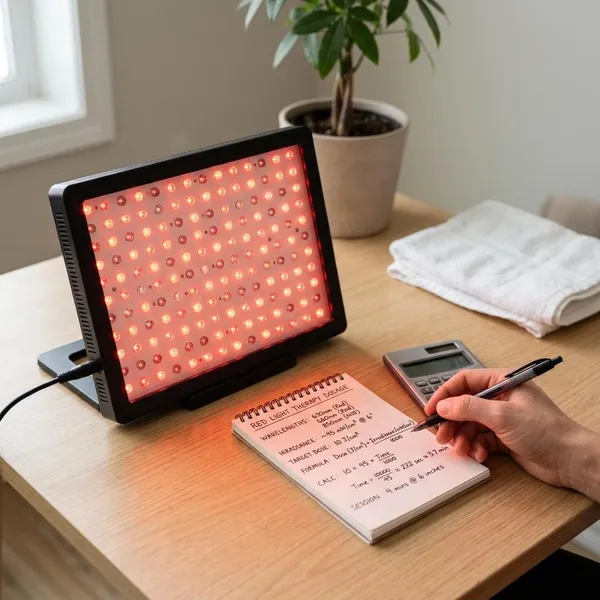
Session length alone is a weak dosing rule. A better estimate uses irradiance and time:
Dose (J/cm²) = Irradiance (mW/cm²) × Time (seconds) ÷ 1000
This formula does not turn home use into a clinical protocol, but it does stop you from treating a weak lamp, a close-range body panel, and a face mask as if they all deliver the same dose.
Find irradiance at your actual distance
Look for the device's irradiance in mW/cm² at the distance you actually use. For panels, that distance matters a lot: moving from close range to a more comfortable standing distance can reduce the energy reaching your skin.
If the brand gives a distance chart, use the closest match to your setup. If it only gives a large power claim with no distance, you do not have enough information for a confident calculation.
Confirm the intended treatment dose
Pick a target dose from a reliable source: the device manual, a clinician's instruction, or a study protocol that actually matches your goal and body area. Avoid mixing numbers from different contexts, such as using a facial skincare dose for a deep joint target.
Multiply irradiance by treatment time
Once you know irradiance and target dose, solve for time. If a device delivers 50 mW/cm² at your treatment distance and you are aiming for 10 J/cm², the calculation is 10 ÷ 0.05 = 200 seconds, or about 3 minutes and 20 seconds.
If that result is very different from the manufacturer's timing, do not ignore the mismatch. Recheck the distance, the output mode, and whether the listed irradiance applies to your setup.
Convert units before calculating
The common mistake is forgetting that mW/cm² is not the same as W/cm². Dividing by 1000 is what converts milliwatts and seconds into joules per square centimeter.
- Use seconds in the formula, then convert the answer back into minutes.
- Do not use total wattage as a substitute for irradiance at the skin.
- Recalculate after changing distance, because the old session time may no longer fit.
Compare the result with device guidance
Your estimate should be compared with the device instructions, not used as a reason to ignore them. If your calculated session is much shorter or longer than the manual recommends, something may not line up: distance, irradiance, treatment mode, or the dose target.
- Check the wavelength mode you are actually using.
- Find irradiance at your real distance, not at the closest possible test point.
- Choose a dose target that matches the tissue and goal.
- Calculate time, then start on the lower end for a new device or sensitive area.
- Track response for one to two weeks before making sessions longer or more frequent.
When to get professional guidance
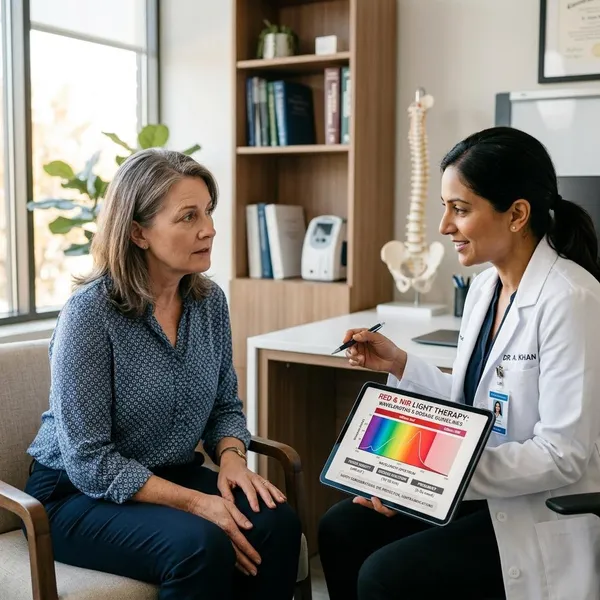
Home red light devices are usually sold for wellness, skincare, or recovery support, but some situations need more caution. If you are treating a medical condition, using medication that affects light sensitivity, or getting unusual reactions, it is better to ask a qualified professional than keep adjusting blindly.
Treating a medical condition
Get medical guidance if you want to use red light therapy for a diagnosed condition, a wound, severe skin problem, thyroid concern, chronic inflammation, or symptoms that are getting worse. A home device may still be supportive, but it should not replace diagnosis or treatment.
Using photosensitizing medication
Ask a clinician or pharmacist before use if you take medication or apply products that may increase light sensitivity. Some antibiotics, acne treatments, prescription creams, and certain supplements can make skin more reactive.
For facial routines, also consider strong skincare actives. If your skin is already irritated from retinoids, acids, or recent treatments, adding light exposure may not feel as mild as the device instructions suggest.
Managing persistent pain or injury
Red or near-infrared light may be part of a recovery routine, but ongoing pain deserves a clearer explanation. A sore muscle after training is different from sharp joint pain, nerve symptoms, a tendon injury, or pain that limits normal movement.
If you are using a device for temporary post-exercise soreness, a cautious home routine may be reasonable. If pain is persistent, worsening, or linked with weakness, swelling, numbness, or loss of function, get assessed instead of increasing dose.
Experiencing unexpected reactions
Stop and reassess if you notice unusual irritation, headaches, dizziness, eye discomfort, sleep disruption, or symptom flares after sessions. The first adjustment is usually simple: shorter time, greater distance, fewer sessions, or a lower-output mode.
If the same reaction keeps returning after you reduce exposure, do not keep testing bigger changes on yourself. That pattern is a good reason to check for sensitivity, medication interactions, heat issues, eye protection problems, or an unrelated cause.
Conclusion
A good routine starts with the boring checks: wavelength for the target, irradiance at your real distance, and a session time that matches the dose rather than someone else's habit. Use lower, more cautious exposure for sensitive skin or a new device, and be more careful when pain, medication, or medical conditions are involved. If those pieces do not line up, changing the session length is guesswork, not a guideline.