The easiest way to choose a red light therapy wavelength is to start with the target: visible red light around 630–660 nm is usually chosen for skin, while near-infrared light around 810–850 nm is more often used for muscles, joints, and deeper tissue goals. The nm number matters, but it should not be the only spec you judge. A good device also needs enough output, sensible session guidance, and a treatment area that fits how you will actually use it.

What wavelength range does red light therapy use?
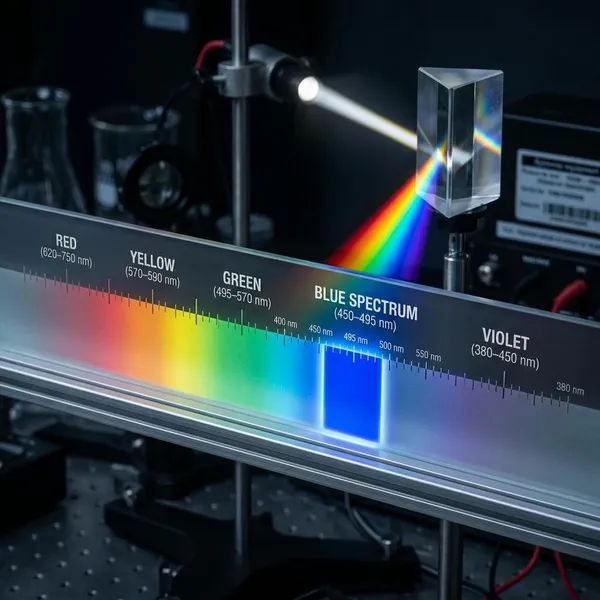
Most red light therapy devices use light in the visible red and near-infrared parts of the spectrum. In practical home-device terms, that usually means visible red light from about 600–700 nm and near-infrared light from about 780–1100 nm, with many consumer products clustering around 630, 660, 810, 830, and 850 nm.
Choose red light when your main goal is skin-facing, and look at near-infrared when the target is deeper. A facial mask and a body panel can both be sold as red light therapy devices, but they may be built for very different jobs.
600–700 nm for visible red light
Visible red light sits roughly in the 600–700 nm range. For home use, the most familiar options are usually around 630 nm and 660 nm, especially in face masks, small beauty tools, and skin-focused panels.
This range makes the most sense when the treatment area is close to the surface, such as the face, neck, hands, or a small area of uneven-looking skin. If your goal is facial tone, texture, or the look of post-blemish marks, visible red light is usually the cleaner starting point than a near-infrared-only device.
780–1100 nm for near-infrared light
Near-infrared light is commonly described as the range from about 780–1100 nm. You usually will not see it as a bright red glow, but it is widely used in devices aimed at deeper treatment areas.
- Best fit: larger muscles, joints, tendons, and body recovery routines.
- Common device types: panels, wraps, belts, and higher-output body systems.
- Practical warning: do not choose near-infrared just because it sounds stronger; it may be unnecessary if your only goal is facial skin appearance.
630–660 and 810–850 nm are common device ranges
The ranges you will see most often are 630–660 nm for visible red light and 810–850 nm for near-infrared light. A skin device may use only 630 or 660 nm, while a recovery-focused panel may include 810, 830, or 850 nm. Many larger home panels combine both groups so one session can cover skin and deeper tissue targets.
Common red light therapy wavelengths
The most common red light therapy wavelengths are not random numbers. They tend to appear because manufacturers design devices around wavelengths that are widely used, practical to produce, and easy to combine in home products.
| Wavelength | Usually chosen for | Practical fit |
|---|---|---|
| 630 nm | Skin-focused routines | Face masks, beauty devices, small treatment areas |
| 660 nm | Skin and general red-light use | Masks, handheld tools, combination panels |
| 810–830 nm | Deeper tissue goals | Muscles, joints, recovery-focused panels |
| 850 nm | Broad near-infrared coverage | Larger body panels and multi-purpose devices |

How does wavelength affect red light therapy?
Wavelength affects how light interacts with tissue and how far it may travel before it is absorbed or scattered. That is why the same session length can feel like a good match for one device but a poor fit for another. The wavelength helps aim the treatment, but the device design and how you use it decide a lot of the real-world outcome.
Wavelength changes how tissue absorbs light
Different wavelengths are absorbed differently by skin, blood, water, and other tissue structures. For a home user, the takeaway is not to memorize the physics; it is to avoid buying a device aimed at the wrong layer of the body.
A skin-focused mask may be perfectly reasonable for facial use but disappointing if you expect it to support a sore lower back. The issue may not be that the device is "bad"; it may simply be designed around a surface-level goal.
Wavelength affects treatment depth
Visible red light is generally associated with shallower treatment, while near-infrared light is generally associated with deeper penetration. That is the main reason 630–660 nm is linked with skin goals and 810–850 nm is linked with muscles and joints.
There is one mistake worth avoiding: assuming the highest nm number always wins. Penetration is affected by wavelength, but also by irradiance, distance, session time, body area, and device build. A weak or poorly used near-infrared device is not automatically more useful than a well-matched red-light device.
What matters besides wavelength?
Once the wavelength matches your goal, the next question is whether the device can deliver useful light in a practical way. The most important checks are irradiance, dose, session time, treatment distance, and coverage area. These are the details that decide whether a device fits your routine or becomes something you stop using after a week.

Irradiance
Irradiance tells you how much light power reaches the treatment area, usually at a stated distance. The key is the phrase "at a stated distance." A high number measured extremely close to the LEDs may not reflect how you will actually use the device.
When comparing products, look for output information given at a realistic use distance and check whether the brand's recommended session time matches that distance. If the spec looks impressive but the testing distance is unclear, treat the claim cautiously.
Treatment dose
Treatment dose is the total light energy delivered during a session. It depends mainly on irradiance and time, so a stronger device usually needs a different routine than a weaker one.
- Too little exposure: may be ineffective or hard to judge.
- Too much exposure: is not automatically better and may be wasteful or uncomfortable.
- Best practical check: follow the device's recommended distance and time before experimenting.
Session time
Session time matters because the best device is the one you can use consistently. A small handheld tool may be fine for a wrist, elbow, or one patch of skin. It becomes tedious if you expect it to cover your back, legs, and shoulders several times per week.
For occasional spot use, a compact device can be enough. For long-term body routines, a panel may save time because it treats a larger area at once.
Treatment distance
Treatment distance changes how concentrated the light is when it reaches your body. Moving farther away usually spreads the light over a wider area but reduces intensity at any one point.
Coverage area
Coverage area is often the overlooked spec. A device can have the right wavelength and decent output, but still be frustrating if it treats too small an area at a time.
Small target, small device; broad target, larger panel. A face, jawline, wrist, or single knee can work with a compact tool. Back, thighs, shoulders, or full-body use usually calls for more coverage, otherwise the routine becomes slow and inconsistent.
Conclusion
Choose the wavelength by goal first, then judge the device around it. For skin, 630 nm or 660 nm is usually the sensible starting point; for muscles, joints, or larger body areas, 810–850 nm is usually more relevant. If your needs are mixed, a red and near-infrared combo device is often more practical than trying to make one wavelength do everything.