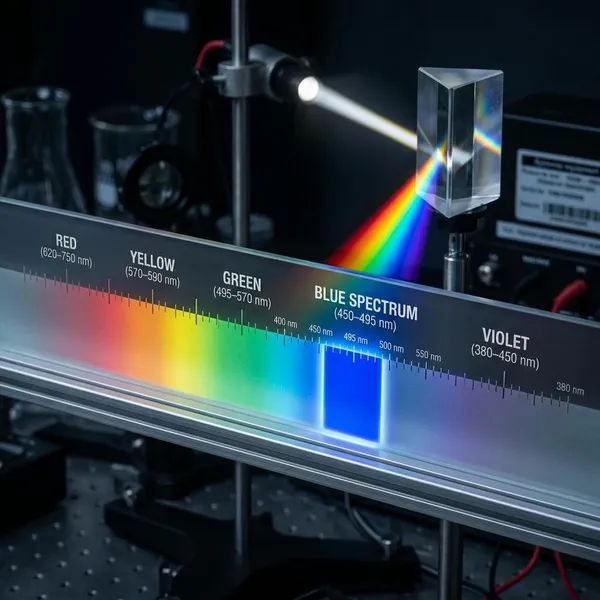
For acne, the red-light range to look for is usually 630–660 nm. Red light is mainly useful for calming visible inflammation, redness, and recovery, while 405–420 nm blue light is more focused on acne-causing bacteria. If your breakouts are active and inflamed, a device that combines blue and red light is usually more practical than red light alone.
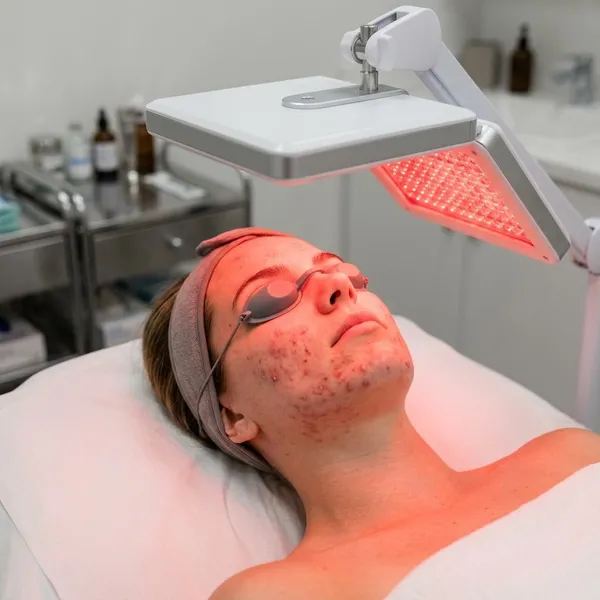
What red light wavelength is best for acne?
The best red light wavelength for acne is usually not one exact number, but the 630–660 nm range. This is the range most often used when the goal is to make inflamed skin look calmer and support the recovery stage after a breakout.
When comparing LED masks, panels, or wands, check three things before the marketing claims: the listed wavelength, whether the device also offers blue light, and whether the brand gives clear treatment instructions. A device that only says "red light" or "skin rejuvenation" without a wavelength is harder to judge.
630–660 nm is the common red-light range
If a device lists 630–660 nm, it is using the red-light range most commonly associated with acne support. This range is not meant to dry out a pimple overnight; it is more relevant for swelling, visible redness, and skin that takes time to settle after breakouts.
That makes it a better match for someone whose pimples look angry and stay red for days than for someone who only wants to stop new clogged pores from forming. Red light can support the skin, but it does not replace acne ingredients or medical treatment when those are needed.
633 nm is widely used in acne studies
A 633 nm red wavelength is a reassuring number to see because it appears often in acne and skin-recovery research settings. It sits inside the useful red-light range and is commonly used in controlled LED treatments.
Still, the wavelength alone does not prove a device will work well. Look for a sensible use schedule, eye-safety guidance, and realistic claims. A weak device with the right number can still disappoint.
660 nm is common in home LED devices
For at-home masks and handheld devices, 660 nm is one of the most common red-light choices. It is often included in devices aimed at both blemishes and redness, sometimes alongside blue light.
- Good sign: the product clearly states 660 nm and gives session timing.
- Less useful: vague claims such as "red glow technology" with no wavelength.
- Worth checking: whether blue light is included if your acne is actively inflamed.
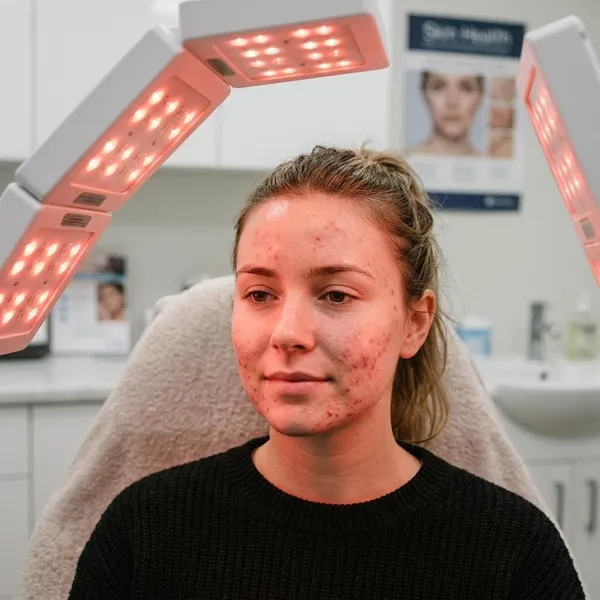
How does red light help acne?
Red light helps acne mainly by supporting the skin's inflammatory and recovery response. It is not the light color most associated with killing acne-causing bacteria; that role belongs more to blue light.
This distinction matters when choosing a device. If your main issue is new inflamed pimples, blue light may matter more. If your skin stays red, tender, or blotchy after the bump starts shrinking, red light becomes more relevant.
Calms visible inflammation
Inflamed acne often looks raised, bright, and irritated. Red wavelengths in the 630–660 nm range are used because they may help that visible inflammation look less intense over time.
Reduces redness around breakouts
Redness can hang around even after a blemish begins to flatten. Red light is most useful at this stage when the acne is healing but the surrounding skin still looks irritated.
This is a common frustration for people who feel their "acne" lasts longer than the actual bump. Red light may help with that visible recovery phase, but it should not be confused with a guaranteed fix for dark marks, pigmentation, or true scars.
Supports skin recovery
Think of red light as a recovery-support step, not the strongest acne-clearing step. It may be helpful when your skin barrier feels stressed from acne products, frequent washing, or repeated breakouts.
- Start with clean, dry skin. Heavy creams or sunscreen can make exposure less consistent.
- Use the device as directed. Short, regular sessions are safer than guessing longer times.
- Keep the rest of the routine simple. A gentle cleanser, moisturizer, and sunscreen usually matter more than adding extra harsh products.
Complements other acne treatments
Red light fits best as an add-on. Someone using adapalene or benzoyl peroxide may use red light to support calmer-looking skin, while someone with mild inflamed pimples may prefer a blue-and-red device to cover both bacteria and redness.
If you already use prescription acne treatment, follow professional advice before changing the schedule. Red light is generally considered gentle when used correctly, but irritated or medically treated skin still needs a cautious routine.
Red light vs blue light for acne
Red light and blue light are often grouped together, but they do different jobs. Blue light around 405–420 nm is more acne-specific because it targets acne-causing bacteria near the skin surface. Red light around 630–660 nm is more about inflammation, redness, and recovery.
| Breakout pattern | More useful light choice | Why it fits |
|---|---|---|
| Small, mild inflamed pimples | Blue light | Focuses more on surface bacteria |
| Redness after pimples flatten | Red light | Supports calmer-looking recovery |
| Red, swollen recurring pimples | Blue plus red light | Targets both bacteria and inflammation |
| Painful deep cysts | Medical care first | Home LED is usually not enough |
Which wavelengths work best for different acne types?
The right wavelength depends on what your acne is doing. Mild surface-level inflammatory acne may respond better to blue light, while red light is more useful for redness and recovery. For inflamed pimples that are both active and visibly irritated, blue plus red is usually the more balanced option.
The main boundary is depth and scarring risk. Home LED devices are usually a support tool for mild to moderate acne. Deep, painful, recurring cysts need a more serious treatment plan because waiting too long can increase the risk of lasting marks or texture changes.
Blue plus red light for inflamed pimples
Blue plus red light is often the best fit for papules and pustules that are red, swollen, and recurring. Blue light addresses the bacterial side near the surface, while red light supports the irritated skin around the breakout.
This is the most sensible at-home choice for someone who gets regular inflamed pimples before a period, after sweating, or during stressful weeks. It gives broader support than choosing red light alone and expecting it to handle every acne trigger.
Blue light for mild inflammatory breakouts
For mild inflammatory breakouts, especially small surface pimples on the forehead, cheeks, or chin, 405–420 nm blue light is usually the more targeted option. It is not a full acne routine by itself, but it can be a useful non-drug support step.
Red light for redness and recovery
Red light is a better match when your acne is already settling but the skin still looks blotchy or irritated. In that case, 630–660 nm is the range to look for.
This can suit someone who only gets occasional pimples but stays red afterward for a week, or someone whose acne products work but leave the face feeling reactive. The mistake to avoid is using red light as the only tool when new breakouts keep forming.
Medical treatment for cystic or scarring acne
Cystic or scarring acne should be handled medically first. Red light may help calm some visible inflammation, but deep painful bumps, repeated jawline cysts, or acne that leaves dents and persistent marks usually need a dermatologist's care.
- Reasonable for home LED: mild to moderate pimples that are mostly surface-level.
- Be more cautious: acne that is painful, widespread, or returning in the same deep areas.
- Do not wait on light therapy alone: acne that is scarring or affecting daily confidence.
Conclusion
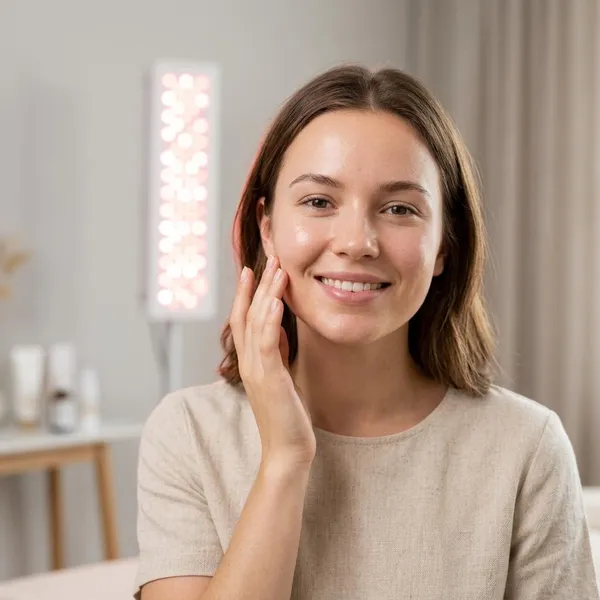
For most acne-prone skin, 630–660 nm is the red-light range worth looking for, with 633 nm common in study settings and 660 nm common in home devices. Choose red light when redness and recovery are the main problem, choose blue light when mild active pimples are the main issue, and choose both when breakouts are inflamed and slow to calm down. If acne is deep, painful, or scarring, a home LED device should not delay proper medical treatment.