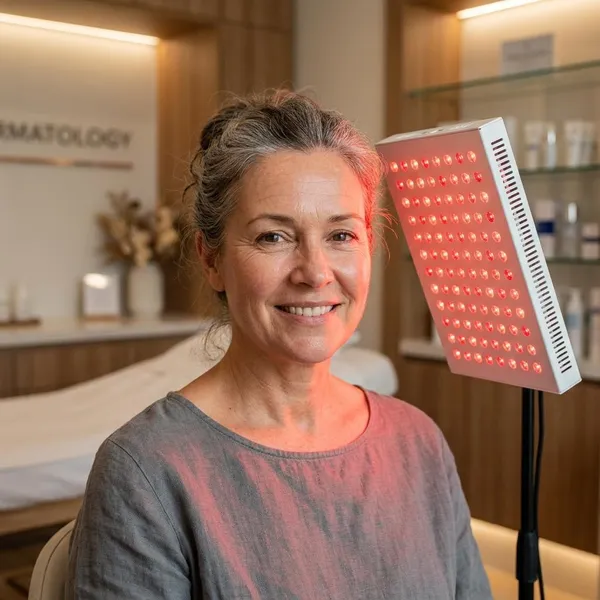
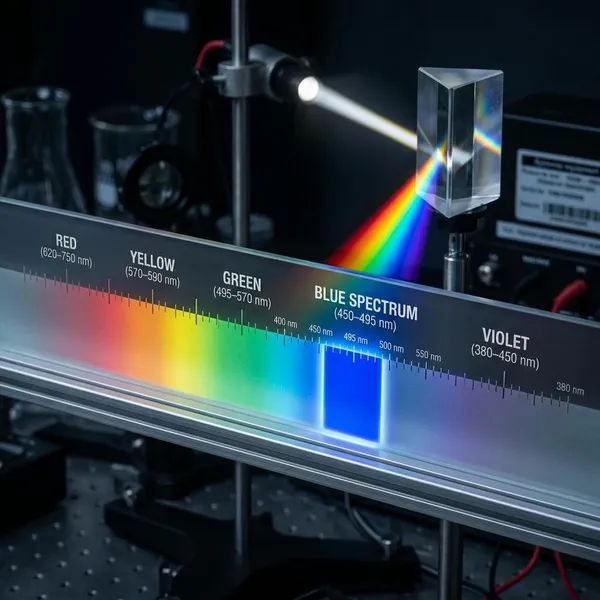
For collagen-focused skin care, the most practical red light wavelength is usually in the 630–660 nm range. If your main concern is fine lines, dullness, or skin texture on the face, start there before worrying about deeper near-infrared options. Near-infrared wavelengths around 810–850 nm can still be useful, but they make more sense when you want deeper photobiomodulation or one device for both skin and body use.
What red light wavelength is best for collagen?
The best choice depends on what you are trying to treat. For visible skin concerns, red light in the 630–660 nm range is the clearest match. For deeper tissue support, near-infrared light in the 810–850 nm range may be worth adding, especially if you want more than a facial skincare device.
- Face, fine lines, texture: prioritize 630–660 nm red light.
- Neck, joints, muscles, broader wellness use: consider adding 810–850 nm near-infrared.
- One device for several household uses: a combined red and near-infrared panel is often more practical.
630–660 nm for skin-focused collagen support
630–660 nm is the range most people should look at first for collagen-related facial goals. Wavelengths such as 630 nm, 633 nm, and 660 nm are commonly used in red light masks and panels because they are suited to more superficial skin layers, where fine lines, rough texture, and dull-looking skin are most visible.
The difference between 630 nm and 660 nm is usually less important than the quality of the routine. For a normal home skincare setup, a device that delivers a sensible dose consistently will matter more than choosing one nearby red wavelength with false precision.
810–850 nm for deeper photobiomodulation
810–850 nm near-infrared light reaches deeper than visible red light, so it is often used when the goal includes broader tissue support rather than only surface-level cosmetic changes. It may support collagen-related processes indirectly by improving the cellular environment involved in repair, but it is not usually the most direct standalone choice if your only concern is facial wrinkles.
Red plus near-infrared for broader coverage
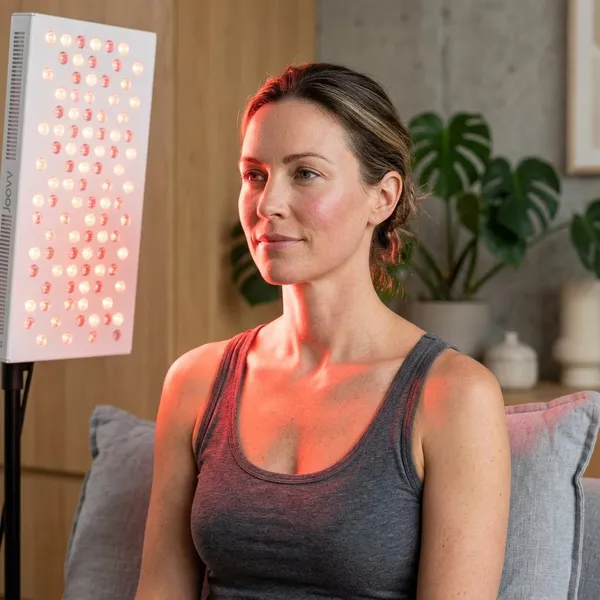
A red plus near-infrared device is useful when your needs overlap. Someone using a panel on the face for skin texture and also on the neck, shoulders, or legs after exercise may get more value from a combined setup than from a red-only beauty mask.
That does not mean combined wavelengths are automatically superior. If the device has poor coverage, unclear irradiance, or an awkward setup, it may be harder to use regularly. For collagen results, the device you can position correctly several times per week is usually the better buy.
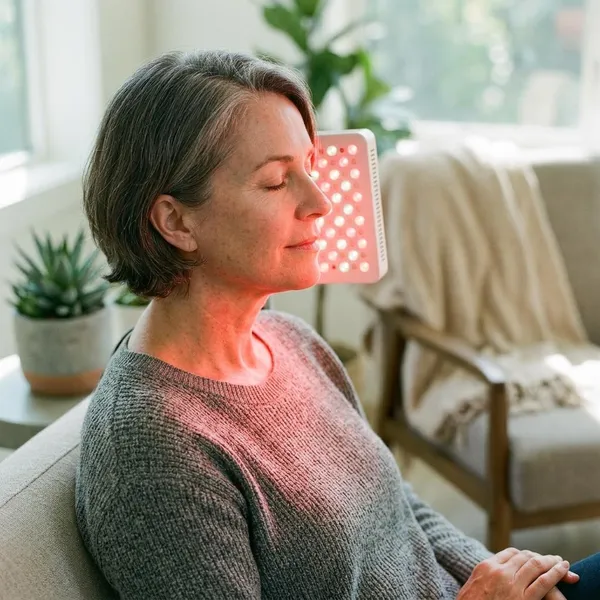
How does red light support collagen production?
Red light does not add collagen to the skin like an ingredient in a cream, and it does not work like a filler or injectable treatment. It is usually discussed in terms of photobiomodulation: certain wavelengths are absorbed by cells and may support signaling, energy production, and repair processes that influence how skin maintains collagen over time.
Supports mitochondrial signaling
Mitochondria help cells produce energy, and skin repair is energy-dependent. Red light may support mitochondrial signaling in a way that helps cells handle routine maintenance more efficiently, which is one reason consistency matters more than occasional long sessions.
Stimulates fibroblast activity
Fibroblasts are the cells involved in producing collagen, elastin, and other structural components of skin. Red light is often linked to collagen because it may encourage a healthier fibroblast response, especially when treatment is repeated on a steady schedule.
Supports collagen remodeling
Collagen support is not only about producing more collagen. The skin also needs to maintain and reorganize existing collagen so the surface looks smoother and more resilient. Red light may help this remodeling process, which is why early changes can look like better texture before anything that feels like firmness appears.
- Choose the right depth: red light first for face-focused goals, near-infrared as an add-on for deeper use.
- Keep the routine stable: changing time, distance, and frequency every few days makes progress hard to judge.
- Track changes fairly: take photos in the same light every few weeks instead of checking the mirror daily.
Red light vs near-infrared for collagen
The main difference is depth. Red light is usually the more direct choice for visible skin appearance, while near-infrared reaches deeper tissue and is often chosen for broader photobiomodulation goals. If a product includes both, check whether that actually fits how you plan to use it.
| Goal | Better starting point | Why it fits |
|---|---|---|
| Fine lines and facial texture | 630–660 nm red light | Targets more superficial skin concerns |
| Face plus neck or body use | Red + near-infrared | Covers more than one treatment depth |
| Deeper tissue support | 810–850 nm near-infrared | Reaches beyond the upper skin layers |
Red light targets more superficial skin
Red light around 630–660 nm is often used for cosmetic collagen goals because it is better matched to the skin layers tied to visible appearance. If you mainly want help with dullness, mild lines, or uneven texture, this is the range to prioritize.
Near-infrared reaches deeper tissue
Near-infrared wavelengths such as 810 nm, 830 nm, and 850 nm penetrate deeper than visible red light. That can be useful for someone who wants one panel for the face and body, but it may feel less directly cosmetic if the only goal is softening fine facial lines.
Combined wavelengths cover both ranges
Combined wavelengths make sense when convenience is part of the decision. A dual red and near-infrared panel can reduce the need for separate devices, especially if more than one person in the home wants to use it for different areas.
What matters besides wavelength?
Wavelength gets the attention, but it is not the only thing that decides whether a routine works. For collagen support, the first practical checks are the device's usable intensity at your treatment distance, the session time needed to reach a sensible dose, and whether the coverage area fits your face, neck, or chest without making the routine tedious.
If a product lists 660 nm or 850 nm but gives no clear guidance on distance, timing, or output, compare carefully. The right wavelength with poor use instructions can still lead to inconsistent results.
Irradiance
Irradiance is the intensity of light reaching the skin, usually shown as mW/cm². Look for measurements at a realistic distance, not only a best-case number taken extremely close to the LEDs. Very low output may require sessions that are too long to maintain, while very high output is not automatically better.
Treatment dose
Dose is the total light energy delivered during a session, and it depends on both irradiance and time. A moderate device can still be useful if you use it at the right distance for long enough, while a powerful device can underdeliver if you stand too far away or cut sessions short.
Session time
Many home routines fall somewhere from a few minutes to about 10–20 minutes per area, depending on device strength and distance. The safer practical move is to start with the manufacturer's instructions, keep the same timing for several weeks, and avoid turning every session into a random experiment.
Treatment distance
Distance changes how much light reaches the skin. A panel used at 6 inches can deliver a very different exposure than the same panel used at 18 inches, so treat distance as part of the dose, not as a comfort detail.
For face use, a mirror, chair position, or simple floor mark can help you repeat the same setup. If the device is close to the eyes or feels too intense, follow the device's safety guidance and use eye protection when recommended.
Coverage area
Coverage decides whether the routine is easy enough to keep doing. A tiny wand may be fine for one spot, but it becomes annoying if you want the full face, jawline, neck, and upper chest. For long-term collagen-focused use, convenience is not a luxury; it is what keeps the routine from disappearing after two weeks.
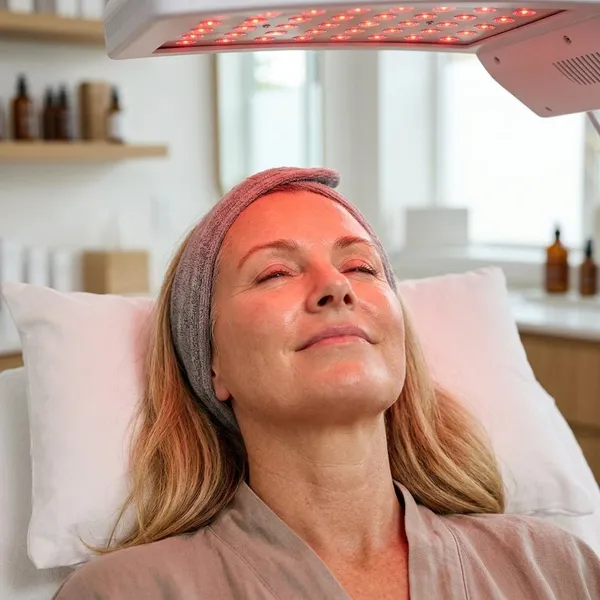
What results can you expect for collagen?
Expect gradual, modest changes rather than a dramatic before-and-after moment. Red light may support collagen-related skin quality, but the visible result usually builds through steady use: smoother texture, a slightly fresher look, and fine lines that appear less sharp.
Skin changes appear gradually
Skin changes usually show up slowly because collagen production and remodeling follow the skin's natural repair rhythm. Photos taken in the same lighting every few weeks are more useful than judging progress from day to day.
Fine lines may soften over time
Fine lines may look softer with consistent use, especially when they are mild and linked to texture or skin quality. Deeper expression lines are less likely to change dramatically, so it is better to look for improvement rather than disappearance.
Texture and firmness may improve
Texture improvements can be easier to notice first: makeup may sit more evenly, skin may look less dull, or the surface may feel smoother. Firmness changes, when they happen, are usually quieter and slower.
Results depend on dose and consistency
Results depend heavily on whether the skin receives a repeatable dose. If sessions are too short, too far from the device, or too irregular, the wavelength may be correct but the routine may still disappoint.
- Check first: wavelength, distance, session time, and coverage.
- Be cautious with: vague product specs, uncomfortable setups, and unrealistic tightening claims.
- Judge fairly: compare changes over weeks, not after one or two sessions.
Conclusion
If your main goal is collagen support for visible skin appearance, choose a device centered on 630–660 nm red light and pay close attention to dose, distance, and coverage. Add 810–850 nm near-infrared when you also want deeper body use or broader photobiomodulation, not because it sounds more advanced. The best routine is the one that fits your actual treatment area, has clear use instructions, and is easy enough to repeat consistently.